God is with us.
My heart's eyes behold your Divine Glory!
From whence does my help come?
My help comes from You,
who created heaven and earth.
You strengthen and uphold me,
You, who are ever by my side.
Behold!  You who watch over the nations
will see all hearts Awaken to the Light.
For You are the Great Counselor;
You dwell within all hearts,
that we might respond to the Universal Heart--
Like the sun, that nourishes us by day,
like the stars that guide the wayfarer at night.
In You we shall not be afraid of the darkness, for
You are the Light of our Life.
May You keep us in our going out
and in our coming in
from this time forth and
forevermore.
-Nan C. Merrill
Reflection:
“… at whatever point in her journey, the pilgrim psalm singer finds assurance of YHWEH’s constant, caring presence.” W p. 182
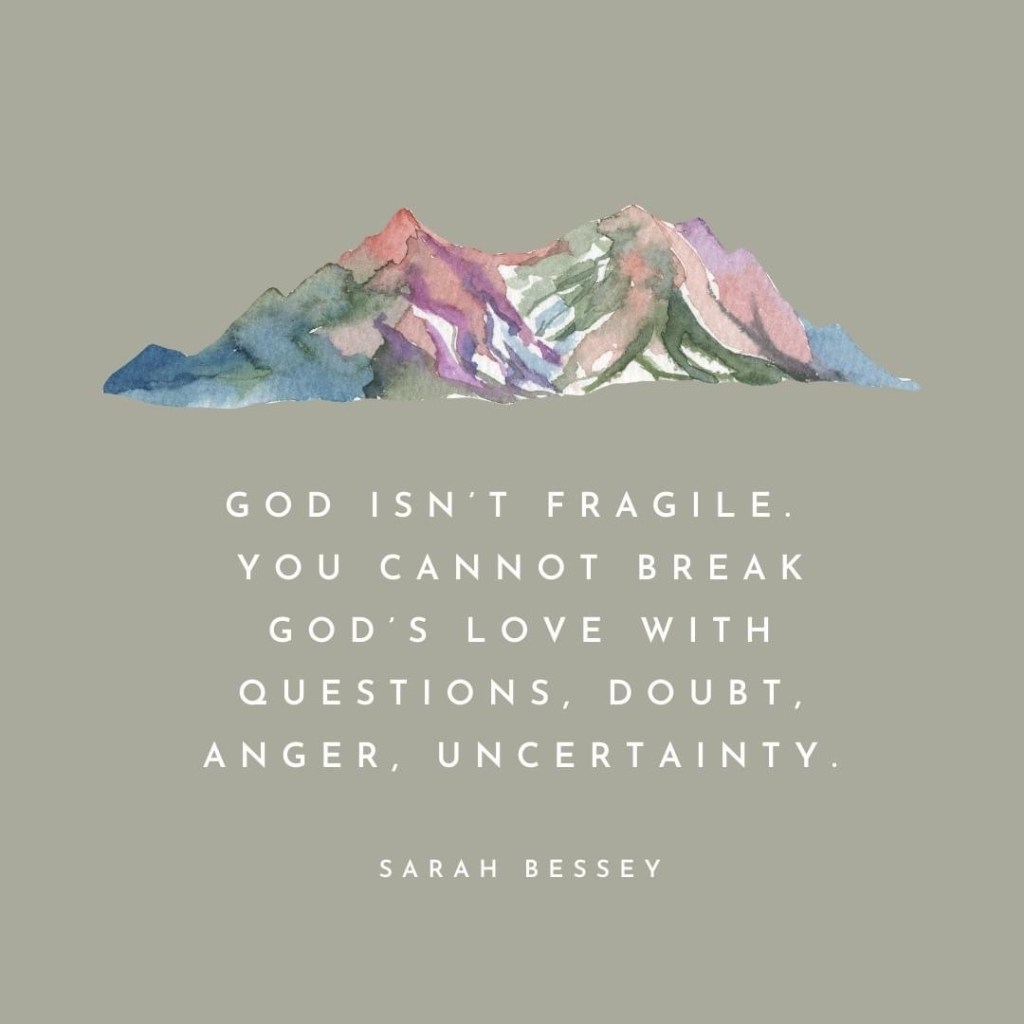
As one of the psalms of ascent, this text was originally used by those on a journey towards Jerusalem and continues to be used by those on varieties of pilgrimages. The first phrase, I lift my eyes to the hills, refers to looking towards Jerusalem, looking to God’s glory, or focusing on God’s presence. This pilgrimage psalm affirms God dwells everywhere, and in all hearts, and at all times. We can find comfort in this psalm for any journey, pilgrimage or not, that has us looking for support through all of the ups and downs. God’s love is not fragile or fickle, God’s love is constant and abundant.
I have read this psalm at funerals as it brings comfort to those who mourn and reminds all of us that God is a constant, caring presence. The psalmist does not suggest that God prevents us from experiencing hardship, sorrow, or loss, but the promise is that we are never alone in our grief. This psalm can be a hug when we feel alone. And this psalm can be heard as an encouragement to love as God loves, to be present for our neighbors in their joys and in their sorrows along our journey together. To respond to and participate in the Universal Heart is the work of all on our life-long pilgrimage on earth and forevermore.
I began writing Psalm reflections during Lent of 2020 shortly after we decided to close the church building, work from home, and worship via zoom. It is a practice I have continued since. Many churches use the Revised Common Lectionary (RLC) that rotates scripture on a three-year cycle (A, B, and C). Starting in Advent 2019, Third Church decided to worship with the texts from Year D, which is still not circulated as are years A, B, and C. Year D was created with the goal of including scriptures that were left out or not used as frequently as others. While we were using Psalms in year D, most other lectionary followers were using Year A. In Advent of 2020 we rejoined those who use the lectionary in year B. Advent of 2021 year C. Advent of 2022 year A.
I use the Vanderbilt Divinity Library’s resource for lectionary readings to make text selections.
Year A Psalms
1st Sunday in Advent Psalm 122, 2nd Sunday in Advent Psalm 72, 3rd Sunday in Advent Psalm 146, 4th Sunday in Advent Psalm 80, Christmas Psalm 96, Psalm 97, Psalm 98, 1st Sunday after Christmas Psalm 148, New Year Psalm 8, Epiphany Psalm 72, 1st Sunday after Epiphany Psalm 29, 2nd Sunday after Epiphany Psalm 40, 3rd Sunday after Epiphany Psalm 27, 4th Sunday after Epiphany Psalm 15, 5th Sunday after Epiphany Psalm 112, 6th Sunday after Epiphany Psalm 119, Transfiguration Sunday Psalm 2 or Psalm 99.
Ash Wednesday Psalm 51, 1st Sunday in Lent Psalm 32, 2nd Sunday in Lent Psalm 121, 3rdSunday in Lent Psalm 95, 4th Sunday in Lent Psalm 23, 5th Sunday in Lent Psalm 130, 6th Sunday in Lent Psalm 118 or Psalm 31.
Holy Week: Monday Psalm 36, Tuesday Psalm 71, Wednesday Psalm 70, Thursday Psalm 116, Friday Psalm 22, Saturday Psalm 31.
Easter Psalm 118 or Psalm 114, 2nd Sunday of Easter Psalm 16, 3rd Sunday of Easter Psalm 116, 4th Sunday of Easter Psalm 23, 5th Sunday of Easter Psalm 31, 6th Sunday of Easter Psalm 66, Ascension of the Lord Psalm 47 or Psalm 93, 7th Sunday of Easter Psalm 68, Pentecost Psalm 104.
1st Sunday after Pentecost Psalm 8, 2nd Sunday after Pentecost Psalm 33 or Psalm 50, 3rd Sunday after Pentecost Psalm 116 or Psalm 100, 4th Sunday after Pentecost Psalm 86 or Psalm 69, 5thSunday after Pentecost Psalm 13 or Psalm 89, 6th Sunday after Pentecost Psalm 45 or Psalm 145, 7th Sunday after Pentecost Psalm 119 or Psalm 65, 8th Sunday after Pentecost Psalm 139 or Psalm 86, 9th Sunday after Pentecost Psalm 105 or Psalm 119, 10th Sunday after Pentecost Psalm 17 or Psalm 145, 11th Sunday after Pentecost Psalm 105 or Psalm 85, 12th Sunday after Pentecost Psalm 133 or Psalm 67, 13th Sunday after Pentecost Psalm 124 or Psalm 138, 14thSunday after Pentecost Psalm 105 or Psalm 26, 15th Sunday after Pentecost Psalm 149 or Psalm 119, 16th Sunday after Pentecost Psalm 114 or Psalm 103, 17th Sunday after Pentecost Psalm 105 or Psalm 145, 18th Sunday after Pentecost Psalm 78 or Psalm 25, 19th Sunday after Pentecost Psalm 19 or Psalm 80, 20th Sunday after Pentecost Psalm 106 or Psalm 23, 21stSunday after Pentecost Psalm 99 or Psalm 96, 22nd Sunday after Pentecost Psalm 90 or Psalm 1, 23rd Sunday after Pentecost Psalm 107 or Psalm 43, 24th Sunday after Pentecost Psalm 78 or Psalm 70, 25th Sunday after Pentecost Psalm 123 or Psalm 90, 26th Sunday after Pentecost Psalm 100 or Psalm 95.
Sources and notes:
“In its position as the second in the sequence of Songs of Ascents, it can serve as a psalm of approach to Jerusalem when the pilgrim’s eye are lifted up to see the distant hills around Jerusalem. The whole could be recited by a pilgrim or a group achieving a dialogical effect in the performance. In any case, the psalm as Scripture has come to be used as a whole to speak of the larger movement of life itself.” Mays p. 390
“Psalm 121 is like Psalm 23 in many ways. One way is the individual form given to a corporate relationship: “my help” as well as “our help”. The keeper of Israel (v. 4) is the help of each pilgrim in Israel. But this individualization of the LORD’s role as protector does not create an independent individual. It is only as one who says “our help” that the pilgrim can say “my help.”” Mays p. 390
“… at whatever point in her journey, the pilgrim psalm singer finds assurance of YHWEH’s constant, caring presence.” W p. 182
WBC Allen, Leslie C. 1983. Word Biblical Commentary: Psalms 101-150. Vol. 21. Waco, TX: Word Books, Publisher.
Bonhoeffer, Dietrich. 1974. Psalms: The Prayer Book of the Bible. 8th ed. Minneapolis, MN: Augsburg Press.
Bourgeault, C. (2006). Chanting the psalms: A practical guide Audio Book. New Seeds.
Brueggemann, Walter. 2007. Praying the Psalms: Engaging Scripture and the Life of the Spirit. 2nd ed. Eugene, OR: Cascade.
Brueggemann Brueggemann, Walter. 2014. From Whom No Secrets Are Hid: Introducing the Psalms. Edited by Brent A. Strawn. 1st ed. Louisville, KY: Westminster John Knox Press.
Brueggemann, W. (2002). Spirituality of the psalms. Augsburg Pub. House.
Chilson, Richard, ed. You Shall Not Want: A Spiritual Journey Based on the Psalms. Ave Maria Press, 2009.
Chittister Chittister, Joan. (2011). Songs of the heart: reflections on the psalms. John Garratt Publishing.
Cudjoe-Wilkes, G., Wilkes, A. J., & Moss, O. (2022). Psalms for black lives: Reflections for the work of Liberation. Upper Room Books.
WBC Craigie, Peter C. 1983. Psalms 1-50–Word Biblical Commentary. Vol. 19. Waco, TX: Word Books.
Creach Creach, Jerome Frederick Davis. 1998. Psalms: Interpretation Bible Studies. Louisville, KY: Westminster John Knox Press.
DAFLER, J. (2021). PSOBRIETY: A journey of recovery through the psalms. Louisville, KY: WESTMINSTER JOHN KNOX.
W de Claisse-Walford, Nancy L. WISDOM COMMENTARY: Psalms Bks. 4-5. Edited by Barbara E. Reid. Vol. 22. Collegeville, MN: Liturgical, 2020.
W Hopkins, Denise Dombkowski. WISDOM COMMENTARY: Psalms Bks. 2-3. Edited by Barbara E. Reid. Vol. 21. Collegeville, MN: Liturgical, 2016.
NIB Keck, Leander E. 2015. The New Interpreters Bible Commentary. Vol. 3. Nashville, TN: Abingdon Press.
Lewis, C. S. (2017). Reflections on the Psalms. Harper One, an imprint of Harper Collins Publishers.
Mays Mays, James Luther. 1994. Psalms. Louisville, KY: John Knox Press.
McCann McCann, J. C. (1993). A theological introduction to the book of Psalms: The Psalms as Torah. Nashville, TN: Abingdon Press.
McCann, J. C., & Howell, J. C. 2001. Preaching the Psalms. Nashville, TN: Abingdon Press.
Merrill, N. C. (2020). Psalms for praying an invitation to wholeness (10th Anniversary Edition ed.). London, England: Bloomsbury Publishing.
Miller Miller, Patrick D. 1986. Interpreting the Psalms. Philadelphia, PA: Fortress Press.
Schlimm Schlimm, Matthew Richard. 2018. 70 Hebrew Words Every Christian Should Know.Nashville, TN: Abington Press.
Spong Spong, M. (Ed.). (2020). The words of her mouth: Psalms for the struggle. Cleveland, OH: The Pilgrim Press.
WBC Tate, Marvin E. 1990. Word Biblical Commentary: Psalms 51-100. Edited by David Allan. Hubbard and Glenn W. Barker. Vol. 20. Waco, TX: Word.
OTL Weiser, Artur. 1998. Old Testament Library: Psalms. Translated by Herbert Hartwell. 3rd ed. New York, NY: Manchester University Press.

 Period Pastor Pad