Because we are united with God, we are called to participate in Love’s work; gathering the outcasts, healing the broken hearted, and binding up all of their wounds. This is the work of the faithful, the beloved of God.
Reflection:
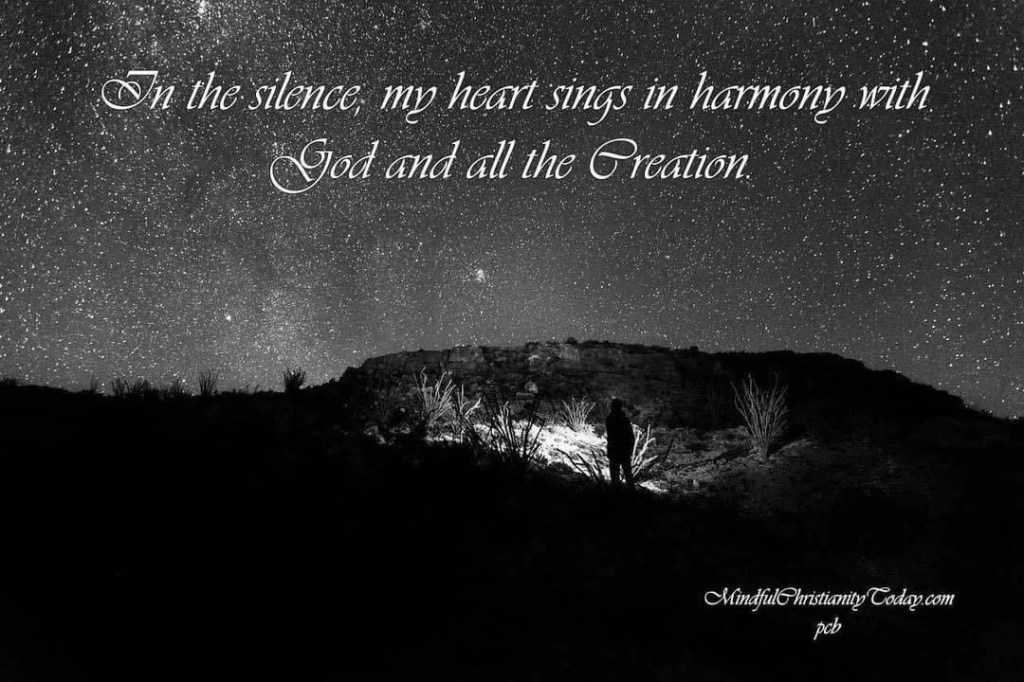
“God of Stars and Broken Hearts” is the title given to Psalm 147 in the Word Biblical Commentary, its a nod to how God is described in verses 3-4. “He heals the brokenhearted, and binds up their wounds. He determines the number of the stars; he gives to all of them their names.” And while I love this one line from the NRSVUE, I would choose to read Nan C. Merrill’s version of this psalm instead. I think she captures the essence of vastness of the cosmos to which we belong and the assurance that God knows and loves each of us down to the tiny cracks in our hearts. We are united in love with Love, to love all, because our work is love.
Praise the Beloved, Heart of all hearts!
We are blessed as we sing praises to the Beloved;
For as we give ourselves to love, so we receive Love.
The Beloved abides in our heart, in every open heart welcomes Love.
Through Love we are sent to the brokenhearted, a mutual balm to the soul.
we seek out the downtrodden, those without shelter or food,
recognizing our own poverty with them.
Those in prison also await willing hearts to visit them,
that forgiveness might free all from bondage.
Sing to the Beloved with thanksgiving; mingle with the melodies of the spheres!
Awaken to your inheritance in all the universe!
For you belong to heaven, to the stars and galaxies.
You come also from the earth, from mineral and plant,
pure water courses through your veins.
Every creature--those that swim and fly and walk on land--knows you as of old;
And each human--in body or in spirit--welcomes you in the heart-song of Love,
where we know we are all One Being.
Praise the Beloved, Life of all life!
Invite Love into your heart!
For Divine Love gives strength to the weak, with courage to face their fears.
Divine Love brings peace that is beyond our knowledge.
Divine Love cuts through the ignorance that fosters greed and arrogance,
humbling and breaking open the heart.
Divine Love severs the veil that separates realms of the profane and sacred;
Holiness radiates through all touched by Divine Love, a refining Fire!
Wisdom flows from the Heart of Divine Love
to all receptive hearts nurtured in the Silence.
Yes, the Divine Word is written on every heart-scroll,
a guide to pilgrims on the way.
May everyone awaken to Divine Love, that peace and integrity and assurance may be born again in every land.
O my soul, praise the Beloved!
God loves creation by uniting with it, all of it, from the stars to our tiny hearts. And when we are made one with God, we are made one with each other, and with all of creation.
All people and all creation are worthy of love and care.
Because we are united with God, we are called to participate in Love’s work; gathering the outcasts, healing the broken hearted, and binding up all of their wounds. This is the work of the faithful, the beloved of God.
I began writing Psalm reflections during Lent of 2020 shortly after we decided to close the church building, work from home, and worship via zoom. It is a practice I have continued since. Many churches use the Revised Common Lectionary (RLC) that rotates scripture on a three-year cycle (A, B, and C). Starting in Advent 2019, Third Church decided to worship with the texts from Year D, which is still not circulated as are years A, B, and C. Year D was created with the goal of including scriptures that were left out or not used as frequently as others. While we were using Psalms in year D, most other lectionary followers were using Year A. In Advent of 2020 we rejoined those who use the lectionary in year B. Advent of 2021 year C. Advent of 2022 year A. Advent of 2023 year B.
I use the Vanderbilt Divinity Library’s resource for lectionary readings to make text selections.
Year B Psalms
Advent – Transfiguration: 1st Sunday in Advent Psalm 80, 2nd Sunday in Advent Psalm 85, 3rdSunday in Advent Psalm 126, 4th Sunday in Advent Psalm 89, Christmas Eve or Christmas Day Psalm 96, Psalm 97, Psalm 98, 1st Sunday after Christmas, Psalm 148, New Year’s Day Psalm 8, Epiphany Psalm 72, 1st Sunday after Epiphany Psalm 29, 2nd Sunday after Epiphany Psalm 139, 3rd Sunday after Epiphany Psalm 62, 4th Sunday after Epiphany Psalm 111, 5th Sunday after Epiphany Psalm 147, Transfiguration Sunday (Sunday before Lent) Psalm 50
Lent: Ash Wednesday Psalm 51, 1st Sunday in Lent Psalm 25, 2nd Sunday in Lent Psalm 22, 3rdSunday in Lent Psalm 19, 4th Sunday in Lent Psalm 107, 5th Sunday in Lent Psalm 51 or Psalm 119:9-16, 6th Sunday in Lent (Palm or Passion Sunday) Psalm 118 or 31
Holy Week: Monday Psalm 36, Tuesday Psalm 71, Wednesday Psalm 70, Maundy Thursday Psalm 116, Good Friday Psalm 22, Holy Saturday Psalm 31
Easter: Easter Psalm 118 or 114, 2nd Sunday of Easter Psalm 133, 3rd Sunday of Easter Psalm 4, 4th Sunday of Easter Psalm 23, 5th Sunday of Easter Psalm 22, 6th Sunday of Easter Psalm 98, Ascension Psalm 47 or Psalm 93, 7th Sunday of Easter Psalm 1, Day of Pentecost Psalm 104
Season After Pentecost (Ordinary Time): 1st Sunday after Pentecost (Trinity Sunday) Psalm 29, 2nd Sunday after Pentecost Psalm 139 or Psalm 81, 3rd Sunday after Pentecost Psalm 138 or Psalm 130, 4th Sunday after Pentecost Psalm 20 or Psalm 92, 5th Sunday after Pentecost Psalm 9or Psalm 133 or Psalm 107, 6th Sunday after Pentecost Psalm 130 or Psalm 30, 7th Sunday after Pentecost Psalm 48 or Psalm 123, 8th Sunday after Pentecost Psalm 24 or Psalm 85, 9th Sunday after Pentecost Psalm 89 or Psalm 23, 10th Sunday after Pentecost Psalm 14 or Psalm 145, 11thSunday after Pentecost Psalm 51 or Psalm 78, 12th Sunday after Pentecost Psalm 130 or Psalm 34, 13th Sunday after Pentecost Psalm 111 or Psalm 34, 14th Sunday after Pentecost Psalm 84 or Psalm 34, 15th Sunday after Pentecost Psalm 45 or Psalm 15, 16th Sunday after Pentecost Psalm 125 or Psalm 146, 17th Sunday after Pentecost Psalm 19 or Psalm 116, 18th Sunday after Pentecost Psalm 1 or Psalm 54, 19th Sunday after Pentecost Psalm 124 or Psalm 19, 20th Sunday after Pentecost Psalm 26 or Psalm 8, 21st Sunday after Pentecost Psalm 22 or Psalm 90, 22ndSunday after Pentecost Psalm 104 or Psalm 91, 23rd Sunday after Pentecost Psalm 34 or Psalm 126, 24th Sunday after Pentecost Psalm 146 or 119, 25th Sunday after Pentecost Psalm 127 or Psalm 146, 26th Sunday after Pentecost Psalm 16, 27th Sunday after Pentecost (Christ the King) Psalm 132 or Psalm 93.
Sources and notes:
I’ve written about this psalm a few times: In 2020, Advent year B, a re-visit in the same year was a really popular post on Pinterest, and then in year C in 2021.
“God of Stars and Broken Hearts” WBC p. 304
“Psalm 147 is the second of the five Hallel psalms that form the doxological end of the book of Psalms. Classified as a community hymn, it celebrates God’s sovereign reign over the community of faith and all of creation.” W p. 306
“In both Psalms 146 and 147 the psalm singers celebrate God as sovereign over all creation as well as over the community of the faithful.” W p. 309
“This post-exilic hymn is a medley of two interwoven themes, Yahweh’s power in the sphere of nature, both as creator and as controller, and his patronage of the covenant people, demonstrated in recent history specifically and in the general attitude of grace which may be deduced therefrom. The psalm divides into three strophes, each with its own short exhortation to praise and a development in terms of this double content.” WBC p. 309
“The LORD is so much the content of praise that praise begins to reflect his attributes. In it his goodness is apparent. Through it the singers experience pleasure over the delightfulness of the LORD. The psalm can be read as a verbal portrait of that delightfulness.” Mays p. 442
“The psalm was written for the Jerusalem congregation (v.12) in the period of the restoration after the exile (vv. 2-3, 13-14). The way that particular experience of the LORD’s help is expressed is one example of the way hymnic theology in Israel’s praise turns a specific deed of the LORD into a general confession. The hymn does not say in narrative mode that the LORD rebuilt Zion and gathered the outcasts, but using participles it makes the deed a typical activity, a feature of the character of the LORD. The deed becomes a symbol, a means of knowledge of God and a guide to what to expect from him. So Israel, and later the church, can say through the years in its praise, “The LORD builds Jerusalem,” and state its confidence that the LORD not only founded the church but restores and gathers it when it passes through tribulation.” Mays p. 443
The word of the LORD: “The psalmist speaks of it as an agent of God’s rule set to do his bidding (vv. 15, 18). The word is an active force by which the LORD deals with the world.” Mays p. 443
“The psalm is the fruit of deep meditation upon sacred literature, as the section on Form/Structure/Setting indicated. Arranging and reworking what he read into his own artistic composition, the psalmist produced a new song of praise. He exults in a God at work in nature and in recent history, a God whose spoken word is heard by the ear of faith both in the winter storms and in the recited law. Yahweh’s power is harnessed to his grace. Yet this divine generosity lays obligations upon his chosen people, not only to praise but ever to trust with hope and to obey.” WBC p. 310
“The force the drives the universe, producing rained snow and heat and cold (vv. 19-20). At the heart of the biblical faith is the astounding claim that the power that has strewn the stars into their courses (v.4) is the same power that — or better who — “heals the broken-hearted” (v. 3), “lifts up the downtrodden” (v. 6), and declares an intelligible, personal, life-giving word to Israel (vv. 19-20). In short, our trust — indeed our only hope — is that the power behind the universe has a personal face that is turned toward us in “steadfast love” (v. 11b). …. The cosmic God is personally, intimately, inextricably involved in the lives and futures of human beings.” NIB p. 720
“This liturgical hymn, to which the Nuremberg hymn, ‘Lobet den Herren, denn er ist sehr freundlich’, (composed about 1560) which ends on a Christian note, owes its origin, is in form clearly divided into three parts, each of which opens with a call to praise God. The thoughts are less strictly arranged, not, as has frequently been assumed, because the psalm is a compilation of quotations taken from earlier literary sources, but because the thoughts revolve round two basic themes and continually revert to them, so that they constitute the sustaining melody of the song of praise; they are the power of God and his compassionate grace as manifested in creation and election.” OTL p. 834
I read one reflection on this psalm with the title “not true” that simply contained verse 6, “The LORD lifts up the downtrodden; God casts the wicked to the ground.” and a list of people whose lives were ended violently because of the racism and hate in their attackers and in our country. The list is four pages long (Marilyn Pagan-Banks, Spong, M. (Ed.). (2020). The words of her mouth: Psalms for the struggle. Cleveland, OH: The Pilgrim Press.) when the book was published early in 2020, and I can think of several more names that should be added, I’m sure you can too.
Music:
“This liturgical hymn, to which the Nuremberg hymn, ‘Lobet den Herren, denn er ist sehr freundlich’, (composed about 1560) which ends on a Christian note, owes its origin, is in form clearly divided into three parts, each of which opens with a call to praise God. The thoughts are less strictly arranged, not, as has frequently been assumed, because the psalm is a compilation of quotations taken from earlier literary sources, but because the thoughts revolve round two basic themes and continually revert to them, so that they constitute the sustaining melody of the song of praise; they are the power of God and his compassionate grace as manifested in creation and election.” OTL p. 834 This commentary didn’t give me much to go on to find this hymn. I was hoping to find all of the verses so I could perhaps use the “Christian note” he mentions in the reflection. No such luck. But with the help of the Third Church music director, I have these gems:
Here’s the Scandello original, from 1568. He worked in Dresden, though:https://youtu.be/HM09uil29wU
And here is the Bach setting:https://youtu.be/68sDHTPhwU0
I found a somewhat literal translation into English here: http://www.bach-cantatas.com/Texts/Chorale374-Eng3.htm
Settings of “O Praise the Lord, for he is Good” on Hymnary.org seem to track with Psalm 107, not 147…
Of parallel interest, there was a beautiful 19th century setting of the German text by Albert Becker:https://youtu.be/aa0g9JmYZjc
I am reminded of the third verse of O Holy Night
Truly He taught us to love one another; His law is love and His gospel is peace. Chains shall He break, for the slave is our brother, And in His name all oppression shall cease. Sweet hymns of joy in grateful chorus raise we; Let all within us praise His holy name. Christ is the Lord! O praise His name forever! His pow’r and glory evermore proclaim! His pow’r and glory evermore proclaim!
Alter Alter, Robert. 2007. The Book of Psalms: A Translation with Commentary New York: W. W. Norton & Company
WBC Allen, Leslie C. 1983. Word Biblical Commentary: Psalms 101-150. Vol. 21. Waco, TX: Word Books, Publisher.
Bonhoeffer, Dietrich. 1974. Psalms: The Prayer Book of the Bible. 8th ed. Minneapolis, MN: Augsburg Press.
Bourgeault, C. (2006). Chanting the psalms: A practical guide Audio Book. New Seeds.
Brueggemann, Walter. 2007. Praying the Psalms: Engaging Scripture and the Life of the Spirit. 2nd ed. Eugene, OR: Cascade.
Brueggemann Brueggemann, Walter. 2014. From Whom No Secrets Are Hid: Introducing the Psalms. Edited by Brent A. Strawn. 1st ed. Louisville, KY: Westminster John Knox Press.
Brueggemann, Walter. Davis Hanskins, Editor. 2022. Our Hearts Wait: Worshiping Through Praise and Lament in the Psalms Westminster John Knox Press, Louisville KY.
Brueggemann, Walter. (2002). Spirituality of the psalms. Augsburg Pub. House.
Brueggemann, Walter. (1984). The Message of the Psalms: A Theological Commentary. Minneapolis: Augsburg.
Chilson, Richard, ed. You Shall Not Want: A Spiritual Journey Based on the Psalms. Ave Maria Press, 2009.
Chittister Chittister, Joan. (2011). Songs of the heart: reflections on the psalms. John Garratt Publishing.
Cudjoe-Wilkes, G., Wilkes, A. J., & Moss, O. (2022). Psalms for black lives: Reflections for the work of Liberation. Upper Room Books.
WBC Craigie, Peter C. 1983. Psalms 1-50–Word Biblical Commentary. Vol. 19. Waco, TX: Word Books.
Creach Creach, Jerome Frederick Davis. 1998. Psalms: Interpretation Bible Studies. Louisville, KY: Westminster John Knox Press.
DAFLER, J. (2021). PSOBRIETY: A journey of recovery through the psalms. Louisville, KY: WESTMINSTER JOHN KNOX.
W de Claisse-Walford, Nancy L. WISDOM COMMENTARY: Psalms Bks. 4-5. Edited by Barbara E. Reid. Vol. 22. Collegeville, MN: Liturgical, 2020.
Green, Barbara. 1997. Like a Tree Planted: An Exploration of Psalms and Parables Through Metaphor. Collegeville, MN: Liturgical Press.
W Hopkins, Denise Dombkowski. WISDOM COMMENTARY: Psalms Bks. 2-3. Edited by Barbara E. Reid. Vol. 21. Collegeville, MN: Liturgical, 2016.
NIB Keck, Leander E. 2015. The New Interpreters Bible Commentary. Vol. 3. Nashville, TN: Abingdon Press.
Lewis, C. S. (2017). Reflections on the Psalms. Harper One, an imprint of Harper Collins Publishers.
Mays Mays, James Luther. 1994. Psalms. Louisville, KY: John Knox Press.
McCann McCann, J. C. (1993). A theological introduction to the book of Psalms: The Psalms as Torah. Nashville, TN: Abingdon Press.
McCann, J. C., & Howell, J. C. 2001. Preaching the Psalms. Nashville, TN: Abingdon Press.
Merrill, N. C. (2020). Psalms for praying an invitation to wholeness (10th Anniversary Edition ed.). London, England: Bloomsbury Publishing.
Miller Miller, Patrick D. 1986. Interpreting the Psalms. Philadelphia, PA: Fortress Press.
Morgan, Michael. 2010. The Psalter for Christian Worship Revised Edition. Westminster John Knox Press.
Schlimm Schlimm, Matthew Richard. 2018. 70 Hebrew Words Every Christian Should Know.Nashville, TN: Abington Press.
Spong Spong, M. (Ed.). (2020). The words of her mouth: Psalms for the struggle. Cleveland, OH: The Pilgrim Press.
WBC Tate, Marvin E. 1990. Word Biblical Commentary: Psalms 51-100. Edited by David Allan. Hubbard and Glenn W. Barker. Vol. 20. Waco, TX: Word.
Weems, Ann. 1995. Psalm of Lament. Westminster John Knox Pres
OTL Weiser, Artur. 1998. Old Testament Library: Psalms. Translated by Herbert Hartwell. 3rd ed. New York, NY: Manchester University Press.

 Period Pastor Pad