Yet, all too often glorious gifts of Grace, of Love and Light, are veiled
by my busyness.
I bow down before You; instruct me,
that I might choose the way of love and truth.
I would live in your abundant Love, and my children as well.
Your friendship is offered to all whose hearts are open;
You make known your promises to them.
My eyes are ever on You, Beloved, keep my feet from stumbling along the way.
Nan C. Merrill Psalm 25
Reflection:
Busyness, stress, anxiety, depression, and fear seem to be the buzz words of our world. Being busy is treated like an achievement outside, but on the inside it is leading us to more stress, and anxiousness. We become sad and depressed or maybe we feel shame when we miss the perfect goals or we have some unexpected down time and feel lazy because we don’t know how to rest.
I am in a season of forced slowness. I didn’t know rest would be such hard work. I’m letting go of the idea that I am defined by my job/profession; and it’s hard. I don’t always know what to do with my time, especially on Sundays. I know I it’s ok to simply rest but its hard to silence the voice in my head telling me I’m lazy. So what I tell myself when I’m feeling distressed is that I’m making space in my life to listen for what is next; to practice having an open heart and mind; and to simply wait for the gifts of love and grace that I know are on the way.
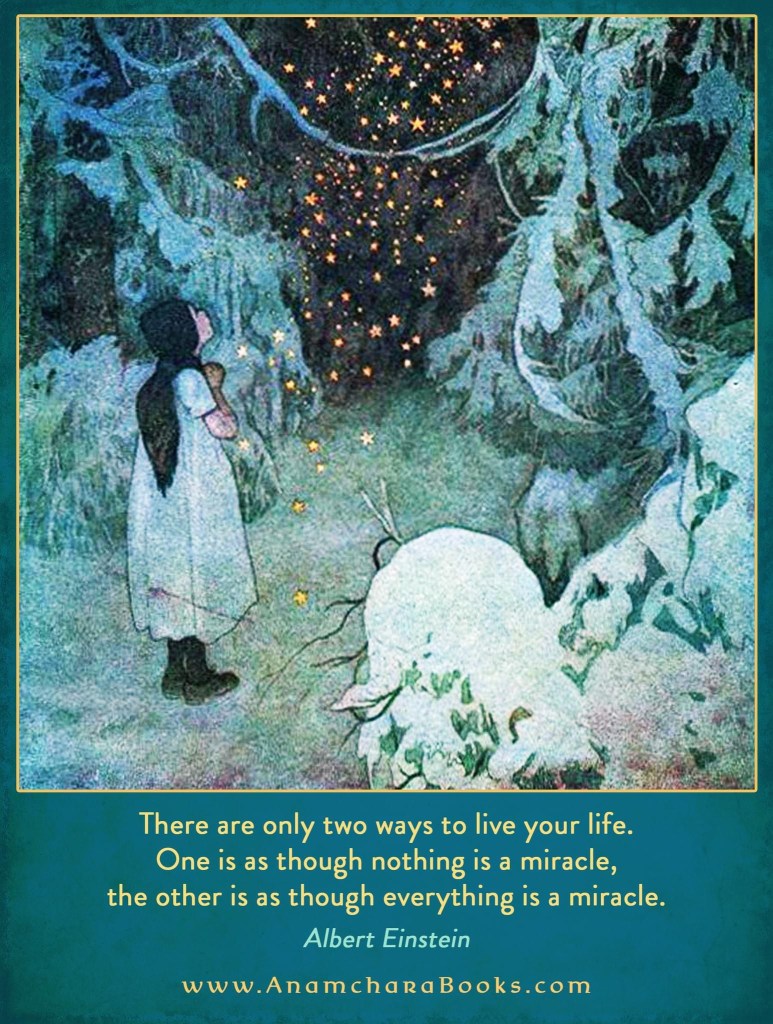
Psalm 25 gives me hope for new life. I lift everything that I am to God, trusting my heart to the Beloved. I am not unworthy. Fear does not control me. My heart is open.
Psalm reflections can be listened to on the Period Pastor Podcast series, Like One who Watches for the Morning. In the podcast I read both the NRSVUE and Nan C. Merrill’s Psalms for Praying in addition to the reflection you see here.
I began writing Psalm reflections during Lent of 2020 shortly after we decided to close the church building, work from home, and worship via zoom. It is a practice I have continued since. Many churches use the Revised Common Lectionary (RLC) that rotates scripture on a three-year cycle (A, B, and C). Starting in Advent 2019, Third Church decided to worship with the texts from Year D, which is still not circulated as are years A, B, and C. Year D was created with the goal of including scriptures that were left out or not used as frequently as others. While we were using Psalms in year D, most other lectionary followers were using Year A. In Advent of 2020 we rejoined those who use the lectionary in year B. Advent of 2021 year C. Advent of 2022 year A. Advent of 2023 year B.
I use the Vanderbilt Divinity Library’s resource for lectionary readings to make text selections.
Year B Psalms
Advent – Transfiguration: 1st Sunday in Advent Psalm 80, 2nd Sunday in Advent Psalm 85, 3rd Sunday in Advent Psalm 126, 4th Sunday in Advent Psalm 89, Christmas Eve or Christmas Day Psalm 96, Psalm 97, Psalm 98, 1st Sunday after Christmas, Psalm 148, New Year’s Day Psalm 8, Epiphany Psalm 72, 1st Sunday after Epiphany Psalm 29, 2nd Sunday after Epiphany Psalm 139, 3rd Sunday after Epiphany Psalm 62, 4th Sunday after Epiphany Psalm 111, 5th Sunday after Epiphany Psalm 147, Transfiguration Sunday (Sunday before Lent) Psalm 50
Lent: Ash Wednesday Psalm 51, 1st Sunday in Lent Psalm 25, 2nd Sunday in Lent Psalm 22, 3rdSunday in Lent Psalm 19, 4th Sunday in Lent Psalm 107, 5th Sunday in Lent Psalm 51 or Psalm 119:9-16, 6th Sunday in Lent (Palm or Passion Sunday) Psalm 118 or 31
Holy Week: Monday Psalm 36, Tuesday Psalm 71, Wednesday Psalm 70, Maundy Thursday Psalm 116, Good Friday Psalm 22, Holy Saturday Psalm 31
Easter: Easter Psalm 118 or 114, 2nd Sunday of Easter Psalm 133, 3rd Sunday of Easter Psalm 4, 4th Sunday of Easter Psalm 23, 5th Sunday of Easter Psalm 22, 6th Sunday of Easter Psalm 98, Ascension Psalm 47 or Psalm 93, 7th Sunday of Easter Psalm 1, Day of Pentecost Psalm 104
Season After Pentecost (Ordinary Time): 1st Sunday after Pentecost (Trinity Sunday) Psalm 29, 2nd Sunday after Pentecost Psalm 139 or Psalm 81, 3rd Sunday after Pentecost Psalm 138 or Psalm 130, 4th Sunday after Pentecost Psalm 20 or Psalm 92, 5th Sunday after Pentecost Psalm 9or Psalm 133 or Psalm 107, 6th Sunday after Pentecost Psalm 130 or Psalm 30, 7th Sunday after Pentecost Psalm 48 or Psalm 123, 8th Sunday after Pentecost Psalm 24 or Psalm 85, 9th Sunday after Pentecost Psalm 89 or Psalm 23, 10th Sunday after Pentecost Psalm 14 or Psalm 145, 11thSunday after Pentecost Psalm 51 or Psalm 78, 12th Sunday after Pentecost Psalm 130 or Psalm 34, 13th Sunday after Pentecost Psalm 111 or Psalm 34, 14th Sunday after Pentecost Psalm 84 or Psalm 34, 15th Sunday after Pentecost Psalm 45 or Psalm 15, 16th Sunday after Pentecost Psalm 125 or Psalm 146, 17th Sunday after Pentecost Psalm 19 or Psalm 116, 18th Sunday after Pentecost Psalm 1 or Psalm 54, 19th Sunday after Pentecost Psalm 124 or Psalm 19, 20th Sunday after Pentecost Psalm 26 or Psalm 8, 21st Sunday after Pentecost Psalm 22 or Psalm 90, 22ndSunday after Pentecost Psalm 104 or Psalm 91, 23rd Sunday after Pentecost Psalm 34 or Psalm 126, 24th Sunday after Pentecost Psalm 146 or 119, 25th Sunday after Pentecost Psalm 127 or Psalm 146, 26th Sunday after Pentecost Psalm 16, 27th Sunday after Pentecost (Christ the King) Psalm 132 or Psalm 93.
Sources and notes:
“Psalm 25 offers a model of prayer and a model of living that are increasingly difficult to appreciate or even to comprehend in the midst of a secular culture that promotes self-actualization, self-sufficiency, and instant gratification. Instead of living for self, the psalmist prays, and that prayer is an offering of his or her life to God (v.1; see Rom 12:12). Instead of depending on self an personal resources, the psalmist depends on God in trust, finding security or refuge in God (vv. 2, 20). Instead of seeking instant gratification, the psalmist is content to what for God (vv. 3, 5, 20) in the confidence that being related to God is the essence of fullness of life (vv. 5, 12-15, 21). For the psalmist, prayer is not a way to pursue what one wants. Rather, it is a means to seek God’s ways (vv. 4-5, 8-9, 12): “They will be done.”” NIB p. 374
“The metaphor portrays prayer as an act in which individuals hold their conscious identity, their life, in hands stretched out to God as a way of saying that their life depends completely and only on the help of God.” Mays p. 124
“The psalm is among those in which first person singular style has a corporate dimension. The prayer is the voice of an individual whose troubles and hopes are those of the whole people. It leads individuals to pray in solidarity with the whole people of God, and the congregation to pray in the unity of an individual identity.” Mays p. 125
“The arrangement of the psalm’s first lines follows the order of the Hebrew alphabet. …. The petitions for the LORD to be the teacher of the one who prays use virtually every available verb in the vocabulary of instruction. …. The device has been used to the poet’s purpose to read a genuine and poignant prayer that gathers up the needs and hopes of the people who live in the midst of opposition to their faith, fearing the dangers of history, aware of their sinfulness, but trusting in the LORD and living out of hope in the LORD’s salvation.” Mays pp. 125-156
“This is one of the psalms that sees clearly that the torah of the LORD, his instruction of those who fear him, is part of God’s saving work and completes the salvation of liberation and justification with sanctification” Mays p. 127
“The psalm taught Israel to seek the grace and salvation given in the torah. It teaches the church to pray fro the Spirit to bring into our lives not only the power an mercy of God but as well a being-taught the way we are to live through the knowledge of God’s ways with us.” Mays p. 127
From: Spong, M. (Ed.). (2020). The words of her mouth: Psalms for the struggle. Cleveland, OH: The Pilgrim Press. A reflection on Psalm 25 by Kentina Washington-Leapheart. She has the word [how] in brackets. You can read her reflection with or without that word. See how it strikes you when read each way: What I Need: O my God, in you I trust; do not let me be put to shame. Psalm 25:2 It has only been since I got “good and grown” that I have learned [how] to ask for what I need. Maturity and a close relationship with disappointment have a way of expediting things. I have learned the steps to the delicate have-not-because-you-ask-not dance. My closed mouth has stood in the way of being fed; Fear and shame has been a bigger obstacle than the ask itself. Lord, show me that embarrassment is not the worst thing that could ever happen to me and that there is no shame in asking boldly. O God, help me to learn [how] to be hopeful for the “yes” and [how] to live with the “no.” O Lord, teach me how to trust.
“The psalmist is clear: Distress is relieved by right-mindedness. It is not so much how much we do that determines the degree of stress it brings. It is the attitude with which we do it that defines its effect on us. It is the spiritual reserve we bring to natural situation s that determines the toll it takes to survive the passing of time gone mad.” Chittister p. 59
Alter Alter, Robert. 2007. The Book of Psalms: A Translation with Commentary New York: W. W. Norton & Company
WBC Allen, Leslie C. 1983. Word Biblical Commentary: Psalms 101-150. Vol. 21. Waco, TX: Word Books, Publisher.
Bonhoeffer, Dietrich. 1974. Psalms: The Prayer Book of the Bible. 8th ed. Minneapolis, MN: Augsburg Press.
Bourgeault, C. (2006). Chanting the psalms: A practical guide Audio Book. New Seeds.
Brueggemann, Walter. 2007. Praying the Psalms: Engaging Scripture and the Life of the Spirit. 2nd ed. Eugene, OR: Cascade.
Brueggemann Brueggemann, Walter. 2014. From Whom No Secrets Are Hid: Introducing the Psalms. Edited by Brent A. Strawn. 1st ed. Louisville, KY: Westminster John Knox Press.
Brueggemann, Walter. Davis Hanskins, Editor. 2022. Our Hearts Wait: Worshiping Through Praise and Lament in the Psalms Westminster John Knox Press, Louisville KY.
Brueggemann, Walter. (2002). Spirituality of the psalms. Augsburg Pub. House.
Brueggemann, Walter. (1984). The Message of the Psalms: A Theological Commentary. Minneapolis: Augsburg.
Chilson, Richard, ed. You Shall Not Want: A Spiritual Journey Based on the Psalms. Ave Maria Press, 2009.
Chittister Chittister, Joan. (2011). Songs of the heart: reflections on the psalms. John Garratt Publishing.
Cudjoe-Wilkes, G., Wilkes, A. J., & Moss, O. (2022). Psalms for black lives: Reflections for the work of Liberation. Upper Room Books.
WBC Craigie, Peter C. 1983. Psalms 1-50–Word Biblical Commentary. Vol. 19. Waco, TX: Word Books.
Creach Creach, Jerome Frederick Davis. 1998. Psalms: Interpretation Bible Studies. Louisville, KY: Westminster John Knox Press.
DAFLER, J. (2021). PSOBRIETY: A journey of recovery through the psalms. Louisville, KY: WESTMINSTER JOHN KNOX.
W de Claisse-Walford, Nancy L. WISDOM COMMENTARY: Psalms Bks. 4-5. Edited by Barbara E. Reid. Vol. 22. Collegeville, MN: Liturgical, 2020.
Green, Barbara. 1997. Like a Tree Planted: An Exploration of Psalms and Parables Through Metaphor. Collegeville, MN: Liturgical Press.
W Hopkins, Denise Dombkowski. WISDOM COMMENTARY: Psalms Bks. 2-3. Edited by Barbara E. Reid. Vol. 21. Collegeville, MN: Liturgical, 2016.
NIB Keck, Leander E. 2015. The New Interpreters Bible Commentary. Vol. 3. Nashville, TN: Abingdon Press.
Lewis, C. S. (2017). Reflections on the Psalms. Harper One, an imprint of Harper Collins Publishers.
Mays Mays, James Luther. 1994. Psalms. Louisville, KY: John Knox Press.
McCann McCann, J. C. (1993). A theological introduction to the book of Psalms: The Psalms as Torah. Nashville, TN: Abingdon Press.
McCann, J. C., & Howell, J. C. 2001. Preaching the Psalms. Nashville, TN: Abingdon Press.
Merrill, N. C. (2020). Psalms for praying an invitation to wholeness (10th Anniversary Edition ed.). London, England: Bloomsbury Publishing.
Miller Miller, Patrick D. 1986. Interpreting the Psalms. Philadelphia, PA: Fortress Press.
Morgan, Michael. 2010. The Psalter for Christian Worship Revised Edition. Westminster John Knox Press.
Schlimm Schlimm, Matthew Richard. 2018. 70 Hebrew Words Every Christian Should Know.Nashville, TN: Abington Press.
Spong Spong, M. (Ed.). (2020). The words of her mouth: Psalms for the struggle. Cleveland, OH: The Pilgrim Press.
WBC Tate, Marvin E. 1990. Word Biblical Commentary: Psalms 51-100. Edited by David Allan. Hubbard and Glenn W. Barker. Vol. 20. Waco, TX: Word.
Weems, Ann. 1995. Psalm of Lament. Westminster John Knox Pres
OTL Weiser, Artur. 1998. Old Testament Library: Psalms. Translated by Herbert Hartwell. 3rd ed. New York, NY: Manchester University Press.

 Period Pastor Pad