We give thanks to You, who are the Source of Love;
whose Light shines forth throughout the universe!
Nan C. Merrill Psalms for Praying
Reflection:
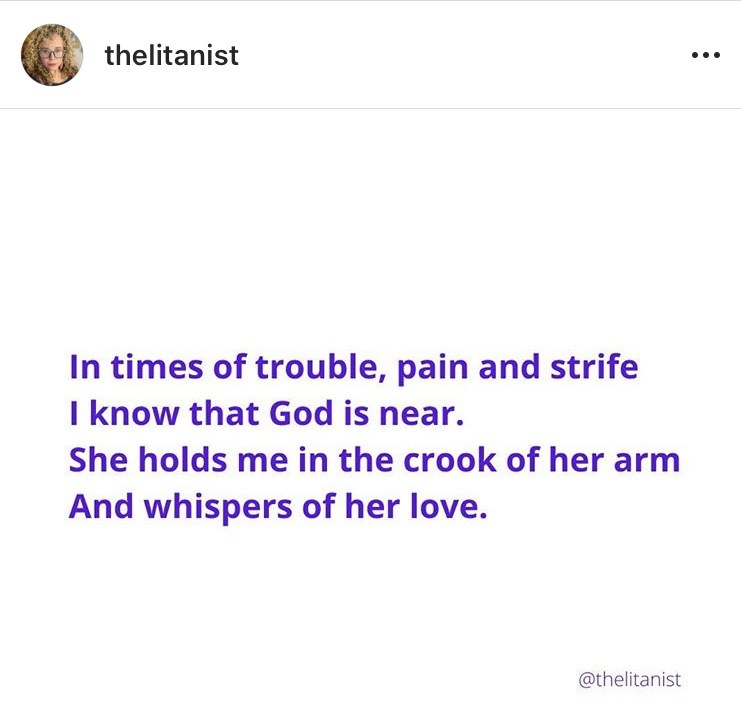
Psalm 107 calls all people together, from every place on earth to praise God for all of the good things God has done and to thank God for being with us in difficult moments. The psalmist recalls these events to remind us that we have a reasons for hope. In times of pain and strife, God is near. I would be comfortable if it was only that, but Psalm 107 says that God is not only near but will respond and deliver us quickly. I don’t know what to do with a psalm like this. On one hand, I know that not everyone who experiences the situations described in the psalm (lost in the desert, in prison, sick, or in a storm at sea) comes of our those situations with their lives, much less, gratitude. On the other hand, there are instances like those described in the psalm that I can not quite explain. These “miracles” are not rational. And as Walter Brueggemann puts it, gratitude is not rational either, he writes, “… a life lived in safe, explanatory categories can never arrive at gratitude because in the safe, explained world there is never anything new beyond our control about which to wonder or to acknowledge.” (From Whom No Secrets are Hid p. 144) If we delude ourselves into thinking we are in control and can neatly explain every moment of our lives, we have no room for awe-filled wonder or deep gratitude. Some things that I can’t explain are terrible, and some things that I can explain are wonderful. But in either case, I believe that God holds me close and whispers of her love. And for that, I am grateful.
Psalm reflections can be listened to on the Period Pastor Podcast series, Like One who Watches for the Morning. In the podcast I read both the NRSVUE and Nan C. Merrill’s Psalms for Praying in addition to the reflection you see here.
I began writing Psalm reflections during Lent of 2020 shortly after we decided to close the church building, work from home, and worship via zoom. It is a practice I have continued since. Many churches use the Revised Common Lectionary (RLC) that rotates scripture on a three-year cycle (A, B, and C). Starting in Advent 2019, Third Church decided to worship with the texts from Year D, which is still not circulated as are years A, B, and C. Year D was created with the goal of including scriptures that were left out or not used as frequently as others. While we were using Psalms in year D, most other lectionary followers were using Year A. In Advent of 2020 we rejoined those who use the lectionary in year B. Advent of 2021 year C. Advent of 2022 year A. Advent of 2023 year B.
I use the Vanderbilt Divinity Library’s resource for lectionary readings to make text selections.
Year B Psalms
Advent – Transfiguration: 1st Sunday in Advent Psalm 80, 2nd Sunday in Advent Psalm 85, 3rdSunday in Advent Psalm 126, 4th Sunday in Advent Psalm 89, Christmas Eve or Christmas Day Psalm 96, Psalm 97, Psalm 98, 1st Sunday after Christmas, Psalm 148, New Year’s Day Psalm 8, Epiphany Psalm 72, 1st Sunday after Epiphany Psalm 29, 2nd Sunday after Epiphany Psalm 139, 3rd Sunday after Epiphany Psalm 62, 4th Sunday after Epiphany Psalm 111, 5th Sunday after Epiphany Psalm 147, Transfiguration Sunday (Sunday before Lent)Psalm 50
Lent: Ash Wednesday Psalm 51, 1st Sunday in Lent Psalm 25, 2nd Sunday in Lent Psalm 22, 3rd Sunday in Lent Psalm 19, 4th Sunday in Lent Psalm 107, 5th Sunday in Lent Psalm 51 or Psalm 119:9-16, 6th Sunday in Lent (Palm or Passion Sunday) Psalm 118 or 31
Holy Week: Monday Psalm 36, Tuesday Psalm 71, Wednesday Psalm 70, Maundy Thursday Psalm 116, Good Friday Psalm 22, Holy Saturday Psalm 31
Easter: Easter Psalm 118 or 114, 2nd Sunday of Easter Psalm 133, 3rd Sunday of Easter Psalm 4, 4th Sunday of Easter Psalm 23, 5th Sunday of Easter Psalm 22, 6th Sunday of Easter Psalm 98, Ascension Psalm 47 or Psalm 93, 7th Sunday of Easter Psalm 1, Day of Pentecost Psalm 104
Season After Pentecost (Ordinary Time): 1st Sunday after Pentecost (Trinity Sunday) Psalm 29, 2nd Sunday after Pentecost Psalm 139 or Psalm 81, 3rd Sunday after Pentecost Psalm 138 or Psalm 130, 4th Sunday after Pentecost Psalm 20 or Psalm 92, 5th Sunday after Pentecost Psalm 9or Psalm 133 or Psalm 107, 6th Sunday after Pentecost Psalm 130 or Psalm 30, 7th Sunday after Pentecost Psalm 48 or Psalm 123, 8th Sunday after Pentecost Psalm 24 or Psalm 85, 9th Sunday after Pentecost Psalm 89 or Psalm 23, 10th Sunday after Pentecost Psalm 14 or Psalm 145, 11th Sunday after Pentecost Psalm 51 or Psalm 78, 12th Sunday after Pentecost Psalm 130 or Psalm 34, 13th Sunday after Pentecost Psalm 111 or Psalm 34, 14th Sunday after Pentecost Psalm 84 or Psalm 34, 15th Sunday after Pentecost Psalm 45 or Psalm 15, 16th Sunday after Pentecost Psalm 125 or Psalm 146, 17th Sunday after Pentecost Psalm 19 or Psalm 116, 18th Sunday after Pentecost Psalm 1 or Psalm 54, 19th Sunday after Pentecost Psalm 124 or Psalm 19, 20th Sunday after Pentecost Psalm 26 or Psalm 8, 21st Sunday after Pentecost Psalm 22 or Psalm 90, 22nd Sunday after Pentecost Psalm 104 or Psalm 91, 23rd Sunday after Pentecost Psalm 34 or Psalm 126, 24th Sunday after Pentecost Psalm 146 or 119, 25th Sunday after Pentecost Psalm 127 or Psalm 146, 26th Sunday after Pentecost Psalm 16, 27th Sunday after Pentecost (Christ the King) Psalm 132 or Psalm 93.
Sources and notes:
“Psalm 107, a community hymn of praise, opens book 5 of the Psalter. Its opening words, in verses 1-3, voiced in answer to the plea of Psalm 106:47 to “save us and gather us,” suggest that the two psalms, though in different books of the Psalter, were purposely juxtaposed. In addition, Psalm 107 continues the theme of “land” addressed in Psalms 105 and 106. Book 5 moves readers or hearers from the exilic to the post exilic period of ancient Israel’s life, but the clear ties between Psalms 105 and 106 and Psalm 107 evince a continuity in the life of Israel from the exile in Babylon to the return to the land.” W p. 83
“Psalm 107 is a song that praises the loyal love (hesed) of the LORD shown in marvelous works of deliverance performed in answer to the cry o those in distress.” Mays p. 344
“Each stand is shaped in a similar way: an account of their adversity, their cry to the LORD, and his deliverance; then a summons to praise the LORD for his hesed.” Mays p. 344
Two patterns unite the psalm. The first is that of the imperative hymn in verse 1 with its summons to thankful praise supported by a statement of the basis and content of the praise (God’s goodness, loyal love). …. The imperative is both a call to praise and a way to praise. All the redeemed are to hear the call and join in the song to exalt the redeemer whose loyal love has saved them. The second pattern is that of the narrative of deliverance from the prayer of thanksgiving. Its report of past trouble, of the cry to the LORD and of the LORD’s deliverance, is used to identify each of the four groups of the redeemed. …. This second pattern maintains the focus on what kind of praise is intended–not just the exaltation of what God is like and typically does–but thanksgiving for what he has specifically done for those who are gathered.” Mays p. 345
“Hesed is the goodness of the LORD as redeemer. It is at once an everlasting attribute of the character of God and occasional in its manifestation in saving actions.” Mays p. 346
“Individual salvation and corporate salvation are held together as the wonderful work of the LORD’s hesed.” Mays p. 347
“In Psalm 107 the hesed of the LORD is a matter of his relation to those who cry out to him. No other basis is mentioned than the goodness of he LORD and the cry of those in trouble.” Mays p. 348
“Four groups of people appear in the first thirty-two verses of Psalm 107, representing , perhaps, the “redeemed of the LORD” from the four points of the compass named in verse 3.” W p. 83
“The psalm celebrates the deliverance of God both in the lives of individuals and in the life of the religious community. It celebrates, too, divine forgiveness which brings liberation and renewal of life to sinful men. As it praises, it intends also to teach concerning the way of folly and the way of wisdom. Divine providence concerning both the overthrown of tyrants and the blessing of the faithful is that God rules in the lives of men and works wonders of love and power.” WBC
“we are taught to be self-made persons–no need to cry to God for help, and consequently no need to thank God for anything. Seldom, if ever, does it occur to us that human life depends on God. Thus the message of Psalm 107 is simple but radical: There is ultimately no such thing as self-sufficiency, for human life depends on God.” NIB p. 610
“In Psalm 107, we read that the LORD makes it possible for the hungry to dwell safely in the land and establish a city; to sow fields, plant vineyards, and gather a harvest; and to have children and increase their cattle (vv. 36-38). In addition, the Lord pours contempt on rulers who oppress the people (vv. 39-40). The actions associated with YHWH in these verses are the actions of the “ideal sovereign” in ancient Israel.”
“In the ancient Near East one’s ability to live in security and provide for self and family required community. A strong leader who could crush the oppressor, ensure abundance of grain, defend the poor and needy, and such was essential to community life. In their post exilic situation the people of Israel were allowed to return to Jerusalem, to rebuild the temple, and to resume their worship practices, but they were vassals to the Persian government and could not have their own sovereign. Psalm 107 assures them that YHWH can and will be their source of security and provision in the post exilic period.” W p. 87
“The importance of land, a place to call one’s owns paramount in the words of Psalm 105, 106, and 107; it is a major concern of much of the Hebrew Bible text, and it is a significant issue in the twenty-first-century world. Every person needs a sense of belonging, of roundedness, of knowing where “home” is. For refugees, immigrants, those subject to forced migration, and those abandoned by their families that sense and knowledge of home is shattered. Such people will need a new sense of belonging, of knowing “home,” and those who know where “home” is are called on to embrace those who do not and help them find a sense of belonging, thereby allowing the to develop a story, their new “enduring literature”.” W p. 88
“The poem begins with a summons to give thanks. the speaker assumes that the “redeemed” and the “gathered” share his gratitude to God and will want to join in expression of it (vv. 1-3). The body of the psalm consist of four case studies in rescue that invite and evoke gratitude:
- those lost in the desert (vv. 4-9);
- those in prison (vv. 10-16);
- those sick (vv. 17-22);
- those at sea in a storm (vv. 23-32)
The pattern of the narrative is highly stylized. In each case, the context of trouble is described in hyperbolic language. The purpose of this kind of rhetoric is to make clear that the subjects expressing this trouble were complete helpless o their own. In each case, however, the extreme circumstances did not lead to despair. They led, rather, to prayers of petition addressed to YHWH as “cry”. The “cry” is not elaborated on, but it clearly consisted of a complaint and a petition whereby God was moved to act. And in each case, we are told, God delivered! That divine response, according to the psalmist’s rhetoric, is immediate and complete. Without delay, God acted decisively to extricate the petitioners from desperate circumstance.
In each case, the deliverance wrought by YHWH evoked thanks. This thanks was in response to God’s covenantal reliability (steadfast love) that had been exhibited. In each instance, it is affirmed to Israel that God is reliable, responsive, and capable of restorative transformation. The theological claims make here for YHWH are very broad, but the evidence is specific and remarkable:
- rescue from desert abandonment;
- emancipation from prison, even if there for rebelling;
- healing of immobilizing illness;
- stilling of a storm
In three of the four cases, there is an invitation to thank God for the prompt and effective rescue (vv. 8, 15, 31).” Brueggemann p. 142
In the third case (vv. 21-22) there is a variation that includes a thanksgiving sacrifice. (I’m paraphrasing Brueggemann). He discusses animal sacrifice for a bit and brings in Micah 6:8 stating that “the proper offering is convenantal responsiveness expressed as neighbor love.” Brueggemann p. 143
“Micah 6:8 moves past material offerings to relational realities that are even more demanding. But the point is the same: Gratitude entails serious, responsive engagement that disrupts “business as usual”.” Brueggemann p. 143
“There is nothing “matter of fact” about these wondrous experience that evoke gratitude. What evokes gratitude is an act outside all normal categories of cause and effect. Because that decisive turn of circumstance defines all reasonableness, gratitude, too, in similar manner, s beyond reasonableness. There is no quid pro quo in gratitude. It is evoked by wonder and expressed in generosity to the point of extravagance. Israel cannot thank YHWH enough! Or do enough in thanks for what YHWH has done!” Brueggemann pp. 143-144
“This outrageously simple speech thanking God for “miracles” violated our rationality: we do not want to think about an “interventionist” God who acts directly and decisively, if only because such a claim violates our sense of a scientifically reasonable and “explainable” world. this kin d of psalmic rhetoric that defines “reason” is at best and embarrassment. It is an embarrassment whenever something happens in our experience that pushes us beyond our explanatory control. When explanatory categories are seen to be inadequate, Israel bursts out in gratitude, no anger embarrassed, with rhetoric that marches and is appropriate to the “wonder” that has been given.” Brueggemann p. 144
“The final declaration of Psalm 107 once again witnesses to God’s steadfast love and invites “the wise” to ponder it (v. 43). ”The wise” are those who know that more is going on in our lives than can be contained within our explanatory categories. It is the foolish, wise in their own eyes and by their own eyes and by their own lights, who think everything can be “explained.” But, as it happens, such explanatory “wisdom” is ultimately foolish, making the rhetoric of gratitude indispensable for the truth of our lives. We read to observe carefully that a life lived in safe, explanatory categories can never arrive at gratitude because in the safe, explained world there is ever anything new beyond our control about which to wonder or to acknowledge.” Brueggemann p. 144
Alter Alter, Robert. 2007. The Book of Psalms: A Translation with Commentary New York: W. W. Norton & Company
WBC Allen, Leslie C. 1983. Word Biblical Commentary: Psalms 101-150. Vol. 21. Waco, TX: Word Books, Publisher.
Bonhoeffer, Dietrich. 1974. Psalms: The Prayer Book of the Bible. 8th ed. Minneapolis, MN: Augsburg Press.
Bourgeault, C. (2006). Chanting the psalms: A practical guide Audio Book. New Seeds.
Brueggemann, Walter. 2007. Praying the Psalms: Engaging Scripture and the Life of the Spirit. 2nd ed. Eugene, OR: Cascade.
Brueggemann Brueggemann, Walter. 2014. From Whom No Secrets Are Hid: Introducing the Psalms. Edited by Brent A. Strawn. 1st ed. Louisville, KY: Westminster John Knox Press.
Brueggemann, Walter. Davis Hanskins, Editor. 2022. Our Hearts Wait: Worshiping Through Praise and Lament in the Psalms Westminster John Knox Press, Louisville KY.
Brueggemann, Walter. (2002). Spirituality of the psalms. Augsburg Pub. House.
Brueggemann, Walter. (1984). The Message of the Psalms: A Theological Commentary. Minneapolis: Augsburg.
Chilson, Richard, ed. You Shall Not Want: A Spiritual Journey Based on the Psalms. Ave Maria Press, 2009.
Chittister Chittister, Joan. (2011). Songs of the heart: reflections on the psalms. John Garratt Publishing.
Cudjoe-Wilkes, G., Wilkes, A. J., & Moss, O. (2022). Psalms for black lives: Reflections for the work of Liberation. Upper Room Books.
WBC Craigie, Peter C. 1983. Psalms 1-50–Word Biblical Commentary. Vol. 19. Waco, TX: Word Books.
Creach Creach, Jerome Frederick Davis. 1998. Psalms: Interpretation Bible Studies. Louisville, KY: Westminster John Knox Press.
DAFLER, J. (2021). PSOBRIETY: A journey of recovery through the psalms. Louisville, KY: WESTMINSTER JOHN KNOX.
W de Claisse-Walford, Nancy L. WISDOM COMMENTARY: Psalms Bks. 4-5. Edited by Barbara E. Reid. Vol. 22. Collegeville, MN: Liturgical, 2020.
Green, Barbara. 1997. Like a Tree Planted: An Exploration of Psalms and Parables Through Metaphor. Collegeville, MN: Liturgical Press.
W Hopkins, Denise Dombkowski. WISDOM COMMENTARY: Psalms Bks. 2-3. Edited by Barbara E. Reid. Vol. 21. Collegeville, MN: Liturgical, 2016.
NIB Keck, Leander E. 2015. The New Interpreters Bible Commentary. Vol. 3. Nashville, TN: Abingdon Press.
Lewis, C. S. (2017). Reflections on the Psalms. Harper One, an imprint of Harper Collins Publishers.
Mays Mays, James Luther. 1994. Psalms. Louisville, KY: John Knox Press.
McCann McCann, J. C. (1993). A theological introduction to the book of Psalms: The Psalms as Torah. Nashville, TN: Abingdon Press.
McCann, J. C., & Howell, J. C. 2001. Preaching the Psalms. Nashville, TN: Abingdon Press.
Merrill, N. C. (2020). Psalms for praying an invitation to wholeness (10th Anniversary Edition ed.). London, England: Bloomsbury Publishing.
Miller Miller, Patrick D. 1986. Interpreting the Psalms. Philadelphia, PA: Fortress Press.
Morgan, Michael. 2010. The Psalter for Christian Worship Revised Edition. Westminster John Knox Press.
Schlimm Schlimm, Matthew Richard. 2018. 70 Hebrew Words Every Christian Should Know.Nashville, TN: Abington Press.
Spong Spong, M. (Ed.). (2020). The words of her mouth: Psalms for the struggle. Cleveland, OH: The Pilgrim Press.
WBC Tate, Marvin E. 1990. Word Biblical Commentary: Psalms 51-100. Edited by David Allan. Hubbard and Glenn W. Barker. Vol. 20. Waco, TX: Word.
Weems, Ann. 1995. Psalm of Lament. Westminster John Knox Pres
OTL Weiser, Artur. 1998. Old Testament Library: Psalms. Translated by Herbert Hartwell. 3rd ed. New York, NY: Manchester University Press.

 Period Pastor Pad