Eternal Listener, give heed to your people,
You, who are our Guide and our Light!
You, who dwell amidst the angels,
shine forth into the heart of all nations!
Enliven your people with compassion that peace and justice might flourish.
Restore us, O Holy One; let your face shine upon us, teach us to love!
Gentle Teacher, help us to turn to You in prayer,
fasting from our negative thoughts.
In your steadfast Love, You weep with our tears,
tears that rise from fear, doubt, and illusion.
You uphold us when we feel the sting of pride,
when our anxiety threatens to paralyze us.
Restore us, O Holy One; let your face shine upon us, teach us to love!
You companion us through the wilderness, through the shadows created by fear.
You plan your Seed into each heart.
You uproot the weeds of our sin,
You cultivate the soil of our goodness.
Truly, in You, we become like a tiny acorn, holding the secret of a mighty oak.
You nourish us with the food of Love, with streams of Living Water.
Be our strength as we break down walls hat separate and divide;
let not fear pluck away the gifts we would share.
Roll away the stones that become obstacles to growth,
to producing a bountiful harvest.
Receive our gratitude, O Heart of all hearts!
Look upon us and see what Love can do; rejoice in the new birth You create!
Be glad where your Seed has found fertile soil.
How much more the returns of one healthy plant
than ten thousand useless weeds!
May those who have borne the fruit of love radiate your Spirit into the world!
May we always walk and co-create with You;
receive the gratitude of our hearts, as we share in the Great Plan!
Restore us, O Holy One!
Let your face shine upon us, teach us to love!
Nan C. Merrill Psalms for Praying
Reflection:
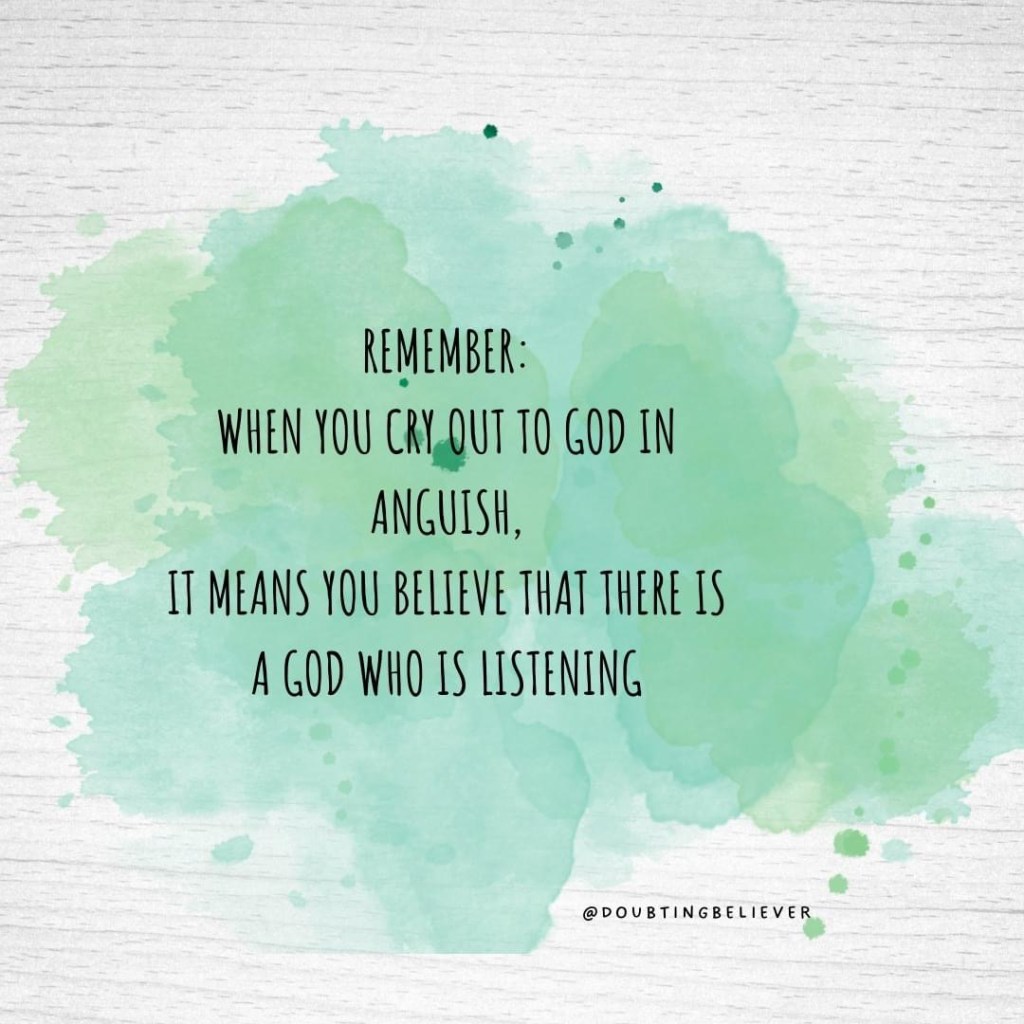
The writer of psalm 80 wants what the writer of psalm 23 has; The Good Shepherd who leads, guides, and restores life. The psalmist believes restoration of relationship with God, nature, and neighbor is possible even when the circumstances would seem otherwise. Psalm 80 is a lament, but it is also a psalm of faith and hope. When we cry out to God and lament or mourn or cry about our unpleasant circumstance, it means that we still believe in a God who will intervene for us. We hope for God’s gracious willingness to repent (see v. 14), that God will return to the work of bringing life to humanity. It is faith in God’s tender loving care that we have received before and we long for again.
The shepherd metaphor is used five times (23:1; 28:9; 49:14; 78:71; and 80:1) in the psalms and Psalm 23 is the only time it is not used as a complaint or lament. In Psalm 80, the psalmist is asking the Shepherd to listen to the cries of the people and save us. The psalmist feels that God is at fault for not taking care of the vineyard (which is the only occasion the vineyard metaphor is used to accuse God of not caring for the vine). Psalm 80 asks why God is letting all of God’s work be ruined.
In psalm 80, the faithful long for God to see what’s happening, to hear our cries, and most importantly to enter our lives anew to bring healing and restoration. We are waiting, hoping, and believing that God will return to lead, guide, and restore our lives. The psalms before and after psalm 80 identify people’s sin as the reason we feel separated from God. But, psalm 80 more than implies that God is the one not present or not actively engaged in relationship. When we feel distant from God, is it God who abandoned us in our time of need or did we loose connection with God? The Psalms say yes. In my experience, sometimes I disengaged with the divine, but sometimes it does feel as though God is the one who stepped away and I’m glad that the psalms express both of these view points. Either way, there is hope that the relationship will be restored and made new.
Perhaps we are in a season of waiting and listening; and most of all hoping that we will see God in our midst just as we have before. We are hoping for what we have already experienced and we know we will experience God’s presence again.
Check out other psalm reflections in the links below or find more of my writing published in Presbyterian Outlook or listen to my experiments in podcasting on the Period Pastor Podcast. Follow me @periodpastor
I began writing Psalm reflections during Lent of 2020. Shortly after, we decided to close the church building, work from home, and worship via zoom. Many churches use the Revised Common Lectionary (RLC) that rotates scripture on a three-year cycle (A, B, and C). Starting in Advent 2019, the church decided to worship with the texts from Year D, which is still not circulated as are years A, B, and C. Year D was created with the goal of including scriptures that were left out or not used as frequently as others. While we were using Psalms in year D, most other lectionary followers were using Year A. In Advent of 2020 we rejoined those who use the lectionary in year B. Advent of 2021 year C. When we returned to in person worship, we took the psalm reflections out of the order of worship. I continued to write them for the blog. Advent of 2022 year A. I left church work in July of 2023 but continued the practice of writing psalm reflections. Advent of 2023 year B.
I use the Vanderbilt Divinity Library’s resource for lectionary readings to make text selections.
1st Sunday in Advent Psalm 25, 2nd Sunday in Advent instead of a Psalm the lectionary gives Luke 1:68-79, 3rd Sunday in Advent instead of a Psalm the lectionary gives Isaiah 12:2-6, 4th Sunday in Advent Luke 1:46b-55 or Psalm 80, Christmas Eve or Christmas Day Psalm 96, Psalm 97, Psalm 98, 1st Sunday after Christmas, Psalm 148, New Year’s Day Psalm 8, 2nd Sunday after Christmas Psalm 147, Epiphany Psalm 72, 1st Sunday after Epiphany Psalm 29, 2nd Sunday after Epiphany Psalm 36, 3rd Sunday after Epiphany Psalm 19, 4th Sunday after Epiphany Psalm 71, 5th Sunday after Epiphany Psalm 138, 6th Sunday after Epiphany Psalm 1, 7th Sunday after Epiphany Psalm 37, Transfiguration Sunday (Sunday before Lent) Psalm 99
Lent: Ash Wednesday Psalm 51, 1st Sunday in Lent Psalm 91, 2nd Sunday in Lent Psalm 27, 3rd Sunday in Lent Psalm 63, 4th Sunday in Lent Psalm 32, 5th Sunday in Lent Psalm 126, 6th Sunday in Lent (Palm or Passion Sunday) Psalm 118 or 31
Easter: Easter Psalm 118 or Psalm 114, 2nd Sunday of Easter Psalm 118 or Psalm 150, 3rd Sunday of Easter Psalm 30, 4thSunday of Easter Psalm 23, 5th Sunday of Easter Psalm 148, 6th Sunday of Easter Psalm 67, Ascension Psalm 47 or Psalm 93, 7th Sunday of Easter Psalm 97, Day of Pentecost Psalm 104
Season After Pentecost (Ordinary Time): 1st Sunday after Pentecost (Trinity Sunday) Psalm 8, 2nd Sunday after Pentecost Psalm 42 and Psalm 43 or Psalm 22, 3rd Sunday after Pentecost Psalm 77 or Psalm 16, 4th Sunday after Pentecost Psalm 30 or Psalm 66, 5th Sunday after Pentecost Psalm 82 or Psalm 25, 6th Sunday after Pentecost Psalm 52 or Psalm 15, 7thSunday after Pentecost Psalm 85 or Psalm 138, 8th Sunday after Pentecost Psalm 107 or Psalm 49, 9th Sunday after Pentecost Psalm 50 or Psalm 33, 10th Sunday after Pentecost Psalm 80 or Psalm 82, 11th Sunday after Pentecost Psalm 71or Psalm 103, 12th Sunday after Pentecost Psalm 81 or Psalm 112, 13th Sunday after Pentecost Psalm 139 or Psalm 1, 14thSunday after Pentecost Psalm 14 or Psalm 51, 15th Sunday after Pentecost Psalm 79 or Psalm 113, 16th Sunday after Pentecost Psalm 91 or Psalm 146, 17th Sunday after Pentecost Psalm 137 or Psalm 37, 18th Sunday after Pentecost Psalm 66 or Psalm 111, 19th Sunday after Pentecost Psalm 119 or Psalm 121, 20th Sunday after Pentecost Psalm 65 or Psalm 84, 21st Sunday after Pentecost Psalm 119 or Psalm 32, 22nd Sunday after Pentecost Psalm 145 or Psalm 98 or Psalm 17, 23rdSunday after Pentecost Psalm 98, 24th Sunday after Pentecost Psalm 46.
Sources and notes:
“Shepherd is the title for God as king who leads, protects, and provides for his people… God of hosts, the title used in the refrain and elsewhere, is the name particularly associated with the ark” Mays p. 262
“Like the flock, the vine and vineyard represented a basic and familiar possession that was owned, cared for, and prized as a primary good of life. Here God is portrayed as the owner who secured the vine, planted it, and cleared space for its growth.” Mays p. 263
“The psalm’s parable introduces the anguish and bewilderment of the people over the contrast and contradiction between what God began and what he now has done, leaving it exposed for strangers to gather the fruit of the vine and for wild animals to ravage the vine (vv. 12-14). Mays p. 263
“The prayer concentrates with a single focus on one thing and one thing alone–the diving Thou. It addresses the God identified in the invocations as the actor in the congregation’s experience of salvation and suffering and seeks God’s resumption of his earlier work as the means of restoration. The psalm is a witness that the congregation must in the long last and in its extremity look away from its own repentance to a kind of repentance in God — his turning away from wrath and retuning to grace. The trust that God will in the end do so is based on nothing in the congregation. It is based on the self-understanding that the congregation is the work of God, there in existence, wholly and only as the act of God. Believing that, the congregation can hope that God will not abandon what he has begun.” Mays pp. 264-265
The title Shepherd appears in the Psalms only in psalms 23 and 80. “The contrast in the mood and situation of the speaker in this psalm with that of the speaker in Ps 23 is striking. The protection and restored life longed for in Ps 80 is a reality in Psalm 23: there the Shepherd “leads”, “restores”, life, and “guides” the speaker in safe paths. The verbs “lead and “guide” differ from those in Ps 80, but the meaning is the same. The speaker in Ps 23 has received what the speaker and the congregation in Ps 80 want.” WBC p. 316
“…because the people trusted God to transform their circumstances and restore them, this act of faith was also an act of hope” NIB p. 526
“The conviction that one confronts God in every circumstance, both good and bad, lies at the heart of the ancient Israelite prayers for help.” NIB p. 526
“Psalm 80 is traditionally associated with the season of Advent, the celebration of God’s coming presence. There is no better way to express belief in the reality of God’s sovereignty than to address God out of our individual and corporate afflictions and to continue looking to God as the only source of light and life. ” NIB p. 526
“Advent is a season of preparation and repentance, and lest we be tempted to focus on our own efforts in these matters, Psalm 80 proclaims that our lives ultimately depend on God’s gracious willingness to repent (see v. 14). So does the birth, life, death, and resurrection of Jesus. What human repentance amounts to, at best, is turning to accept the loving embrace of ht eGod who gives us life. As Jesus indicated in his extension of he image of he vine, “apart from me you can to do nothing” (John15:5 NRSV; see also Phil 1:6).” NIB p. 526
“Standing in dialogical tension with the psalms that come before and after it, Psalm 80 claims that God is responsible for the people’s suffering. It does this by reversing traditional vine imagery that both expresses God’s commitment to Israel and points out Israel’s failure to reciprocated that commitment (see Isa 5:1-7; Her 2:21; 6:9; Ezek 17:1-10; 19:10-14; Has 10:1; 14:7).” W p. 289
“The psalmist asks God directly why (v.12a) a careful gardener would put so much effort into transplanting the vine from Egypt (v. 8, a reference to the exodus) only to abandon it to destruction (vv. 12b-13). This question turns the vine metaphor on its head. “In fact, Psalm 80 is the only case in the Old Testament/Hebrew Bible where this vine imagery is used for the purpose of critiquing God’s unfaithfulness. In this way the vine metaphor functions as a motivation to support the plea for God to intervene.” W pp. 289-290
“The shepherd metaphor is used five times (23:1; 28:9; 49:14; 78:71; and 80:1) in the psalms and Psalm 23 is the only time it is not used as a complaint or lament.” From my notes on the Psalms retreat in October 2023 by Paul Lang
Alter, Robert. 2007. The Book of Psalms: A Translation with Commentary New York: W. W. Norton & Company
WBC Allen, Leslie C. 1983. Word Biblical Commentary: Psalms 101-150. Vol. 21. Waco, TX: Word Books, Publisher.
Bonhoeffer, Dietrich. 1974. Psalms: The Prayer Book of the Bible. 8th ed. Minneapolis, MN: Augsburg Press.
Bourgeault, C. (2006). Chanting the psalms: A practical guide Audio Book. New Seeds.
Brueggemann, Walter. 2007. Praying the Psalms: Engaging Scripture and the Life of the Spirit. 2nd ed. Eugene, OR: Cascade.
Brueggemann, Walter. 2014. From Whom No Secrets Are Hid: Introducing the Psalms. Edited by Brent A. Strawn. 1st ed. Louisville, KY: Westminster John Knox Press.
Brueggemann, Walter. Davis Hanskins, Editor. 2022. Our Hearts Wait: Worshiping Through Praise and Lament in the Psalms Westminster John Knox Press, Louisville KY.
Brueggemann, Walter. (2002). Spirituality of the psalms. Augsburg Pub. House.
Brueggemann, Walter. (1984). The Message of the Psalms: A Theological Commentary. Minneapolis: Augsburg.
Chilson, Richard, ed. You Shall Not Want: A Spiritual Journey Based on the Psalms. Ave Maria Press, 2009.
Chittister, Joan. (2011). Songs of the heart: reflections on the psalms. John Garratt Publishing.
Cudjoe-Wilkes, G., Wilkes, A. J., & Moss, O. (2022). Psalms for black lives: Reflections for the work of Liberation. Upper Room Books.
WBC Craigie, Peter C. 1983. Psalms 1-50–Word Biblical Commentary. Vol. 19. Waco, TX: Word Books.
Creach, Jerome Frederick Davis. 1998. Psalms: Interpretation Bible Studies. Louisville, KY: Westminster John Knox Press.
DAFLER, J. (2021). PSOBRIETY: A journey of recovery through the psalms. Louisville, KY: WESTMINSTER JOHN KNOX.
W de Claisse-Walford, Nancy L. WISDOM COMMENTARY: Psalms Bks. 4-5. Edited by Barbara E. Reid. Vol. 22. Collegeville, MN: Liturgical, 2020.
Green, Barbara. 1997. Like a Tree Planted: An Exploration of Psalms and Parables Through Metaphor. Collegeville, MN: Liturgical Press.
W Hopkins, Denise Dombkowski. WISDOM COMMENTARY: Psalms Bks. 2-3. Edited by Barbara E. Reid. Vol. 21. Collegeville, MN: Liturgical, 2016.
NIB Keck, Leander E. 2015. The New Interpreters Bible Commentary. Vol. 3. Nashville, TN: Abingdon Press.
Lewis, C. S. (2017). Reflections on the Psalms. Harper One, an imprint of Harper Collins Publishers.
Mays, James Luther. 1994. Psalms. Louisville, KY: John Knox Press.
McCann, J. C. (1993). A theological introduction to the book of Psalms: The Psalms as Torah. Nashville, TN: Abingdon Press.
McCann, J. C., & Howell, J. C. 2001. Preaching the Psalms. Nashville, TN: Abingdon Press.
Merrill, N. C. (2020). Psalms for praying an invitation to wholeness (10th Anniversary Edition ed.). London, England: Bloomsbury Publishing.
Miller, Patrick D. 1986. Interpreting the Psalms. Philadelphia, PA: Fortress Press.
Morgan, Michael. 2010. The Psalter for Christian Worship Revised Edition. Westminster John Knox Press.
Schlimm, Matthew Richard. 2018. 70 Hebrew Words Every Christian Should Know. Nashville, TN: Abington Press.
Spong, M. (Ed.). (2020). The words of her mouth: Psalms for the struggle. Cleveland, OH: The Pilgrim Press.
WBC Tate, Marvin E. 1990. Word Biblical Commentary: Psalms 51-100. Edited by David Allan. Hubbard and Glenn W. Barker. Vol. 20. Waco, TX: Word.
Weems, Ann. 1995. Psalm of Lament. Westminster John Knox Pres
OTL Weiser, Artur. 1998. Old Testament Library: Psalms. Translated by Herbert Hartwell. 3rd ed. New York, NY: Manchester University Press.

 Period Pastor Pad