Give praise to the Beloved, O heavenly hosts,
Sing of Love’s glory and strength.
Exalt the glory of Love’s Name; Adore the Beloved in holy splendor.
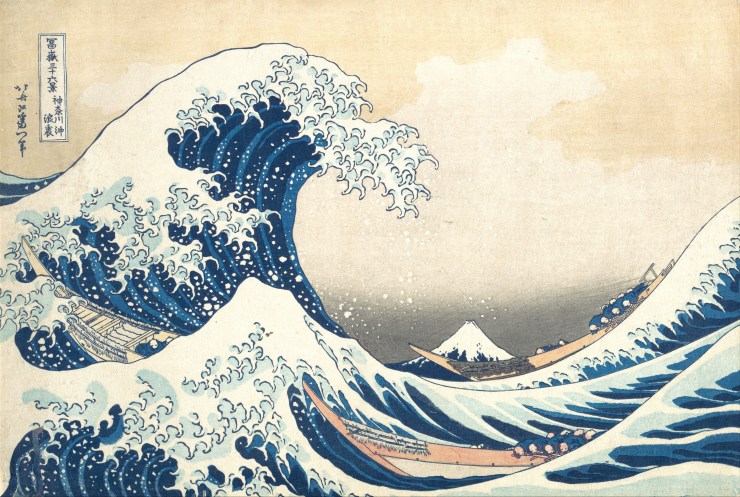
The voice of the Beloved is upon the waters;
Love’s voice echoes over the oceans and seas.
The voice of Love is powerful, majestic is the heart of Love.
The mercy of the Beloved breaks the bonds of oppression,
shatters the chains of injustice.
Love invites all to the dance of freedom, to sing the Beloved’s song of truth.
The voice of Love strikes with fire upon the hearts of stone.
The voice of Love uproots the thorns of fear,
Love uproots fear in every open heart.
The voice of Love is heard in every storm, and strips the ego bare;
And in the heart’s chapel, all cry, “Peace and Glory forever!”
The Beloved lives in our hearts; Love dwells with us forever.
You who awaken to the Light of universal Oneness will know the blessed joy
of serving in the great Work of Love.
Nan C. Merrill Psalms for Praying
Reflection:
Psalm 29 is one of the oldest psalms and can be traced back to the Canaanite religion as a song about Baal. The psalmist simply replaced Baal with YHWH. We could talk about religion’s role in colonization when we talk about how this enthronement psalm came to be in our psalter. It’s a little icky. The change from Baal to YHWH happened because the psalmist was showing the Israelites that they didn’t need to worship other gods (like Baal) because the God of Israel was more than capable of creating order out of chaos in all things, including the natural world (which was thought to be Baal’s domain, especially storms and rain as they were associated with growing crops and fertility). The psalmist is saying YHWH is God not Baal. And, some Christians may say that the entire Hebrew Bible is actually pointing to Jesus, which can also feel icky, especially in inter-faith work.
Christians use this psalm for the Sunday in which Christians celebrate the Baptism of Jesus (a water event) when the voice of God is heard saying, ‘this is my son’. The Holy Spirit descended like a dove on Jesus in the moment the voice of God was heard. So, Christians didn’t exactly replace YHWH (who replaced Baal in Psalm 29) but shifted to understand a triune God (traditionally, Father, Son, and Holy Spirit). For Christians, combining this psalm with Jesus’ baptism is a way of solidifying the belief that Jesus is God’s son and he is in control over the waters of chaos.
To be honest, a lot of the sources I’ve consulted have a ‘my god is the best god’ feel to them and that feels icky to me because I value relationships with people who believe differently than me. I don’t think about religion as right or wrong, but as an expression of the individual’s relationship to the divine. When I come across the icky stuff in the tradition I participate in, I try to look for what is good and true about God that all of us can hold onto (no matter which God we may think this psalm is about). For me, that means seeing in Psalm 29 the God who chooses to use power to strengthen the weak and to bring peace. I love Nan Merrill’s versions of the psalms because of her use of inclusive language and the way she gets at the heart of the meaning of the psalm. In Psalm 29, she captures the power of God’s love, which works to free all from oppression and injustice, and invites all of us to join in that great work of Love. That’s the God I want to be connected with. My desire is to participate in the work of Love.
Check out other psalm reflections in the links below or find more of my writing published in Presbyterian Outlook or listen to my experiments in podcasting on the Period Pastor Podcast. Follow me @periodpastor
I began writing Psalm reflections during Lent of 2020. Shortly after, we decided to close the church building, work from home, and worship via zoom. Many churches use the Revised Common Lectionary (RLC) that rotates scripture on a three-year cycle (A, B, and C). Starting in Advent 2019, the church decided to worship with the texts from Year D, which is still not circulated as are years A, B, and C. Year D was created with the goal of including scriptures that were left out or not used as frequently as others. While we were using Psalms in year D, most other lectionary followers were using Year A. In Advent of 2020 we rejoined those who use the lectionary in year B. Advent of 2021 year C. When we returned to in person worship, we took the psalm reflections out of the order of worship. I continued to write them for the blog. Advent of 2022 year A. I left church work in July of 2023 but continued the practice of writing psalm reflections. Advent of 2023 year B.
I use the Vanderbilt Divinity Library’s resource for lectionary readings to make text selections.
1st Sunday in Advent Psalm 25, 2nd Sunday in Advent instead of a Psalm the lectionary gives Luke 1:68-79, 3rd Sunday in Advent instead of a Psalm the lectionary gives Isaiah 12:2-6, 4th Sunday in Advent Luke 1:46b-55 or Psalm 80, Christmas Eve or Christmas Day Psalm 96, Psalm 97, Psalm 98, 1st Sunday after Christmas, Psalm 148, New Year’s Day Psalm 8, 2nd Sunday after Christmas Psalm 147, Epiphany Psalm 72, 1st Sunday after Epiphany Psalm 29, 2nd Sunday after Epiphany Psalm 36, 3rd Sunday after Epiphany Psalm 19, 4th Sunday after Epiphany Psalm 71, 5th Sunday after Epiphany Psalm 138, 6th Sunday after Epiphany Psalm 1, 7th Sunday after Epiphany Psalm 37, Transfiguration Sunday (Sunday before Lent) Psalm 99
Lent: Ash Wednesday Psalm 51, 1st Sunday in Lent Psalm 91, 2nd Sunday in Lent Psalm 27, 3rd Sunday in Lent Psalm 63, 4th Sunday in Lent Psalm 32, 5th Sunday in Lent Psalm 126, 6th Sunday in Lent (Palm or Passion Sunday) Psalm 118 or 31
Easter: Easter Psalm 118 or Psalm 114, 2nd Sunday of Easter Psalm 118 or Psalm 150, 3rd Sunday of Easter Psalm 30, 4thSunday of Easter Psalm 23, 5th Sunday of Easter Psalm 148, 6th Sunday of Easter Psalm 67, Ascension Psalm 47 or Psalm 93, 7th Sunday of Easter Psalm 97, Day of Pentecost Psalm 104
Season After Pentecost (Ordinary Time): 1st Sunday after Pentecost (Trinity Sunday) Psalm 8, 2nd Sunday after Pentecost Psalm 42 and Psalm 43 or Psalm 22, 3rd Sunday after Pentecost Psalm 77 or Psalm 16, 4th Sunday after Pentecost Psalm 30 or Psalm 66, 5th Sunday after Pentecost Psalm 82 or Psalm 25, 6th Sunday after Pentecost Psalm 52 or Psalm 15, 7thSunday after Pentecost Psalm 85 or Psalm 138, 8th Sunday after Pentecost Psalm 107 or Psalm 49, 9th Sunday after Pentecost Psalm 50 or Psalm 33, 10th Sunday after Pentecost Psalm 80 or Psalm 82, 11th Sunday after Pentecost Psalm 71or Psalm 103, 12th Sunday after Pentecost Psalm 81 or Psalm 112, 13th Sunday after Pentecost Psalm 139 or Psalm 1, 14thSunday after Pentecost Psalm 14 or Psalm 51, 15th Sunday after Pentecost Psalm 79 or Psalm 113, 16th Sunday after Pentecost Psalm 91 or Psalm 146, 17th Sunday after Pentecost Psalm 137 or Psalm 37, 18th Sunday after Pentecost Psalm 66 or Psalm 111, 19th Sunday after Pentecost Psalm 119 or Psalm 121, 20th Sunday after Pentecost Psalm 65 or Psalm 84, 21st Sunday after Pentecost Psalm 119 or Psalm 32, 22nd Sunday after Pentecost Psalm 145 or Psalm 98 or Psalm 17, 23rdSunday after Pentecost Psalm 98, 24th Sunday after Pentecost Psalm 46.
Sources and notes:
“Psalm 29 is an Old Testament doxology in praise of the LORD as sovereign of the universe. The kingdom, power, and glory are its themes.” Mays p. 135
“…everyone in the temple, both the heavenly palace and the earthly sanctuary, is saying “Glory” in recognition of what the proclamation means (v. 9).” Mays p. 136
“The voice of the LORD is the active agent that produces every effect described in the proclamation; it is heard, seen, and felt.” Mays p. 136
“Psalm 29 is the only text in the Old Testament in which the glory of the LORD is so extensively and directly said to be manifested in what we moderns call natural phenomena.” Mays p. 137
“In the history of Hebrew religion, it is clear that one of the hard lessons for the Hebrews to learn was that their God was not only Lord of History, but also Lord of Nature. The prophets constantly harangued their people for resorting to the religion of Baal (e.g. Hos 1-3), and such deviations from the path of religion reflected a deeper lack of faith concerning the Lord’s real control of the world of nature, specifically of the forces of storm and rain which were so fundamental to harvest and survival.” WBC p. 249
“Psalm 29 is one of the most distinctive affirmations in the Bible, not only that God was Lord of Nature, but also that all the forces of nature so commonly attributed to Baal by the persons living in and around the Promised Land were actually attributes of the Lord. The language and imagery of the psalm not only transfer all attributes of weather control from Baal to the Lord, but also by implication mock the supposed powers attributed to Baal.” WBC p. 249
“Psalm 29 is most often thought to be a very old hymn that was originally a hymn of praise to the Canaanite god, Baal. Only now, in its Israelite context, the divine name has been altered to YHWH. As a result, this hymn of praise to YHWH is at once an affirmation of YHWH and a polemic agains Baal: a determined effort to displace the name and marking of Baal with the name and marking of YHWH. In a context of fierce contestation (which is where the church most often lives), hymns may be vigorous assertive polemical acts to insist on this God and this faith claim against all other competitors. In this light, the singing of praise is never innocent–it is always deeply fraught, heavily contested.” Brueggemann, Walter. 2014. From Whom No Secrets Are Hid: Introducing the Psalms. Edited by Brent A. Strawn. 1st ed. Louisville, KY: Westminster John Knox Press. p. 37
“Psalm 29 concludes in verse 11 with an edict from the newly enthroned God who declares that the people who worship YHWH (Israel!) will live with strength and well-being in a zone of shalom. Worship ends in shalom when the rule of YHWH is established and acknowledged. The psalm is thus a lyrical performance of the way in which the theological claim of HYWH contracts and construes an order world of stability and well-being. The implicit polemic is that Baal–or any other rival–has no capacity to do such world making. Psalm 29 exhibits the way in which Israel’s liturgical imagination can utilize the old Canaanite lyric for its own conventional world making.” Brueggemann, Walter. 2014. From Whom No Secrets Are Hid: Introducing the Psalms. Edited by Brent A. Strawn. 1st ed. Louisville, KY: Westminster John Knox Press. p. 39
“This psalm, more clearly than Psalm 114, is an enthronement psalm. It utilizes a very different set of metaphors. Here there is nothing to connect hte poem to the saving recital of Israel’s creed. Indeed, it is the scholarly consensus that this an older Canaanite psalm, taken over by Israel, wherein only the name of the deity has been changed. Thus it reflects Canaanite mythology and rhetorical structures. This may therefore be one of the oldest of the psalms, showing Israel most directly related to the religious articulations of its cultural context.” Brueggemann, Walter. (1984). The Message of the Psalms: A Theological Commentary. Minneapolis: Augsburg. p. 142
“These two psalms together (Israel’s faith memory in Psalm 114; Israel’s common inheritance among the nations in Psalm 29) provide the basis for new life and for hope in the governance of God. The new life is based in the new kingship of Yahweh, wrought either over the historical enemies of Egypt or over the chaotic threats present in creation. As a liturgical piece, Psalm 29 is a concrete enactment of kingship. The new order requires the honoring of God, but it also requires the capacity and power to reorder life. That is the cause for singing, on earth, as in heaven.” Brueggemann, Walter. (1984). The Message of the Psalms: A Theological Commentary. Minneapolis: Augsburg. p. 143
This reflection comes from Spong, M. (Ed.). (2020). The words of her mouth: Psalms for the struggle. Cleveland, OH: The Pilgrim Press.
The reflection for Psalm 29 is by Katie Mulligan.
Over the murmur of the stream, over the crashing of the ocean, over the shattered scatter of the rain, over the stillness of the morning lake before the wind:the wind, the Spirit. Over the rushing of blood through my body, thudding my head, breaking my heart, aching my feet: the voice of the LORD over the waters, stirring up trouble, calling my name. I hold my hands over my ears, I play music to drown the voice, I shut the doors and windows on the hottest day, I crawl under the blanket and curl into myself, and still the voice of the Lord calls over the waters, whispering to my trembling, hidden self, a shivering lump wrapped in my grandmother’s quilt. They say, “Come child, let us play.” From under the quilt I worship the Lord in holy splendor. They have given me strength! They have blessed me with Peace! Glory!
This reflection comes from: DAFLER, J. (2021). PSOBRIETY: A journey of recovery through the psalms. Louisville, KY: WESTMINSTER JOHN KNOX. p. 35
3 The voice of the Lord is over the waters;
the God of glory thunders,
the Lord, over mighty waters.
4 The voice of the Lord is powerful;
the voice of the Lord is full of majesty.
For much of my life, I had a belief in a powerless god, when I had any belief at all. I believed that this god might have been the source of the Big Bang that set the universe in motion, but he was otherwise a “hands-off” god who played no further role in the world of human affairs. Having arrived at a concept of a god who exercised no power, it was easy for me to ignore him altogether and grant myself license to try to control my life and those of the people around me.
Psalm 29 sings praise to an all-powerful God, different from the one many of us may have imagined. This is the God who speaks like thunder and rules over the mighty forces of nature. This is the God who gives his people strength and peace. This is also the God who hears our simple cry fro help when our disease has stripped us of all other hope.
This God who “shakes the wilderness” (v.8) hears our plea and answers our prayers! He removes from us our obsession oath alcohol or drugs and sets us on a new path. This path of sobriety–God’s path–brings us ever more hope, freedom, and joy.
The God of Psalm 29 is the God of miracles, the Higher Power who has the strength to save us from death and destruction . Let us stand alongside his children in the temple and shout, “Glory!”
Glory be to you, oh God, who causes the mountains to tremble and saves us from our long suffering! Please use your mighty power to keep us sober today.
Alter, Robert. 2007. The Book of Psalms: A Translation with Commentary New York: W. W. Norton & Company
WBC Allen, Leslie C. 1983. Word Biblical Commentary: Psalms 101-150. Vol. 21. Waco, TX: Word Books, Publisher.
Bonhoeffer, Dietrich. 1974. Psalms: The Prayer Book of the Bible. 8th ed. Minneapolis, MN: Augsburg Press.
Bourgeault, C. (2006). Chanting the psalms: A practical guide Audio Book. New Seeds.
Brueggemann, Walter. 2007. Praying the Psalms: Engaging Scripture and the Life of the Spirit. 2nd ed. Eugene, OR: Cascade.
Brueggemann, Walter. 2014. From Whom No Secrets Are Hid: Introducing the Psalms. Edited by Brent A. Strawn. 1st ed. Louisville, KY: Westminster John Knox Press.
Brueggemann, Walter. Davis Hanskins, Editor. 2022. Our Hearts Wait: Worshiping Through Praise and Lament in the Psalms Westminster John Knox Press, Louisville KY.
Brueggemann, Walter. (2002). Spirituality of the psalms. Augsburg Pub. House.
Brueggemann, Walter. (1984). The Message of the Psalms: A Theological Commentary. Minneapolis: Augsburg.
Chilson, Richard, ed. You Shall Not Want: A Spiritual Journey Based on the Psalms. Ave Maria Press, 2009.
Chittister, Joan. (2011). Songs of the heart: reflections on the psalms. John Garratt Publishing.
Cudjoe-Wilkes, G., Wilkes, A. J., & Moss, O. (2022). Psalms for black lives: Reflections for the work of Liberation. Upper Room Books.
WBC Craigie, Peter C. 1983. Psalms 1-50–Word Biblical Commentary. Vol. 19. Waco, TX: Word Books.
Creach, Jerome Frederick Davis. 1998. Psalms: Interpretation Bible Studies. Louisville, KY: Westminster John Knox Press.
DAFLER, J. (2021). PSOBRIETY: A journey of recovery through the psalms. Louisville, KY: WESTMINSTER JOHN KNOX.
W de Claisse-Walford, Nancy L. WISDOM COMMENTARY: Psalms Bks. 4-5. Edited by Barbara E. Reid. Vol. 22. Collegeville, MN: Liturgical, 2020.
Green, Barbara. 1997. Like a Tree Planted: An Exploration of Psalms and Parables Through Metaphor. Collegeville, MN: Liturgical Press.
W Hopkins, Denise Dombkowski. WISDOM COMMENTARY: Psalms Bks. 2-3. Edited by Barbara E. Reid. Vol. 21. Collegeville, MN: Liturgical, 2016.
NIB Keck, Leander E. 2015. The New Interpreters Bible Commentary. Vol. 3. Nashville, TN: Abingdon Press.
Lewis, C. S. (2017). Reflections on the Psalms. Harper One, an imprint of Harper Collins Publishers.
Mays, James Luther. 1994. Psalms. Louisville, KY: John Knox Press.
McCann, J. C. (1993). A theological introduction to the book of Psalms: The Psalms as Torah. Nashville, TN: Abingdon Press.
McCann, J. C., & Howell, J. C. 2001. Preaching the Psalms. Nashville, TN: Abingdon Press.
Merrill, N. C. (2020). Psalms for praying an invitation to wholeness (10th Anniversary Edition ed.). London, England: Bloomsbury Publishing.
Miller, Patrick D. 1986. Interpreting the Psalms. Philadelphia, PA: Fortress Press.
Morgan, Michael. 2010. The Psalter for Christian Worship Revised Edition. Westminster John Knox Press.
Schlimm, Matthew Richard. 2018. 70 Hebrew Words Every Christian Should Know. Nashville, TN: Abington Press.
Spong, M. (Ed.). (2020). The words of her mouth: Psalms for the struggle. Cleveland, OH: The Pilgrim Press.
WBC Tate, Marvin E. 1990. Word Biblical Commentary: Psalms 51-100. Edited by David Allan. Hubbard and Glenn W. Barker. Vol. 20. Waco, TX: Word.
Weems, Ann. 1995. Psalm of Lament. Westminster John Knox Pres
OTL Weiser, Artur. 1998. Old Testament Library: Psalms. Translated by Herbert Hartwell. 3rd ed. New York, NY: Manchester University Press.

 Period Pastor Pad