We give thanks to You, O Beloved, for You are kind;
your steadfast Love endures forever!
Let every nation proclaim, “Your steadfast Love endures forever!”
Let all the people cry, “Your steadfast Love endures forever!”
Let those who reverence You sing, “Your steadfast Love endures forever!”
Out of my distress I called upon You;
You answered me, setting me on a new path.
With You bestie me, I do not fear.
What can others do to me?
You live within me and answer my prayer
as I face the fears that well up from within.
It is better to abandon yourself to the Beloved than to trust in yourself alone.
It is better to surrender to Love’s will than to seek the riches of the world.
When all my fears surround me, I acknowledge your Presence within me!
When they surrounded me on every side,
I gave thanks for your Companioning Presence!
They surrounded me like bees, and they threatened to overwhelm me;
in your strong Presence, I faced them!
Though they arose like an army, You stood firm beside me.
You are my strength and my song; You are my Counselor and my Friend.
Harken to songs of victory, to the music of my soul:
“You, O Loving Presence, have been my strength,
You have stood beside me in the darkness,
You have walked with me into the Light!”
I shall not give in to fear, but I shall live in peace
and give witness to your saving grace.
You turned your face from my weaknesses, and
You opened the door leading to new life.
Yes, You opened to me the gates of truth and justice
that I might enter through them.
Praise be to You, O Merciful One!
This is the Door to Life; those who know Love shall enter through It.
I give thanks to You, O Beloved, who answer our prayers
and invite us to new Life.
The stone which the builders rejected has become the foundation of our lives.
This, O Eternal Listener, is your Work; it is marvelous in our eyes.
This is the day which You have made; let us rejoice and be glad in it!
Remain ever by our side, O Friend!
We welcome You into our hearts as Loving Companion Presence!
Blessed are all who enter through your gates!
Blessed are all who dwell in the house of Love!
For You lead the Way, You forgive our misguided ways, and
You bring Light into darkness.
Come, all you who will, partake of the Great Banquet!
You are my Beloved, and I will give thanks to You;
You are my Beloved, greatly will I praise You!
We give thanks to You, O Blessed One, for You are kind;
your steadfast Love endures forever!
Nan C. Merrill Psalms for Praying
Reflection:
Psalm 118 is a liturgy where an individual voice is joined by a worshiping community. The soloist sings about personal redemption, and the community joins the song in solidarity and in affirmation that God’s love, not our distress, is what endures.
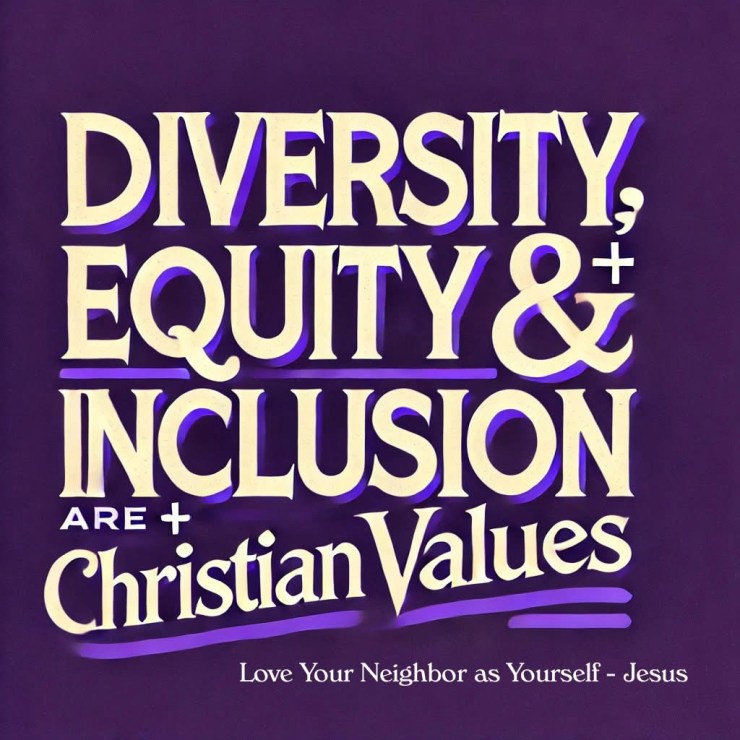
We are the worshipers who join the solo psalmist, adding our own stories and witness to God’s steadfast love. We find strength in each other as we continue God’s work of feeding the hungry, healing the sick, visiting the prisoner, uplifting the oppressed, and giving good things to the poor. The more diverse the voices, the more clearly we can hear the big story of the people of God. When everyone is included in community, we have the ability to meet each other’s needs and to see that everyone is valued, respected, and loved.
Co-creating a loving community aligned with God’s work puts us at odds with the powerful and upsets the status quo, and the systems set up to keep the rich in control. There are times when we will want to give up, especially when we have the gender, sexual orientation, color, and economic status that benefit from the system that oppresses others. When we participate in systems that harm others, in truth, it hurts us all. We are all deeply connected. We are deeply connected in our pain and in our love. I hope we can choose to connect with the Love that endures.
And there will be times when we feel alone in the work that we do to move towards a better world, but we are not alone. Love reminds us that we are never alone. Like the psalmist, when we are overwhelmed, tired, or frightened, we can find comfort, solidarity, and rest in our community. Rest when you need to and join in when you can. I encourage you to trust the love of God and the love of your community. Love is stronger than death. Love is what will remain forever. Trust in Love. We shall not die but live as we declare the works of Love.
We give thanks to You, O Beloved, for You are kind; your steadfast Love endures forever!
Check out other psalm reflections in the links below or find more of my writing published in Presbyterian Outlook or listen to my experiments in podcasting on the Period Pastor Podcast. Follow me @periodpastor
I began writing Psalm reflections during Lent of 2020. Shortly after, we decided to close the church building, work from home, and worship via zoom. Many churches use the Revised Common Lectionary (RLC) that rotates scripture on a three-year cycle (A, B, and C). Starting in Advent 2019, the church decided to worship with the texts from Year D, which is still not circulated as are years A, B, and C. Year D was created with the goal of including scriptures that were left out or not used as frequently as others. While we were using Psalms in year D, most other lectionary followers were using Year A. In Advent of 2020 we rejoined those who use the lectionary in year B. Advent of 2021 year C. When we returned to in person worship, we took the psalm reflections out of the order of worship. I continued to write them for the blog. Advent of 2022 year A. I left church work in July of 2023 but continued the practice of writing psalm reflections. Advent of 2023 year B.
I use the Vanderbilt Divinity Library’s resource for lectionary readings to make text selections.
1st Sunday in Advent Psalm 25, 2nd Sunday in Advent instead of a Psalm the lectionary gives Luke 1:68-79, 3rd Sunday in Advent instead of a Psalm the lectionary gives Isaiah 12:2-6, 4th Sunday in Advent Luke 1:46b-55 or Psalm 80, Christmas Eve or Christmas Day Psalm 96, Psalm 97, Psalm 98, 1st Sunday after Christmas, Psalm 148, New Year’s Day Psalm 8, 2nd Sunday after Christmas Psalm 147, Epiphany Psalm 72, 1st Sunday after Epiphany Psalm 29, 2nd Sunday after Epiphany Psalm 36, 3rd Sunday after Epiphany Psalm 19, 4th Sunday after Epiphany Psalm 71, 5th Sunday after Epiphany Psalm 138, 6th Sunday after Epiphany Psalm 1, 7th Sunday after Epiphany Psalm 37, Transfiguration Sunday (Sunday before Lent) Psalm 99
Lent: Ash Wednesday Psalm 51, 1st Sunday in Lent Psalm 91, 2nd Sunday in Lent Psalm 27, 3rd Sunday in Lent Psalm 63, 4th Sunday in Lent Psalm 32, 5th Sunday in Lent Psalm 126, 6th Sunday in Lent (Palm or Passion Sunday) Psalm 118 or 31
Easter: Easter Psalm 118 or Psalm 114, 2nd Sunday of Easter Psalm 118 or Psalm 150, 3rd Sunday of Easter Psalm 30, 4thSunday of Easter Psalm 23, 5th Sunday of Easter Psalm 148, 6th Sunday of Easter Psalm 67, Ascension Psalm 47 or Psalm 93, 7th Sunday of Easter Psalm 97, Day of Pentecost Psalm 104
Season After Pentecost (Ordinary Time): 1st Sunday after Pentecost (Trinity Sunday) Psalm 8, 2nd Sunday after Pentecost Psalm 42 and Psalm 43 or Psalm 22, 3rd Sunday after Pentecost Psalm 77 or Psalm 16, 4th Sunday after Pentecost Psalm 30 or Psalm 66, 5th Sunday after Pentecost Psalm 82 or Psalm 25, 6th Sunday after Pentecost Psalm 52 or Psalm 15, 7thSunday after Pentecost Psalm 85 or Psalm 138, 8th Sunday after Pentecost Psalm 107 or Psalm 49, 9th Sunday after Pentecost Psalm 50 or Psalm 33, 10th Sunday after Pentecost Psalm 80 or Psalm 82, 11th Sunday after Pentecost Psalm 71or Psalm 103, 12th Sunday after Pentecost Psalm 81 or Psalm 112, 13th Sunday after Pentecost Psalm 139 or Psalm 1, 14thSunday after Pentecost Psalm 14 or Psalm 51, 15th Sunday after Pentecost Psalm 79 or Psalm 113, 16th Sunday after Pentecost Psalm 91 or Psalm 146, 17th Sunday after Pentecost Psalm 137 or Psalm 37, 18th Sunday after Pentecost Psalm 66 or Psalm 111, 19th Sunday after Pentecost Psalm 119 or Psalm 121, 20th Sunday after Pentecost Psalm 65 or Psalm 84, 21st Sunday after Pentecost Psalm 119 or Psalm 32, 22nd Sunday after Pentecost Psalm 145 or Psalm 98 or Psalm 17, 23rdSunday after Pentecost Psalm 98, 24th Sunday after Pentecost Psalm 46.
Sources and notes:
“Psalm 118 is the final Egyptian Hallel psalm. It is an interesting and rather lengthy composition with a significant history of transmission and use in Jewish and Christian religious life.” W p. 143
“The consensus of most scholars is that Psalm 118 was used in early Jewish life in liturgical processions, perhaps as an entrance liturgy into the temple in Jerusalem, in much the same way that Psalms 15 and 24 may have been used. According to the Mishnah the procession around the altar that took place on seven successive days during the feats of Tabernacles was accompanied by the recitation of Psalm 188:27. In the New Testament, Psalm 118 is the most quoted and referenced psalm from the Hebrew Bible.” W pp. 143-144
“All four of the gospel writers use the words of Psalm 118:26, “Blessed is the one who comes in the name of the LORD,” in their Palm Sunday narratives.” W p. 144
“Psalm 118 is presented as the voice of an individual psalm singer, but that individual voice is woven into and “anchored in” the liturgy of the gathered worshiping community. We hear the individual in the first twenty-three verses of the psalm thanking YHWH for deliverance from a situation of personal peril, and then, beginning in verse 24, the community adds its voice to that of the individual in a context of corporate worship.” W p. 145
“In verses 2-4 three groups of people are singled out to join in the words of thanks: Israel, the house of Aaron, and the ones who fear YHWH–the same three groups who are called on in Psalm 115:9-11. Whereas the groups are called in Psalm 115 to “trust in the LORD” as their “help and shield,” in Psalm 118 they are called to “say” that “YHWH’s steadfast love endures forever”. W p. 146
“The words of verse 14 repeat exactly the words that Moses, Miriam, and the children of Israel sing in Exodus 15:2 after they have crossed the Reed Sea; likewise the words of verses 15b and 16 echo those of Exodus 15:6 and 12 in a threefold summer of the might of the reign hand of YHWH. The singer of Psalm 118 likens the help rendered in the present situation to the help God gave the Israelites in the Exodus from Egypt, and in verse 17 the psalmist affirms, “I shall not die, but I shall live, and recoup the deeds of the LORD.” The psalm singer has escaped; the enemy has perished; a new life lies ahead.” W p. 147
“In the ancient Israelite context of Psalm 118 we may understand the “stone the builders rejected” as the psalm singer, who has not been rejected but has become a chief cornerstone, an essential element in the construction of the life of the ancient Israelite faithful.” W p. 148
“Psalm 118 is a rich composition, sung first as an individual hymn of thanksgiving in a corporate worship setting adopted by the ancient Israelites as a song of celebration for the feast of Tabernacles, and for Christians man of its verses suggest the life and times of Jesus. Erich Zenger says this about psalm 118: “As a voice in opposition to the threatening power of hatred and violence, the psalm evokes the experience of Israel and the church that the ‘true’God is ‘good,’…and that his ‘love,’ that is, his mercy, endures forever.”” W p.149
“As is usually the case in the psalms, the rightness of the righteous is a matter of relation to the LORD. The morality involved is a morality of trust. The righteous are right in knowing that it is better to take refuge in the LORD than trust in morals. They fear the LORD (v. 4), rejoice over his victories (vv. 15-16), and cry out to him for salvation (v. 25). As a group, they are the opposite of the wicked nations that do not fear God (9:17).” Mays p. 377
“The normal human predicament is that, because we must die, teh expectation of our final negation infects our liven in all kinds of conscious ad subliminal ways. The church has found in verse 17 the expression of the transformation worked by the resurrection in one’s fundamental stance in life. The way in which believers face every threat and crisis and need is colored by teh knowledge that God has not given us over to death.” Mays p. 380
“The marvelous thing is that the one whom our human instincts and wisdom reject, God has nonetheless, in spite of us and for our salvation, made the chief cornerstone.” Mays p. 381
Alter, Robert. 2007. The Book of Psalms: A Translation with Commentary New York: W. W. Norton & Company
WBC Allen, Leslie C. 1983. Word Biblical Commentary: Psalms 101-150. Vol. 21. Waco, TX: Word Books, Publisher.
Bonhoeffer, Dietrich. 1974. Psalms: The Prayer Book of the Bible. 8th ed. Minneapolis, MN: Augsburg Press.
Bourgeault, C. (2006). Chanting the psalms: A practical guide Audio Book. New Seeds.
Brueggemann, Walter. 2007. Praying the Psalms: Engaging Scripture and the Life of the Spirit. 2nd ed. Eugene, OR: Cascade.
Brueggemann, Walter. 2014. From Whom No Secrets Are Hid: Introducing the Psalms. Edited by Brent A. Strawn. 1st ed. Louisville, KY: Westminster John Knox Press.
Brueggemann, Walter. Davis Hanskins, Editor. 2022. Our Hearts Wait: Worshiping Through Praise and Lament in the Psalms Westminster John Knox Press, Louisville KY.
Brueggemann, Walter. (2002). Spirituality of the psalms. Augsburg Pub. House.
Brueggemann, Walter. (1984). The Message of the Psalms: A Theological Commentary. Minneapolis: Augsburg.
Chilson, Richard, ed. You Shall Not Want: A Spiritual Journey Based on the Psalms. Ave Maria Press, 2009.
Chittister, Joan. (2011). Songs of the heart: reflections on the psalms. John Garratt Publishing.
Cudjoe-Wilkes, G., Wilkes, A. J., & Moss, O. (2022). Psalms for black lives: Reflections for the work of Liberation. Upper Room Books.
WBC Craigie, Peter C. 1983. Psalms 1-50–Word Biblical Commentary. Vol. 19. Waco, TX: Word Books.
Creach, Jerome Frederick Davis. 1998. Psalms: Interpretation Bible Studies. Louisville, KY: Westminster John Knox Press.
DAFLER, J. (2021). PSOBRIETY: A journey of recovery through the psalms. Louisville, KY: WESTMINSTER JOHN KNOX.
W de Claisse-Walford, Nancy L. WISDOM COMMENTARY: Psalms Bks. 4-5. Edited by Barbara E. Reid. Vol. 22. Collegeville, MN: Liturgical, 2020.
Green, Barbara. 1997. Like a Tree Planted: An Exploration of Psalms and Parables Through Metaphor. Collegeville, MN: Liturgical Press.
W Hopkins, Denise Dombkowski. WISDOM COMMENTARY: Psalms Bks. 2-3. Edited by Barbara E. Reid. Vol. 21. Collegeville, MN: Liturgical, 2016.
NIB Keck, Leander E. 2015. The New Interpreters Bible Commentary. Vol. 3. Nashville, TN: Abingdon Press.
Lewis, C. S. (2017). Reflections on the Psalms. Harper One, an imprint of Harper Collins Publishers.
Mays, James Luther. 1994. Psalms. Louisville, KY: John Knox Press.
McCann, J. C. (1993). A theological introduction to the book of Psalms: The Psalms as Torah. Nashville, TN: Abingdon Press.
McCann, J. C., & Howell, J. C. 2001. Preaching the Psalms. Nashville, TN: Abingdon Press.
Merrill, N. C. (2020). Psalms for praying an invitation to wholeness (10th Anniversary Edition ed.). London, England: Bloomsbury Publishing.
Miller, Patrick D. 1986. Interpreting the Psalms. Philadelphia, PA: Fortress Press.
Morgan, Michael. 2010. The Psalter for Christian Worship Revised Edition. Westminster John Knox Press.
Schlimm, Matthew Richard. 2018. 70 Hebrew Words Every Christian Should Know. Nashville, TN: Abington Press.
Spong, M. (Ed.). (2020). The words of her mouth: Psalms for the struggle. Cleveland, OH: The Pilgrim Press.
WBC Tate, Marvin E. 1990. Word Biblical Commentary: Psalms 51-100. Edited by David Allan. Hubbard and Glenn W. Barker. Vol. 20. Waco, TX: Word.
Weems, Ann. 1995. Psalm of Lament. Westminster John Knox Pres
OTL Weiser, Artur. 1998. Old Testament Library: Psalms. Translated by Herbert Hartwell. 3rd ed. New York, NY: Manchester University Press.

 Period Pastor Pad