All praise to You, O Beloved, for You have raised me up,
and have not let my fears overwhelm me.
O Compassionate One, I cried for help, and You comforted me.
You, O Love, helped me release my soul from despair;
You gave me strength to face my fears; now love is awakening in me.
Sing praises to the Beloved, All you saints, giving thanks to Love’s holy Name.
Love withdraws when we close our hearts, yet ever awaits an open door.
In the evening we may weep, yet joy comes with the morning.
In my prosperity, I had lost sight of Love, I found power in my wealth.
In your mercy, O Beloved, my foundations You shook,
and in my recognizing my separation from You, I was dismayed.
I cried to You for help; to You, I pleaded for forgiveness:
“What profit in my riches if I am separated from Love?
Will emptiness praise You? Will it tell of your faithfulness?
Hear me, O Beloved, and be gracious to me! O Love, hasten to my assistance!”
And You turned my mourning into dancing;
You set me free and clothed me with gladness.
My soul rejoices and is glad in You; songs of gratitude fill My soul
rising up to You, O Beloved. Amen.
Nan C. Merrill Psalms for Praying
Reflection:
When life is going well, it is easy to think we are self-made; that our prosperity is a direct result of our efforts alone. And this story about being self-made transforms us into being self-centered and selfish. When we don’t see the love that surrounds us, helps us, holds us; we don’t know how to express love to others and eventually, we can’t even be kind to ourselves. Unsurprisingly, this is disorienting, discouraging, and destructive.
When the things we trusted fall apart we need to reevaluate. Sometimes it’s only after we get to the end of our ability to cope that we can see that we do in fact need other people and a higher power. When we recognize that we have been self-separated from the love of God and community, it can feel as though we don’t deserve to ask or receive Love again. It can be hard to ask for help and to ask for forgiveness when we are so separated from Love we can not see that we are worthy of Love. But beloved neighbor, I can assure you that you are lovable.
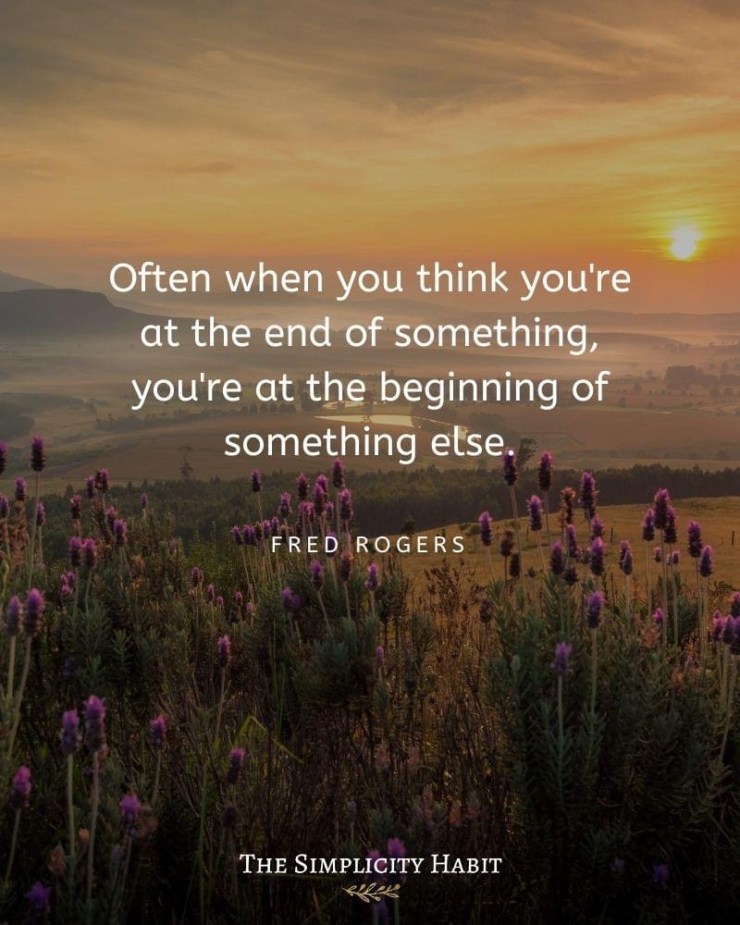
In some ways, when things fall apart, or relationships end, or jobs disappear, it’s actually the start of something new. Maybe, endings are gifts. And the only way to get a new beginning is through an ending. Let Love guide you.
Through reflecting on Psalm 30 and my own experiences of joy following sorrow, I know that the transformative Love of God surrounds me, even when (and especially when) I felt unworthy of it. I can see the cycle that Walter Brueggemann labels “prosperity, dismay, complaint, and resolution ” or “orientation, disorientation, new orientation” play out in scriptures, in the lives of those who have shared their stories with me, and in my own life. The Psalms and the testimony of other believers witness that our lives are ordered in relationship with Divine Love. It is in the sharing of our lives, the reading of these stories, that we find hope and we begin to trust that Love is ever with us. We are transformed, renewed, and oriented in a new identity, Beloved.
I hope that you find the trust that comes from being in loving relationship with the Divine, with yourself, and with your community.
Check out other psalm reflections in the links below or find more of my writing published in Presbyterian Outlook or listen to my experiments in podcasting on the Period Pastor Podcast. Follow me @periodpastor
I began writing Psalm reflections during Lent of 2020. Shortly after, we decided to close the church building, work from home, and worship via zoom. Many churches use the Revised Common Lectionary (RLC) that rotates scripture on a three-year cycle (A, B, and C). Starting in Advent 2019, the church decided to worship with the texts from Year D, which is still not circulated as are years A, B, and C. Year D was created with the goal of including scriptures that were left out or not used as frequently as others. While we were using Psalms in year D, most other lectionary followers were using Year A. In Advent of 2020 we rejoined those who use the lectionary in year B. Advent of 2021 year C. When we returned to in person worship, we took the psalm reflections out of the order of worship. I continued to write them for the blog. Advent of 2022 year A. I left church work in July of 2023 but continued the practice of writing psalm reflections. Advent of 2023 year B.
I use the Vanderbilt Divinity Library’s resource for lectionary readings to make text selections.
1st Sunday in Advent Psalm 25, 2nd Sunday in Advent instead of a Psalm the lectionary gives Luke 1:68-79, 3rd Sunday in Advent instead of a Psalm the lectionary gives Isaiah 12:2-6, 4th Sunday in Advent Luke 1:46b-55 or Psalm 80, Christmas Eve or Christmas Day Psalm 96, Psalm 97, Psalm 98, 1st Sunday after Christmas, Psalm 148, New Year’s Day Psalm 8, 2nd Sunday after Christmas Psalm 147, Epiphany Psalm 72, 1st Sunday after Epiphany Psalm 29, 2nd Sunday after Epiphany Psalm 36, 3rd Sunday after Epiphany Psalm 19, 4th Sunday after Epiphany Psalm 71, 5th Sunday after Epiphany Psalm 138, 6th Sunday after Epiphany Psalm 1, 7th Sunday after Epiphany Psalm 37, Transfiguration Sunday (Sunday before Lent) Psalm 99
Lent: Ash Wednesday Psalm 51, 1st Sunday in Lent Psalm 91, 2nd Sunday in Lent Psalm 27, 3rd Sunday in Lent Psalm 63, 4th Sunday in Lent Psalm 32, 5th Sunday in Lent Psalm 126, 6th Sunday in Lent (Palm or Passion Sunday) Psalm 118 or 31
Easter: Easter Psalm 118 or Psalm 114, 2nd Sunday of Easter Psalm 118 or Psalm 150, 3rd Sunday of Easter Psalm 30, 4th Sunday of Easter Psalm 23, 5th Sunday of Easter Psalm 148, 6th Sunday of Easter Psalm 67, Ascension Psalm 47 or Psalm 93, 7th Sunday of Easter Psalm 97, Day of Pentecost Psalm 104
Season After Pentecost (Ordinary Time): 1st Sunday after Pentecost (Trinity Sunday) Psalm 8, 2nd Sunday after Pentecost Psalm 42 and Psalm 43 or Psalm 22, 3rd Sunday after Pentecost Psalm 77 or Psalm 16, 4th Sunday after Pentecost Psalm 30 or Psalm 66, 5th Sunday after Pentecost Psalm 82 or Psalm 25, 6th Sunday after Pentecost Psalm 52 or Psalm 15, 7thSunday after Pentecost Psalm 85 or Psalm 138, 8th Sunday after Pentecost Psalm 107 or Psalm 49, 9th Sunday after Pentecost Psalm 50 or Psalm 33, 10th Sunday after Pentecost Psalm 80 or Psalm 82, 11th Sunday after Pentecost Psalm 71or Psalm 103, 12th Sunday after Pentecost Psalm 81 or Psalm 112, 13th Sunday after Pentecost Psalm 139 or Psalm 1, 14thSunday after Pentecost Psalm 14 or Psalm 51, 15th Sunday after Pentecost Psalm 79 or Psalm 113, 16th Sunday after Pentecost Psalm 91 or Psalm 146, 17th Sunday after Pentecost Psalm 137 or Psalm 37, 18th Sunday after Pentecost Psalm 66 or Psalm 111, 19th Sunday after Pentecost Psalm 119 or Psalm 121, 20th Sunday after Pentecost Psalm 65 or Psalm 84, 21st Sunday after Pentecost Psalm 119 or Psalm 32, 22nd Sunday after Pentecost Psalm 145 or Psalm 98 or Psalm 17, 23rdSunday after Pentecost Psalm 98, 24th Sunday after Pentecost Psalm 46.
Sources and notes:
“Psalm 30 is a prayer of thanksgiving for deliverance. …. In it a person whose prayer for help has been answered brings an offering of praise and proclamation in gratitude. The opening declaration, “I extol you, LORD,” identifies the purpose of the song. The declaration is supported by an acknowledgment of the LORD’s deliverance (v. 1a plus 1b-3); the basic report of prayer and deliverance in verse 2 anticipated the longer narrative in verses 6-12. An invitation in the form of an imperative hymn calls the faithful to join in the praise because God’s anger and human weeping are so quickly replaced by God’s sovereign pleasure and human joy (vv. 4-5)/ Then an extended narration of deliverance tells of previous distress (vv. 6-7), quotes the prayer for help made because of distress (vv. 8-10), and confesses that it is the LORD who has turned mourning to celebration and silence to praise (vv. 11-12). The composer has woven a pattern of alternation and reversal through the entire poem. “I cried out – you healed” (v. 2) sets the basic pattern; the other alternations are variations on this basic theme.” Mays p. 139
“The formulaic poetry of salvation can be and was read as a rendering of individual or national experience. It is this openness of its language that has led to the use of the psalm by individuals to speak of the God-given changes in their lives and by the whole community to speak of the drama of salvation, especially in reference to Christ.” Mays p. 140
“Praise has a theological basis as well as an anthropological one. Praise is the way the faithfulness of the LORD becomes word and is heard in the LORD’s world (v. 9). For people, it is the language of joy and gladness that goes with life and is life in contrast to the silence of death (vv. 11-12). And salvation is here understood as reaching its goal, not just in the restoration of the needy, but finally in the praise of God.” Mays p. 141
“The psalm shows how prayer and praise can together become a rubric for holding the experiences of life in relation to God. It makes a simple direct reading of experience in terms of the context of the LORD’s sovereign reality. The psalmist’s earlier untroubled life is attributed to the royal pleasure of God (v. 7a). His distress comes when the LORD hides his face (v. 7b). His restoration is a change worked by the LORD (v. 11). He sees his previous attitude as a mistaken reading of God’s favor, for he said in his self-confidence what should be said only in complete dependence on God: “I shall never be moved” (v. 6 and 10:6; 16:8, 62:2). Now he sees his life as a vocation of thanksgiving to the LORD. Correlating the course of life so directly with the sovereignty of God is, of course, risky. All sorts of distortions and misreadings are possible. But there is a strong faith in the providence of God here. Prayer and praise, if they are to be authentic and vigorous, must have actual life as their subject and not hover carefully in generalities above the earth. Life must be experienced in relation to God, sought and received as from the LORD’s hand.” Mays pp. 141-142 (emphasis is mine)
“Because of new life given only by God, silence is impossible. New life requires doxology, the end of sullenness, depression, numbness, despair. the last work in the psalm is confession. The mark of new life, inexplicable and unexpected, is confession expressed as thanks. Such thanks, which articulates a new life commitment, is possible only among those who vividly remember their prerescue situation. The purpose of the psalm appears to be to keep that memory alive, so that the occasion of transformation is kept alive. In that movement of transformation are found both the power to life and the passion for praise of God.” Brueggemann, The Message of the Psalms pp. 127-128
“In the book of Psalms, praise and thanks tend to converge and are treated as synonyms (as in Ps. 30:4), but they are in fact very different. Whereas praise tends to be expansive and nonspecific, thanks is typically focused on a particular memorable gift from God that evokes gratitude. Gratitude is thus concrete and expressed in both verbal form (as a Song of Thanksgiving) and material form (as a thank offering). Israel’s usual way of giving thanks is by telling: reciting a narrative about a situation of need or desperation and then reporting on the wondrous way in which God reduced, delivered, or restored.” Brueggemann From Whom No Secrets are Hid p. 140
“In short compass, the speaker has taken us through the entire drama of prosperity, dismay, complaint, and resolution. The speaker refers to a specific deliverance. But that specificity is not identified. As a result, when we belatedly use Psalm 30, we may bring to it our own specificity of prosperity, dismay, complaint, and resolution.” Brueggemann From Whom No Secrets are Hid p. 141
Alter, Robert. 2007. The Book of Psalms: A Translation with Commentary New York: W. W. Norton & Company
WBC Allen, Leslie C. 1983. Word Biblical Commentary: Psalms 101-150. Vol. 21. Waco, TX: Word Books, Publisher.
Bonhoeffer, Dietrich. 1974. Psalms: The Prayer Book of the Bible. 8th ed. Minneapolis, MN: Augsburg Press.
Bourgeault, C. (2006). Chanting the psalms: A practical guide Audio Book. New Seeds.
Brueggemann, Walter. 2007. Praying the Psalms: Engaging Scripture and the Life of the Spirit. 2nd ed. Eugene, OR: Cascade.
Brueggemann, Walter. 2014. From Whom No Secrets Are Hid: Introducing the Psalms. Edited by Brent A. Strawn. 1st ed. Louisville, KY: Westminster John Knox Press.
Brueggemann, Walter. Davis Hanskins, Editor. 2022. Our Hearts Wait: Worshiping Through Praise and Lament in the Psalms Westminster John Knox Press, Louisville KY.
Brueggemann, Walter. (2002). Spirituality of the psalms. Augsburg Pub. House.
Brueggemann, Walter. (1984). The Message of the Psalms: A Theological Commentary. Minneapolis: Augsburg.
Chilson, Richard, ed. You Shall Not Want: A Spiritual Journey Based on the Psalms. Ave Maria Press, 2009.
Chittister, Joan. (2011). Songs of the heart: reflections on the psalms. John Garratt Publishing.
Cudjoe-Wilkes, G., Wilkes, A. J., & Moss, O. (2022). Psalms for black lives: Reflections for the work of Liberation. Upper Room Books.
WBC Craigie, Peter C. 1983. Psalms 1-50–Word Biblical Commentary. Vol. 19. Waco, TX: Word Books.
Creach, Jerome Frederick Davis. 1998. Psalms: Interpretation Bible Studies. Louisville, KY: Westminster John Knox Press.
DAFLER, J. (2021). PSOBRIETY: A journey of recovery through the psalms. Louisville, KY: WESTMINSTER JOHN KNOX.
W de Claisse-Walford, Nancy L. WISDOM COMMENTARY: Psalms Bks. 4-5. Edited by Barbara E. Reid. Vol. 22. Collegeville, MN: Liturgical, 2020.
Green, Barbara. 1997. Like a Tree Planted: An Exploration of Psalms and Parables Through Metaphor. Collegeville, MN: Liturgical Press.
W Hopkins, Denise Dombkowski. WISDOM COMMENTARY: Psalms Bks. 2-3. Edited by Barbara E. Reid. Vol. 21. Collegeville, MN: Liturgical, 2016.
NIB Keck, Leander E. 2015. The New Interpreters Bible Commentary. Vol. 3. Nashville, TN: Abingdon Press.
Lewis, C. S. (2017). Reflections on the Psalms. Harper One, an imprint of Harper Collins Publishers.
Mays, James Luther. 1994. Psalms. Louisville, KY: John Knox Press.
McCann, J. C. (1993). A theological introduction to the book of Psalms: The Psalms as Torah. Nashville, TN: Abingdon Press.
McCann, J. C., & Howell, J. C. 2001. Preaching the Psalms. Nashville, TN: Abingdon Press.
Merrill, N. C. (2020). Psalms for praying an invitation to wholeness (10th Anniversary Edition ed.). London, England: Bloomsbury Publishing.
Miller, Patrick D. 1986. Interpreting the Psalms. Philadelphia, PA: Fortress Press.
Morgan, Michael. 2010. The Psalter for Christian Worship Revised Edition. Westminster John Knox Press.
Schlimm, Matthew Richard. 2018. 70 Hebrew Words Every Christian Should Know. Nashville, TN: Abington Press.
Spong, M. (Ed.). (2020). The words of her mouth: Psalms for the struggle. Cleveland, OH: The Pilgrim Press.
WBC Tate, Marvin E. 1990. Word Biblical Commentary: Psalms 51-100. Edited by David Allan. Hubbard and Glenn W. Barker. Vol. 20. Waco, TX: Word.
Weems, Ann. 1995. Psalm of Lament. Westminster John Knox Pres
OTL Weiser, Artur. 1998. Old Testament Library: Psalms. Translated by Herbert Hartwell. 3rd ed. New York, NY: Manchester University Press.

 Period Pastor Pad