I cry aloud to You, O Friend, to the Eternal Listener, that I might be heard.
In the day of trouble I seek the Beloved;
in the night my hand is stretched out in prayer;
my soul yearns to be comforted.
I think of the Beloved, and I moan; I meditate, and my spirit is weak.
You trouble me and I cannot find peace;
I am so fearful, I cannot sleep;
I am so filled with fantasies I cannot speak out.
How well I remember years past, when You were a companion close by.
I commune with my heart all through the night;
I meditated, my spirit seeking its Friend:
“Will You abandon me forever, and leave me comfortless in my distress?
Where is your steadfast Love that made my soul to sing?
Are your promises empty, that I feel so alone?”
“Where is the Comforter to ease this emptiness?
How have I offended You, O Friend, that I am so alone?”
And I wonder, “Is it those all of fear and guilt,
that separate me from the very Heart of my heart?”
I call to mind the closeness of my Friend;
yes, I remember the joy of the Beloved’s presence.
I contemplate in the Silence, recalling how You led me along the Way;
For your Way, O Beloved, is holy. There is no other like You!
You are the One who will bring us to wholeness,
You manifest your Love to all who call upon You;
With You the peoples are redeemed, the nations brought to peace.
When our fears sense You, O Beloved, when our doubt encounter your Love,
they are afraid and attack.
Our eyes pour forth oceans of tears; our countenance grows cloudy;
we hid begin walls of resistance.
The power of your Love seems too much for us;
your Light unveils the secrets hidden in our heart;
Can You wonder that we tremble?
Yet, You stand beside us as we walk through our fears
to the path of wholeness and love, through our footsteps are unsure.
You send the Counselor as a guide to lead us on the road
to peace, truth, and love.
Nan C. Merrill Psalms for Praying
Reflection:
Will you abandon me forever?
When bad things happen, the situation is made worse when we feel abandoned and alone. Hopelessness seeps in. It is the memory, of who God is and what God has done, that shores up the psalmists resolve. God has acted on their behalf in the past, guided the community through difficult situations, and provided a loving presence when they were afraid. The psalm ends with the recital of the memories but does not tell us if the psalmist feels better or if God does indeed act.
It is my experience with the psalms that allows me to believe that yes, God does act for the psalmist and her community, and they have a sense of peace. And it is this belief and hope that informs my actions. I can have hope in God and in my community because I believe that we have been through worse and come out okay in the past.
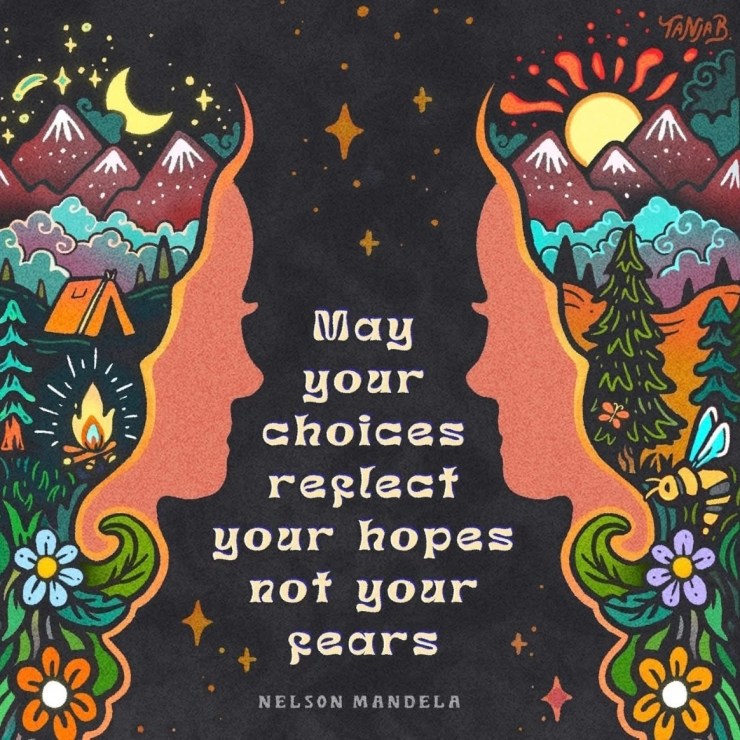
I will go where my best hopes and my best prayers take me. I believe in Love, in peace, and in joy; and I will go where they lead.
Check out other psalm reflections in the links below or find more of my writing published in Presbyterian Outlook or listen to my experiments in podcasting on the Period Pastor Podcast. Follow me @periodpastor
I began writing Psalm reflections during Lent of 2020. Shortly after, we decided to close the church building, work from home, and worship via zoom. Many churches use the Revised Common Lectionary (RLC) that rotates scripture on a three-year cycle (A, B, and C). Starting in Advent 2019, the church decided to worship with the texts from Year D, which is still not circulated as are years A, B, and C. Year D was created with the goal of including scriptures that were left out or not used as frequently as others. While we were using Psalms in year D, most other lectionary followers were using Year A. In Advent of 2020 we rejoined those who use the lectionary in year B. Advent of 2021 year C. When we returned to in person worship, we took the psalm reflections out of the order of worship. I continued to write them for the blog. Advent of 2022 year A. I left church work in July of 2023 but continued the practice of writing psalm reflections. Advent of 2023 year B.
I use the Vanderbilt Divinity Library’s resource for lectionary readings to make text selections.
1st Sunday in Advent Psalm 25, 2nd Sunday in Advent instead of a Psalm the lectionary gives Luke 1:68-79, 3rd Sunday in Advent instead of a Psalm the lectionary gives Isaiah 12:2-6, 4th Sunday in Advent Luke 1:46b-55 or Psalm 80, Christmas Eve or Christmas Day Psalm 96, Psalm 97, Psalm 98, 1st Sunday after Christmas, Psalm 148, New Year’s Day Psalm 8, 2nd Sunday after Christmas Psalm 147, Epiphany Psalm 72, 1st Sunday after Epiphany Psalm 29, 2nd Sunday after Epiphany Psalm 36, 3rd Sunday after Epiphany Psalm 19, 4th Sunday after Epiphany Psalm 71, 5th Sunday after Epiphany Psalm 138, 6th Sunday after Epiphany Psalm 1, 7th Sunday after Epiphany Psalm 37, Transfiguration Sunday (Sunday before Lent) Psalm 99
Lent: Ash Wednesday Psalm 51, 1st Sunday in Lent Psalm 91, 2nd Sunday in Lent Psalm 27, 3rd Sunday in Lent Psalm 63, 4th Sunday in Lent Psalm 32, 5th Sunday in Lent Psalm 126, 6th Sunday in Lent (Palm or Passion Sunday) Psalm 118 or 31
Easter: Easter Psalm 118 or Psalm 114, 2nd Sunday of Easter Psalm 118 or Psalm 150, 3rd Sunday of Easter Psalm 30, 4th Sunday of Easter Psalm 23 or 114, 5th Sunday of Easter Psalm 148, 6th Sunday of Easter Psalm 67 or 109, Ascension Psalm 47 or Psalm 93, 7th Sunday of Easter Psalm 97 or Psalm 2, Day of Pentecost Psalm 104
Season After Pentecost (Ordinary Time): 1st Sunday after Pentecost (Trinity Sunday) Psalm 8, 2nd Sunday after Pentecost Psalm 42 and Psalm 43 or Psalm 22, 3rd Sunday after Pentecost Psalm 77 or Psalm 16, 4th Sunday after Pentecost Psalm 30 or Psalm 66, 5th Sunday after Pentecost Psalm 82 or Psalm 25, 6th Sunday after Pentecost Psalm 52 or Psalm 15, 7th Sunday after Pentecost Psalm 85 or Psalm 138, 8th Sunday after Pentecost Psalm 107 or Psalm 49, 9th Sunday after Pentecost Psalm 50 or Psalm 33, 10th Sunday after Pentecost Psalm 80 or Psalm 82, 11th Sunday after Pentecost Psalm 71or Psalm 103, 12th Sunday after Pentecost Psalm 81 or Psalm 112, 13th Sunday after Pentecost Psalm 139 or Psalm 1, 14th Sunday after Pentecost Psalm 14 or Psalm 51, 15th Sunday after Pentecost Psalm 79 or Psalm 113, 16th Sunday after Pentecost Psalm 91 or Psalm 146, 17th Sunday after Pentecost Psalm 137 or Psalm 37, 18th Sunday after Pentecost Psalm 66 or Psalm 111, 19th Sunday after Pentecost Psalm 119 or Psalm 121, 20th Sunday after Pentecost Psalm 65 or Psalm 84, 21st Sunday after Pentecost Psalm 119 or Psalm 32, 22nd Sunday after Pentecost Psalm 145 or Psalm 98 or Psalm 17, 23rdSunday after Pentecost Psalm 98, 24th Sunday after Pentecost Psalm 46.
Sources and notes:
“The psalm begins and proceeds in the style of an individual prayer for help. But the form of the prayer is changed in important ways. God is spoken of in third person. The prayer never reaches petition. It is composed only of a description of trouble, with God interspersed with concentrations of verbs of reflection–remember, meditate, consider, inquire, muse (vv. 3, 5-6, 11-12). There i son mention of an enemy, no assessment of self.” Mays p. 251
“Instead, the psalm is composed as a report of prayer that, unsatisfied, turned into reflection on God. The cry to God has brought no comfort (vv. 1-2), so the psalmist turns to thinking of God, his spirit fainting, so troubled he cannot continue to pray aloud (vv. 3-4). There is no purchase for hope in the present, so the psalmist turns to the ancient past (v. 5) and searches there for an answer (v. 6) to a series of questions (vv. 7-9) that are in truth only one: Is the LORD’s rejection final?” Mays pp. 251-252
“When the psalm as a whole is considered, it is evident that the individual style is being used to speak of a dilemma that is corporate. Either the speaker’s problem with God is situated completely in the distress of the whole people of God or he speaks as their representative and recapitulates their experience in his account. Because it is composed in the style of an account of experience, it is suitable as a liturgical text to lead others to articulate their distress and bring it to confrontation with the God evoked in the hymnic address.” Mays p. 253
“Psalm 77 opens with deeply emotional, body-based complaint from one who speaks on behalf of Israel. At night the psalmist’s “hand is stretched out without wearying” (v. 2b). She cannot sleep because of God: “you keep my eyelids from closing” (v. 4a). She is so “troubled” that neither can she “speak” any more (v. 4b). Memory seems to paralyze her, yet all she can do is remember.” W p. 261
“Psalm 77 shares with other Asaph psalms (74-83) a focus on national suffering, perhaps in exile, and a collective memory of God’s deliverance of Israel in the exodus.” W p. 261
“The psalmist’s remembering is juxtaposed with the accusation of God’s “forgetting” to be gracious (v. 9).” W p. 261
“Psalm 77 lives in the emotional exhausting intersections between the memory of the exodus and Rachel crying for her children in Jeremiah 31. Psalm 77 wonders whether God will announce a “new thing” (Jer 31:22) for Israel. The answer is not certain, so the psalm ends in memory, just as Rachel does not respond to God’s declaration.” W p. 267
“Indeed, in a broken and sinful world, there is a sense in which a mature faith cannot exist apart from doubt. In any case, Psalm 77 reminds us that we are people of memory and of hope. Faith is no guarantee agains the possibility of despair, but even amid despair, the faithful will remember that God has been our help in ages past and will be our hope for years to come.” NIB p. 517
Alter, Robert. 2007. The Book of Psalms: A Translation with Commentary New York: W. W. Norton & Company
WBC Allen, Leslie C. 1983. Word Biblical Commentary: Psalms 101-150. Vol. 21. Waco, TX: Word Books, Publisher.
Bonhoeffer, Dietrich. 1974. Psalms: The Prayer Book of the Bible. 8th ed. Minneapolis, MN: Augsburg Press.
Bourgeault, C. (2006). Chanting the psalms: A practical guide Audio Book. New Seeds.
Brueggemann, Walter. 2007. Praying the Psalms: Engaging Scripture and the Life of the Spirit. 2nd ed. Eugene, OR: Cascade.
Brueggemann, Walter. 2014. From Whom No Secrets Are Hid: Introducing the Psalms. Edited by Brent A. Strawn. 1st ed. Louisville, KY: Westminster John Knox Press.
Brueggemann, Walter. Davis Hanskins, Editor. 2022. Our Hearts Wait: Worshiping Through Praise and Lament in the Psalms Westminster John Knox Press, Louisville KY.
Brueggemann, Walter. (2002). Spirituality of the psalms. Augsburg Pub. House.
Brueggemann, Walter. (1984). The Message of the Psalms: A Theological Commentary. Minneapolis: Augsburg.
Chilson, Richard, ed. You Shall Not Want: A Spiritual Journey Based on the Psalms. Ave Maria Press, 2009.
Chittister, Joan. (2011). Songs of the heart: reflections on the psalms. John Garratt Publishing.
Cudjoe-Wilkes, G., Wilkes, A. J., & Moss, O. (2022). Psalms for black lives: Reflections for the work of Liberation. Upper Room Books.
WBC Craigie, Peter C. 1983. Psalms 1-50–Word Biblical Commentary. Vol. 19. Waco, TX: Word Books.
Creach, Jerome Frederick Davis. 1998. Psalms: Interpretation Bible Studies. Louisville, KY: Westminster John Knox Press.
DAFLER, J. (2021). PSOBRIETY: A journey of recovery through the psalms. Louisville, KY: WESTMINSTER JOHN KNOX.
W de Claisse-Walford, Nancy L. WISDOM COMMENTARY: Psalms Bks. 4-5. Edited by Barbara E. Reid. Vol. 22. Collegeville, MN: Liturgical, 2020.
Green, Barbara. 1997. Like a Tree Planted: An Exploration of Psalms and Parables Through Metaphor. Collegeville, MN: Liturgical Press.
W Hopkins, Denise Dombkowski. WISDOM COMMENTARY: Psalms Bks. 2-3. Edited by Barbara E. Reid. Vol. 21. Collegeville, MN: Liturgical, 2016.
NIB Keck, Leander E. 2015. The New Interpreters Bible Commentary. Vol. 3. Nashville, TN: Abingdon Press.
Lewis, C. S. (2017). Reflections on the Psalms. Harper One, an imprint of Harper Collins Publishers.
Mays, James Luther. 1994. Psalms. Louisville, KY: John Knox Press.
McCann, J. C. (1993). A theological introduction to the book of Psalms: The Psalms as Torah. Nashville, TN: Abingdon Press.
McCann, J. C., & Howell, J. C. 2001. Preaching the Psalms. Nashville, TN: Abingdon Press.
Merrill, N. C. (2020). Psalms for praying an invitation to wholeness (10th Anniversary Edition ed.). London, England: Bloomsbury Publishing.
Miller, Patrick D. 1986. Interpreting the Psalms. Philadelphia, PA: Fortress Press.
Morgan, Michael. 2010. The Psalter for Christian Worship Revised Edition. Westminster John Knox Press.
Schlimm, Matthew Richard. 2018. 70 Hebrew Words Every Christian Should Know. Nashville, TN: Abington Press.
Spong, M. (Ed.). (2020). The words of her mouth: Psalms for the struggle. Cleveland, OH: The Pilgrim Press.
WBC Tate, Marvin E. 1990. Word Biblical Commentary: Psalms 51-100. Edited by David Allan. Hubbard and Glenn W. Barker. Vol. 20. Waco, TX: Word.
Weems, Ann. 1995. Psalm of Lament. Westminster John Knox Pres
OTL Weiser, Artur. 1998. Old Testament Library: Psalms. Translated by Herbert Hartwell. 3rd ed. New York, NY: Manchester University Press.

 Period Pastor Pad