The Beloved, through the energy of Love, brought forth the world.
From the rising to the setting sun,
Love radiates out to all the nations perfect in beauty.
The Beloved has come and will not keep silence;
for Divine Love is a consuming Fire,
calling forth heaven and earth to the judgement of all peoples:
“Gather around, my loyal friends,
all who by repentance and recompense follow the Inner Way.”
The universe forever proclaims justice,
And, the Beloved’s Indwelling Presence
guides those who hear with their heart’s ear.
“Listen, all people, and I shall speak; I will bear witness against you, O nations:
As Divine Presence, Eternal Flame of Love,
Shall I not find fault with what you call holy,
these offerings of greed and war that are before Me always?
Your lies and deceitful ways,
your greed for power and wealth are spawned by darkness.
Have you forgotten that we are to be One in Love and Truth,
that all of life is Sacred Gift?
I know every creature, every plant, every mineral;
I know you- your every need and your fears;
the Earth and all that is in it belongs to the Whole,
to be tended by all in co-operation with Love.
Shall I accept your proud and boasting hearts,
the oppression, the injustices brought about through your fearful deeds?
Never shall I accept such burnt offerings!
Rather, offer to the Beloved a gift of thanksgiving with grateful hearts;
For what other return can you make for all that Love offers to you?
My friends, search for the still voice that dwells in the Silence.
If you call upon Me in times of trouble, I am ever present to you.
You will know Me in your hearts, as you honor my love for you.
To you, whose hearts have turned to stone I say:
“What right have you to mouth empty prayers,
and make so free with words attributed to Love-
You, who hate correction and turn away when you hear
my Voice speaking within your heart?
You rob the poor with your greed and prejudice;
You consort with murder and destruction;
You blame others for your own deceitful ways,
thinking I am blind to your iniquities.
The air, the earth, the seas have become foul with the pollution of your
self-seeking ways in the name of nationalism, security, and progress.
All this you have done, and shall I keep silence?
You think that I am another like yourself, but point by point,
I shall rebuke you to your face.
Think well on this, you who disdain Divine Love;
for you will reap in proportion the suffering that you ave sown,
and no one will be able to save you from your own destruction.”
All who surrender to the love of the Great Mystery,
whose hearts are merciful and kind,
will go in beauty and walk with grace;
And all who reverence Love’s Eternal Flame,
will know Love’s Companioning Presence.
Nan C. Merrill Psalms for Praying
Reflection:
Everything is created by God; the earth, planets, and all of the cosmos. Sun, moon, and stars; God has set into motion. Fire, storms, floods and all that shapes the earth are in God’s control. All creatures, plants, and minerals belong to God. God doesn’t need anything.
What God desires is our grateful hearts; that we look at creation with gratitude and treat one another with compassion, generosity, and love. God wants to be relationship with us, co-creators and caretakers of all that belongs to God. God desires a connection with us, being in God’s presence with open hearts is enough. You are enough.
Sometimes out of a misplaced desire to give something to God, we give God (God’s church) our junk. Like the psalmist’s congregation, we fall into the trap of giving crap to the church. God doesn’t eat, and doesn’t need leftover cookies from coffee hour. God’s house does not need or want the castoffs from your cluttered home. God doesn’t need your old TV, CD player, nor grandma’s good china. Stop bringing these things to God’s houses of worship and pretending they are gifts. God is not going to sit on the couch your family doesn’t want now that they have up-graded, and neither are your neighbors, even though they are too polite to tell you it smells like your dog. Instead, let us give to the thrift store what belongs in the thrift store and give to God what belongs to God.
Yes, sometimes we will want to give back or pay it forward or share our blessings and this is healthy and loving response to what God has done for us. When you desire to participate in God’s work in the world, when you want to give, do so in Love and with your intellect. Follow your heart to give where you feel you can contribute, but ask questions first. What is needed and wanted? Evaluate what is currently being done by those organizations connected with the cause and contribute accordingly.
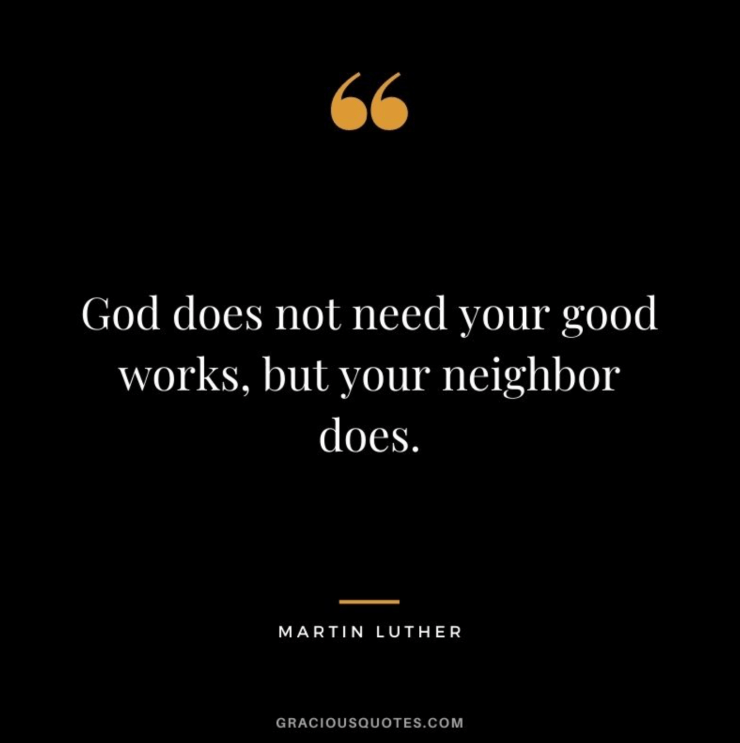
God doesn’t need our good deeds but our neighbor does. God loves you just as you are, and if out of gratitude for that love, you want to give, give to your neighbor who needs you. Work for justice and love, especially for the poor, afflicted, and oppressed. In this, you will experience God’s loving presence.
Check out other psalm reflections in the links below or find more of my writing published in Presbyterian Outlook or listen to my experiments in podcasting on the Period Pastor Podcast. Follow me @periodpastor
I began writing Psalm reflections during Lent of 2020. Shortly after, we decided to close the church building, work from home, and worship via zoom. Many churches use the Revised Common Lectionary (RLC) that rotates scripture on a three-year cycle (A, B, and C). Starting in Advent 2019, the church decided to worship with the texts from Year D, which is still not circulated as are years A, B, and C. Year D was created with the goal of including scriptures that were left out or not used as frequently as others. While we were using Psalms in year D, most other lectionary followers were using Year A. In Advent of 2020 we rejoined those who use the lectionary in year B. Advent of 2021 year C. When we returned to in person worship, we took the psalm reflections out of the order of worship. I continued to write them for the blog. Advent of 2022 year A. I left church work in July of 2023 but continued the practice of writing psalm reflections. Advent of 2023 year B.
I use the Vanderbilt Divinity Library’s resource for lectionary readings to make text selections.
1st Sunday in Advent Psalm 25, 2nd Sunday in Advent instead of a Psalm the lectionary gives Luke 1:68-79, 3rd Sunday in Advent instead of a Psalm the lectionary gives Isaiah 12:2-6, 4th Sunday in Advent Luke 1:46b-55 or Psalm 80, Christmas Eve or Christmas Day Psalm 96, Psalm 97, Psalm 98, 1st Sunday after Christmas, Psalm 148, New Year’s Day Psalm 8, 2nd Sunday after Christmas Psalm 147, Epiphany Psalm 72, 1st Sunday after Epiphany Psalm 29, 2nd Sunday after Epiphany Psalm 36, 3rd Sunday after Epiphany Psalm 19, 4th Sunday after Epiphany Psalm 71, 5th Sunday after Epiphany Psalm 138, 6th Sunday after Epiphany Psalm 1, 7th Sunday after Epiphany Psalm 37, Transfiguration Sunday (Sunday before Lent) Psalm 99
Lent: Ash Wednesday Psalm 51, 1st Sunday in Lent Psalm 91, 2nd Sunday in Lent Psalm 27, 3rd Sunday in Lent Psalm 63, 4th Sunday in Lent Psalm 32, 5th Sunday in Lent Psalm 126, 6th Sunday in Lent (Palm or Passion Sunday) Psalm 118 or 31
Easter: Easter Psalm 118 or Psalm 114, 2nd Sunday of Easter Psalm 118 or Psalm 150, 3rd Sunday of Easter Psalm 30, 4thSunday of Easter Psalm 23 or 114, 5th Sunday of Easter Psalm 148, 6th Sunday of Easter Psalm 67 or 109, Ascension Psalm 47 or Psalm 93, 7th Sunday of Easter Psalm 97 or Psalm 2, Day of Pentecost Psalm 104
Season After Pentecost (Ordinary Time): 1st Sunday after Pentecost (Trinity Sunday) Psalm 8, 2nd Sunday after Pentecost Psalm 42 and Psalm 43 or Psalm 22, 3rd Sunday after Pentecost Psalm 77 or Psalm 16, 4th Sunday after Pentecost Psalm 30 or Psalm 66, 5th Sunday after Pentecost Psalm 82 or Psalm 25, 6th Sunday after Pentecost Psalm 52 or Psalm 15, 7th Sunday after Pentecost Psalm 85 or Psalm 138, 8th Sunday after Pentecost Psalm 107 or Psalm 49, 9th Sunday after Pentecost Psalm 50 or Psalm 33, 10th Sunday after Pentecost Psalm 80 or Psalm 82, 11th Sunday after Pentecost Psalm 71or Psalm 103, 12th Sunday after Pentecost Psalm 81 or Psalm 112, 13th Sunday after Pentecost Psalm 139 or Psalm 1, 14th Sunday after Pentecost Psalm 14 or Psalm 51, 15th Sunday after Pentecost Psalm 79 or Psalm 113, 16th Sunday after Pentecost Psalm 91 or Psalm 146, 17th Sunday after Pentecost Psalm 137 or Psalm 37, 18th Sunday after Pentecost Psalm 66 or Psalm 111, 19th Sunday after Pentecost Psalm 119 or Psalm 121, 20th Sunday after Pentecost Psalm 65 or Psalm 84, 21st Sunday after Pentecost Psalm 119 or Psalm 32, 22nd Sunday after Pentecost Psalm 145 or Psalm 98 or Psalm 17, 23rd Sunday after Pentecost Psalm 98, 24th Sunday after Pentecost Psalm 46.
Sources and notes:
“This psalm is not a hymn or prayer or song of thanksgiving. It is composed on the model of a speech for trial proceedings. It begins with an introduction (vv. 1-6) in which the LORD appears, convenes court, and summon this covenant people as defendants. The body of the psalm is a speech made by the LORD to put the worship (vv. 7-15) and the conduct (vv. 16-22) of the covenant people under judgement. The speech ends with a summary statement on worship and conduct, a sort of instructive finding of the court (v. 23).” Mays p. 194
“Rather than addressing God directly as most psalms do, Psalm 50 offers “first-person divine speech” that criticizes Israel’s sacrifices and behavior. Some argue that Psalm 50 belongs to the liturgy of a covenant renewal ceremony (Josh 24); others call it a didactic poem or a covenant lawsuit brought by God against Israel (Isa 1:10-17; Mic 6:6-8). Robert Alter calls it “a prophetic psalm, with God actually quoted in direct discourse for much of the poem, as in the literary prophets.” The “I” in Psalm 50 represents God speaking in oracles delivered by a prophet who need not necessarily be male. Tanakh identifies five women prophets (feminine singular): Miriam (Exod 15:20), Deborah (Judg 4-5), Huldah (2 Kgs 22:8-14), the unnamed woman with whom Isaiah fathers a son (Isa 8:1), Noadiah (New 6:14). Also the daughters of Heman, along with their brothers (“all of these”, 1 Christ 25:6), perform music in the temple under the direction of their father; their music is considered to be prophecy (1Chr 25:1). As Psalm 68:24-25 suggests, women probably played the (small frame drum). The Talmud (b. Meg. 14a) lists seven female prophets: Sarah, Miriam, Deborah, Hannah, Abigail, Huldah, and Esther. Ezekiel 13:17 and Joel 2:28 speak generally of women and men prophesying. In many texts the masculine plural (“prophets”) masks the presence of female prophets who “are lost to the binaries of grammar.” The NT names Anna (Luke 2:36), the virgin daughters of Philip (Acts 21:9), and females at Corinth (1 For 11:5) as prophets. Though only eleven psalms contain direct “God-quotations,” H. G. M. Williamson argues that it “seems likely” that “the figure of the prophetess was not nearly so familiar in monarchical Israel and Judah as our scant sources initially suggest.” Prophesy as a “male preserve” has obscured the earlier social reality of female prophets.” W pp. 63-65 There were Hebrew words in this text that I don’t have the correct font for.
“A trinity of names identify the judge; he is El, Elohim, and YHWH, whose authority reaches from one horizon of earth to the other (v.1).” Mays p. 194
“As personnel and witnesses for the trial the LORD summons heaven and earth (vv. 4, 1, 6). In the ancient Near East, lists of gods were invoked as witnesses and enforcers of sworn agreements and treaties. In the theological dramatization of covenant proceedings between the Lord and Israel, heaven and earth as cosmic personifications replace the gods (Deut. 32:1; Isa. 1:2; Micah 6:1-2).” Mays pp. 194-195
“As defendants the LORD calls those “who made a covenant with me (confirmed) by sacrifice” (v. 5). The effect of this identification is to equate those to whom the psalm is being spoken with the congregation of Israel at Sinai (Exod. 24:3-8). They are the hasidim of the LORD, the ones whose identity and life are determined by the covenant they have made with the LORD (NRSV, “faithful ones”; NJPS “devotes”). To be a hasid is to hold oneself subject to the LORD under the claims of the covenant. The terms of the covenant are set out in statutes (v. 16) and words (v. 17, i.e., commandments; see Exod. 20:1). The covenant belongs to the liturgical life of hasidim; they recite its terms and pledge allegiance to its commitment (v. 16). By participation in the worship of Israel they have entered into the relation established at Sinai.” Mays p. 195
“The patience of God with his people, the forbearance of the LORD in the face of misunderstanding and faithlessness, could lead to a terrible conclusion. The congregation could make the very worst mistake. They might think of the LORD, and may already think of the LORD, as one like themselves. To project themselves on God and take that for the ultimate reality in terms of which to live, instead of determination of life–what hideous error!” Mays p. 195
“The problem is a misunderstanding and misuse of sacrifice. …. The scornful questions about God’s being hungry and eating the sacrifices are a vehement attack on worship that thinks of God as like the worshiper.” Mays p. 196
“There is a disparity, goes the accusation, between confession (v. 16) and conduct (v. 17). They recite the statues and ignore the commandments. They confess the covenant and reject its discipline. But covenanters must conform to the covenant. Disciples out observe discipline. Servants of God must bring innate human willfulness and selfishness under the control of commitment.” Mays p. 196
“Psalm 50 represents a type and style of speech that the prophets employed (e.g., Isa. 4:13-15). But where the prophets would typically conclude an indictment with an announcement of punishment, this saying concludes with warning and interaction (vv. 22-23). It threatens punishment (compare v. 22b with Hos. 5:14) but offers another way. Understanding must replace misunderstanding. Conduct must take the right way. If the speech is heard, God will save instead of punish.” Mays p. 197
“This psalm can and must be heard in the liturgy of the church because the Christian community has been incorporated into the people of the LORD by a covenant made though the sacrifice of Jesus Messiah (Mark 14:25).” Mays p. 197
“The call to decision presented by Psalm 50, by Jesus, and by Paul is still a crucial one. Hypocrisy is a persistent temptation. Good faith is always in danger of becoming bad religion –a mechanistic system to put God at our disposal and to give us the illusion of merit and self-control. If we think that we are deserving, and if we think that we have things under control, then there will be no need for us to call upon God or to live in dependence upon God. All that is left is to glorify ourselves (see v. 15). The issue, then, is this: Will we live to gratify ourselves? Or will we live in gratitude to God?” NIB p. 445
“In a right relation with God we do not treat God as an equal or as a needy, hungry partner, but rather call upon God and know that God is ready to save. So it is calland save that shapes this faith. The alternative that is rejected is need and feed. ”Call… save” keeps priorities clear. It affirms that the relationship is grounded in god’s rule and his will to save. A religion of “need…feed” distorts this truth and draws god into ta pattern of need and satisfaction in which this God will not participate. Psalm 50 resists the piton that Yahweh is a consumer or a client of Israel.” Brueggemann, The Message of the Psalms p. 90
Alter, Robert. 2007. The Book of Psalms: A Translation with Commentary New York: W. W. Norton & Company
WBC Allen, Leslie C. 1983. Word Biblical Commentary: Psalms 101-150. Vol. 21. Waco, TX: Word Books, Publisher.
Bonhoeffer, Dietrich. 1974. Psalms: The Prayer Book of the Bible. 8th ed. Minneapolis, MN: Augsburg Press.
Bourgeault, C. (2006). Chanting the psalms: A practical guide Audio Book. New Seeds.
Brueggemann, Walter. 2007. Praying the Psalms: Engaging Scripture and the Life of the Spirit. 2nd ed. Eugene, OR: Cascade.
Brueggemann, Walter. 2014. From Whom No Secrets Are Hid: Introducing the Psalms. Edited by Brent A. Strawn. 1st ed. Louisville, KY: Westminster John Knox Press.
Brueggemann, Walter. Davis Hanskins, Editor. 2022. Our Hearts Wait: Worshiping Through Praise and Lament in the Psalms Westminster John Knox Press, Louisville KY.
Brueggemann, Walter. (2002). Spirituality of the psalms. Augsburg Pub. House.
Brueggemann, Walter. (1984). The Message of the Psalms: A Theological Commentary. Minneapolis: Augsburg.
Chilson, Richard, ed. You Shall Not Want: A Spiritual Journey Based on the Psalms. Ave Maria Press, 2009.
Chittister, Joan. (2011). Songs of the heart: reflections on the psalms. John Garratt Publishing.
Cudjoe-Wilkes, G., Wilkes, A. J., & Moss, O. (2022). Psalms for black lives: Reflections for the work of Liberation. Upper Room Books.
WBC Craigie, Peter C. 1983. Psalms 1-50–Word Biblical Commentary. Vol. 19. Waco, TX: Word Books.
Creach, Jerome Frederick Davis. 1998. Psalms: Interpretation Bible Studies. Louisville, KY: Westminster John Knox Press.
DAFLER, J. (2021). PSOBRIETY: A journey of recovery through the psalms. Louisville, KY: WESTMINSTER JOHN KNOX.
W de Claisse-Walford, Nancy L. WISDOM COMMENTARY: Psalms Bks. 4-5. Edited by Barbara E. Reid. Vol. 22. Collegeville, MN: Liturgical, 2020.
Green, Barbara. 1997. Like a Tree Planted: An Exploration of Psalms and Parables Through Metaphor. Collegeville, MN: Liturgical Press.
W Hopkins, Denise Dombkowski. WISDOM COMMENTARY: Psalms Bks. 2-3. Edited by Barbara E. Reid. Vol. 21. Collegeville, MN: Liturgical, 2016.
NIB Keck, Leander E. 2015. The New Interpreters Bible Commentary. Vol. 3. Nashville, TN: Abingdon Press.
Lewis, C. S. (2017). Reflections on the Psalms. Harper One, an imprint of Harper Collins Publishers.
Mays, James Luther. 1994. Psalms. Louisville, KY: John Knox Press.
McCann, J. C. (1993). A theological introduction to the book of Psalms: The Psalms as Torah. Nashville, TN: Abingdon Press.
McCann, J. C., & Howell, J. C. 2001. Preaching the Psalms. Nashville, TN: Abingdon Press.
Merrill, N. C. (2020). Psalms for praying an invitation to wholeness (10th Anniversary Edition ed.). London, England: Bloomsbury Publishing.
Miller, Patrick D. 1986. Interpreting the Psalms. Philadelphia, PA: Fortress Press.
Morgan, Michael. 2010. The Psalter for Christian Worship Revised Edition. Westminster John Knox Press.
Schlimm, Matthew Richard. 2018. 70 Hebrew Words Every Christian Should Know. Nashville, TN: Abington Press.
Spong, M. (Ed.). (2020). The words of her mouth: Psalms for the struggle. Cleveland, OH: The Pilgrim Press.
WBC Tate, Marvin E. 1990. Word Biblical Commentary: Psalms 51-100. Edited by David Allan. Hubbard and Glenn W. Barker. Vol. 20. Waco, TX: Word.
Weems, Ann. 1995. Psalm of Lament. Westminster John Knox Pres
OTL Weiser, Artur. 1998. Old Testament Library: Psalms. Translated by Herbert Hartwell. 3rd ed. New York, NY: Manchester University Press.

 Period Pastor Pad