I waited patiently for the Beloved, who heard my cry and came to me.
Love raised me from the pits of despair, out of confusion and fear,
and set my feet upon a rock making my steps secure.
There is a new song in my mouth, a song of praise to the Beloved.
May many see and rejoice, may they put their trust in Love.
Blessed are those who make Love their home, who do not turn to the proud,
to those who follow false idols!
O Beloved, how wondrous are your gifts to us;
your thoughts are beyond our imagination.
What joy to live in Oneness with You!
Were we to proclaim and tell of Your beauty and blessed grace,
who could measure it?
Sacrifice and offering are not your desire for us;
for, you have opened our heart’s ear.
Burnt offerings are not required.
My heart affirms my surrender; in the Book of Life it is written:
“I abandon myself into your hands,
for I love You and wish only to create with You, O my Beloved;
For You are the life of my life forever.”
I tell the glad news of Love’s way to all who will listen.
Yes, I raise my voice, with raise and acclamation.
I tell of Love’s saving grace within my heart,
I speak of Love’s faithfulness and healing power.
I aspire to reveal your steadfast love and truth through the witness of my life.
Do not, O Beloved, withhold your mercy from me,
Let your Love, your Light, and faithfulness ever guide and uphold me.
For fears so often overwhelm me; My desires and anger cause me to be blind;
so I look away when I see injustice, my heart becomes cold.
In your mercy, O Beloved, deliver me!
O Love, make haste to help me!
Let my fears be put to rest, fears that separate me from You;
Let all that keeps me from love, from peace and gratitude,
be transformed within me.
And may all who seek Love rejoice and be glad;
May all who would live truth and justice, continually call upon Love!
As for me, though often broken and weak, I know that Love dwells within.
For now, where injustice or illusion make their home,
I witness to your Peace and Love, O Teacher and Friend to All!
Nan C. Merrill Psalms for Praying
Reflection:
At first read, a psalm that starts with joy and ends with lament doesn’t seem right. We expect bad things to happen and then be resolved by the end, like in our TV and movie storytelling. But that is not true to life.
Psalm 40 begins with praise and ends in lament. The psalmist knows God’s ability to save and to renew life. This deep faith and knowledge of God’s character is what gives the psalmist the ability to complain with hope that God will respond.
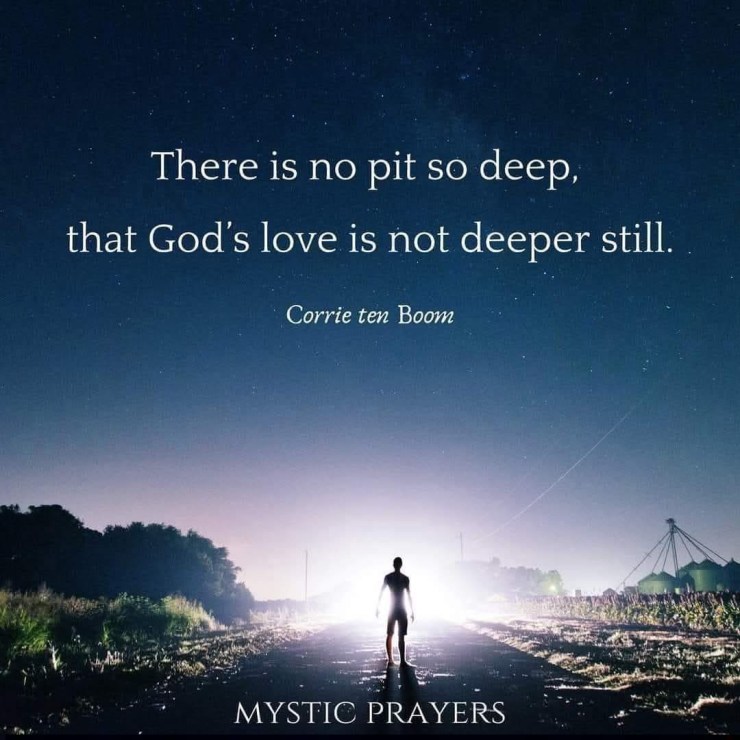
Life is not linear, neither is our relationship with God. It’s more like a spiral, ever deepening and developing through the seasons of lived faith. Knowing that “arrival at enlightenment” isn’t the goal is helpful as I live into a relationship with God. Maybe “goal” isn’t the right word either. Transformation, renewal, growth, journey, pilgrimage, are better words that describe the loving relationship God invites me to join. No matter where I am or what is happening, God’s love is the one steadfast source of hope and comfort.
Check out other psalm reflections in the links below or find more of my writing published in Presbyterian Outlook or listen to my experiments in podcasting on the Period Pastor Podcast. Follow me @periodpastor
Past reflection links:
Psalm 40 Year D (2019-2020)
I began writing Psalm reflections during Lent of 2020. Shortly after, we decided to close the church building, work from home, and worship via zoom. Many churches use the Revised Common Lectionary (RLC) that rotates scripture on a three-year cycle (A, B, and C). Starting in Advent 2019, the church decided to worship with the texts from Year D, which is still not circulated as are years A, B, and C. Year D was created with the goal of including scriptures that were left out or not used as frequently as others. While we were using Psalms in year D, most other lectionary followers were using Year A. In Advent of 2020 we rejoined those who use the lectionary in year B. Advent of 2021 year C. When we returned to in person worship, we took the psalm reflections out of the order of worship. I continued to write them for the blog. Advent of 2022 year A. I left church work in July of 2023 but continued the practice of writing psalm reflections. Advent of 2023 year B. Advent of 2024 year C. I finished year C early, so I began work on psalms I missed: Psalm 119, Year D and others not in the lectionary. By the end of 2025, I have written a reflection for each psalm.
Advent of 2025 year A.
I use the Vanderbilt Divinity Library’s resource for lectionary readings and the PCUSA planning calendar to make text selections.
Year A Psalms
1st Sunday in Advent Psalm 122, 2nd Sunday in Advent Psalm 72, 3rd Sunday in Advent Psalm 146, 4th Sunday in Advent Psalm 80, Christmas Psalm 96, Psalm 97, Psalm 98, 1st Sunday after Christmas Psalm 148, 2nd Sunday after Christmas Psalm 147, 1st Sunday after Epiphany Psalm 29, 2nd Sunday after Epiphany Psalm 40, 3rd Sunday after Epiphany Psalm 27, 4th Sunday after Epiphany Psalm 15, 5th Sunday after Epiphany Psalm 112, Transfiguration Sunday Psalm 2 or Psalm 99.
Ash Wednesday Psalm 51, 1st Sunday in Lent Psalm 32, 2nd Sunday in Lent Psalm 121, 3rdSunday in Lent Psalm 95, 4th Sunday in Lent Psalm 23, 5th Sunday in Lent Psalm 130, 6th Sunday in Lent Psalm 118 or Psalm 31.
Holy Week: Monday Psalm 36, Tuesday Psalm 71, Wednesday Psalm 70, Thursday Psalm 116, Friday Psalm 22, Saturday Psalm 31.
Easter Psalm 118 or Psalm 114, 2nd Sunday of Easter Psalm 16, 3rd Sunday of Easter Psalm 116, 4th Sunday of Easter Psalm 23, 5th Sunday of Easter Psalm 31, 6th Sunday of Easter Psalm 66, Ascension of the Lord Psalm 47 or Psalm 93, 7th Sunday of Easter Psalm 68, Pentecost Psalm 104.
1st Sunday after Pentecost Psalm 8, 2nd Sunday after Pentecost Psalm 33 or Psalm 50, 3rd Sunday after Pentecost Psalm 116 or Psalm 100, 4th Sunday after Pentecost Psalm 86 or Psalm 69, 5th Sunday after Pentecost Psalm 13 or Psalm 89, 6th Sunday after Pentecost Psalm 45 or Psalm 145, 7th Sunday after Pentecost Psalm 119 or Psalm 65, 8th Sunday after Pentecost Psalm 139 or Psalm 86, 9th Sunday after Pentecost Psalm 105 or Psalm 119, 10th Sunday after Pentecost Psalm 17 or Psalm 145, 11th Sunday after Pentecost Psalm 105 or Psalm 85, 12th Sunday after Pentecost Psalm 133 or Psalm 67, 13th Sunday after Pentecost Psalm 124 or Psalm 138, 14th Sunday after Pentecost Psalm 105 or Psalm 26, 15thSunday after Pentecost Psalm 149 or Psalm 119, 16th Sunday after Pentecost Psalm 114 or Psalm 103, 17th Sunday after Pentecost Psalm 105 or Psalm 145, 18th Sunday after Pentecost Psalm 78 or Psalm 25, 19th Sunday after Pentecost Psalm 19 or Psalm 80, 20th Sunday after Pentecost Psalm 106 or Psalm 23, 21st Sunday after Pentecost Psalm 99 or Psalm 96, 22nd Sunday after Pentecost Psalm 90 or Psalm 1, 23rd Sunday after Pentecost Psalm 107 or Psalm 43, 24th Sunday after Pentecost Psalm 78 or Psalm 70, 25th Sunday after Pentecost Psalm 123 or Psalm 90, 26th Sunday after Pentecost Psalm 100 or Psalm 95.
Sources and notes:
“The psalm reflects a person who had been in danger of death, had cried to the LORD, was delivered, found himself responsive to the LORD in a new way, had offered witness and self as thanksgiving instead of sacrifice, but now in trouble, conscious of failings, appeals in weakness to the LORD for deliverance.” Mays p. 169
Verse 8: “Besides the document, the psalmist brought himself — a person whose desire is to do what pleases his God and in whose inmost parts is the LORD’s instruction. …. It is an offering of praise for salvation, and what is even more important, it is the confession of a transformation of the self worked by salvation. Where human desire and will are conformed to diving pleasure and instruction, the purpose of praise through sacrifice an song has been incorporated into the very process of the self. The true thanksgiving for salvation is witness and will.” Mays p. 168
“Verse 11 is best read as a statement of trust (with NJPS) than as a petition (with NRSV). The psalmist trusts himself to the gospel he has proclaimed in the situation in which he now is. He does what is usually so difficult to do — live by the gospel you preach.” Mays pp. 168-169
“His present troubles and failures seem as numerous as the LORD’s past wondrous deeds (cf. v. 5). Though many could see how the LORD saved in the past (v. 3), now the psalmist cannot see beyond all his problems. God’s saving righteousness was in the psalmist’s heart (v. 10), but now his heart fails him. The psalm teaches that the torah in the heart does not prevent sin, more does the experience of salvation spare us form the need of God’s help.” Mays p. 169
“Praise and piety were for them the true responses to the salvation of the LORD. Psalm 40 is shaped by this theology. …. The psalmist with his praise and piety still must pray for salvation from suffering and sin. That is where we all are. But our prayers are made in hope, because the sacrifice for sin has been made for us once and for all.” Mays pp. 170-171
“This psalm is of special interest because verses 1-10 constitute a song of thanksgiving, whereas verses 11-17 are a lament psalm.” Brueggemann, The Message of the Psalms p. 128
New Song “Here it is used to say that life has begun anew for this person, and t requires new lyrical speech to match the gift. Elsewhere the phrase refers to historical liberation (Isa. 42:10), liturgical renewal (Pss. 96:1; 98:1), and finally to a great new opening of public life for those who “hope intensely” in the gospel, like this psalmist (cf. Rev. 5:9).” Brueggemann, The Message of the Psalms p. 128
“The verbs of thanksgiving are of interest. No doubt they refer to a personal experience, but the words have imaginative power because they also tough and allude to the primal memories of Egypt and the exodus. That God inclines and hears, brings up, and sets feet in new places is the experience of all of Israel (cf. Exod. 2:23-25; 3:7-15). The new song is enacted there in the Songs of Moses (Exod. 15:1-18) and Miriam (Exod. 15:21), though the phrase is not used. When one uses this psalm, one stands in solidarity with, participates in, and relives the whole saving memory of Israel.” Brueggemann, The Message of the Psalms p. 128
“The psalmist, as the Bible generally, draws broad and universal conclusions from the particulars of verses 1-3. But then, that is what Israel has been doing since the exodus, (cf. Exodus. 15:11). What Yahweh has done for this speaker is taken as characteristic of what Yahweh does all the time for everyone. It is a claim made both by Job’s friends (Job 5:8-9) and by Job (9:10). Yahweh as deliverer is the one who causes surprises and newnesses and miracles in the historical process and in creation. No other god does so. This is the proper source of hope and trust.” Brueggemann, The Message of the Psalms p. 129
“The new life is one in which obedience to torah is an utter delight.” Brueggemann, The Message of the Psalms p. 129
“The vocabulary expresses the main agenda of biblical faith: good news, righteousness, faithfulness, deliverance, steadfast love, reliability.” Brueggemann, The Message of the Psalms p. 129
“It appears that the lament is composed with precise reference to the thanksgiving song so that the thanksgiving song adds weight to the complaint.” Brueggemann, The Message of the Psalms p. 131
“Understood logically, the sequence is wrong. A complaint should not come after the joy of the new song, but experientially the sequence is significant. It reminds us that the move from disorientation to new orientation is not a single, straight line, irreversible and unambiguous. Life moves in and out. In our daily life the joy of deliverance is immediately beset and assaulted by the despair and fear of the Pit. So the one who hopes has to urge God against delay. The one who has not “withheld” praise has to ask that Yahweh not “withhold” mercy. There is a realism to the psalm, but it is a realism set in a profound trust. It is to Yahweh that Israel turns in deep need, to Yahweh and to none other, in trouble as well as in joy.” Brueggemann, The Message of the Psalms p. 131
Alter, Robert. 2007. The Book of Psalms: A Translation with Commentary New York: W. W. Norton & Company
WBC Allen, Leslie C. 1983. Word Biblical Commentary: Psalms 101-150. Vol. 21. Waco, TX: Word Books, Publisher.
Bonhoeffer, Dietrich. 1974. Psalms: The Prayer Book of the Bible. 8th ed. Minneapolis, MN: Augsburg Press.
Bourgeault, C. (2006). Chanting the psalms: A practical guide Audio Book. New Seeds.
Brueggemann, Walter. 2007. Praying the Psalms: Engaging Scripture and the Life of the Spirit. 2nd ed. Eugene, OR: Cascade.
Brueggemann, Walter. 2014. From Whom No Secrets Are Hid: Introducing the Psalms. Edited by Brent A. Strawn. 1st ed. Louisville, KY: Westminster John Knox Press.
Brueggemann, Walter. Davis Hanskins, Editor. 2022. Our Hearts Wait: Worshiping Through Praise and Lament in the Psalms Westminster John Knox Press, Louisville KY.
Brueggemann, Walter. (2002). Spirituality of the psalms. Augsburg Pub. House.
Brueggemann, Walter. (1984). The Message of the Psalms: A Theological Commentary. Minneapolis: Augsburg.
Chilson, Richard, ed. You Shall Not Want: A Spiritual Journey Based on the Psalms. Ave Maria Press, 2009.
Chittister, Joan. (2011). Songs of the heart: reflections on the psalms. John Garratt Publishing.
Cudjoe-Wilkes and Wilkes Cudjoe-Wilkes, G., Wilkes, A. J., & Moss, O. (2022). Psalms for black lives: Reflections for the work of Liberation. Upper Room Books.
WBC Craigie, Peter C. 1983. Psalms 1-50–Word Biblical Commentary. Vol. 19. Waco, TX: Word Books.
Creach, Jerome Frederick Davis. 1998. Psalms: Interpretation Bible Studies. Louisville, KY: Westminster John Knox Press.
DAFLER, J. (2021). PSOBRIETY: A journey of recovery through the psalms. Louisville, KY: WESTMINSTER JOHN KNOX.
W de Claisse-Walford, Nancy L. WISDOM COMMENTARY: Psalms Bks. 4-5. Edited by Barbara E. Reid. Vol. 22. Collegeville, MN: Liturgical, 2020.
Green, Barbara. 1997. Like a Tree Planted: An Exploration of Psalms and Parables Through Metaphor. Collegeville, MN: Liturgical Press.
W Hopkins, Denise Dombkowski. WISDOM COMMENTARY: Psalms Bks. 2-3. Edited by Barbara E. Reid. Vol. 21. Collegeville, MN: Liturgical, 2016.
NIB Keck, Leander E. 2015. The New Interpreters Bible Commentary. Vol. 3. Nashville, TN: Abingdon Press.
Lewis, C. S. (2017). Reflections on the Psalms. Harper One, an imprint of Harper Collins Publishers.
Mays, James Luther. 1994. Psalms. Louisville, KY: John Knox Press.
McCann, J. C. (1993). A theological introduction to the book of Psalms: The Psalms as Torah. Nashville, TN: Abingdon Press.
McCann, J. C., & Howell, J. C. 2001. Preaching the Psalms. Nashville, TN: Abingdon Press.
Merrill, N. C. (2020). Psalms for praying an invitation to wholeness (10th Anniversary Edition ed.). London, England: Bloomsbury Publishing.
Miller, Patrick D. 1986. Interpreting the Psalms. Philadelphia, PA: Fortress Press.
Morgan, Michael. 2010. The Psalter for Christian Worship Revised Edition. Westminster John Knox Press.
Schlimm, Matthew Richard. 2018. 70 Hebrew Words Every Christian Should Know. Nashville, TN: Abington Press.
Spong, M. (Ed.). (2020). The words of her mouth: Psalms for the struggle. Cleveland, OH: The Pilgrim Press.
WBC Tate, Marvin E. 1990. Word Biblical Commentary: Psalms 51-100. Edited by David Allan. Hubbard and Glenn W. Barker. Vol. 20. Waco, TX: Word.
Weems, Ann. 1995. Psalm of Lament. Westminster John Knox Pres
OTL Weiser, Artur. 1998. Old Testament Library: Psalms. Translated by Herbert Hartwell. 3rd ed. New York, NY: Manchester University Press.

 Period Pastor Pad