Praises be to You, O Gracious One!
Blessed are those who reverence the Holy One,
who delight in Love Consciousness!
For they dwell with the Beloved, and their children will learn of peace and justice.
Abundance and wholeness will be their heritage, and truth will be their banner.
Light penetrates the darkness for those who face their fears;
Love stands by the with mercy and forgiveness.
It goes well for those who are loving and kind,
who live their days with justice and integrity.
They become co-creators with the Divine One;
they bless the world with their presence.
In times of trouble, they know not fear;
their hearts are firm, trusting in your Loving Companion Presence.
Yes, their hearts are steady, they are not afraid,
even their enemies are blessed by their love.
They are generous and give freely; the needy are offered shelter and food;
justice and mercy make their home there;
and their righteousness endures forever.
The unloving are witness to this;
who knows when the Seed will find a fertile heart?
The fruits of those who know Love are blessing to all!
Nan C. Merrill Psalms for Praying
Reflection:
God is gracious, merciful, and righteous. Those who follow God’s ways will also embody these characteristics. The righteous will act with grace, mercy, and love towards their neighbors, treating each person with dignity. Living as one transformed by God’s love and teachings, will shape our actions towards generosity as we co-create a world of peace, justice, and righteousness.
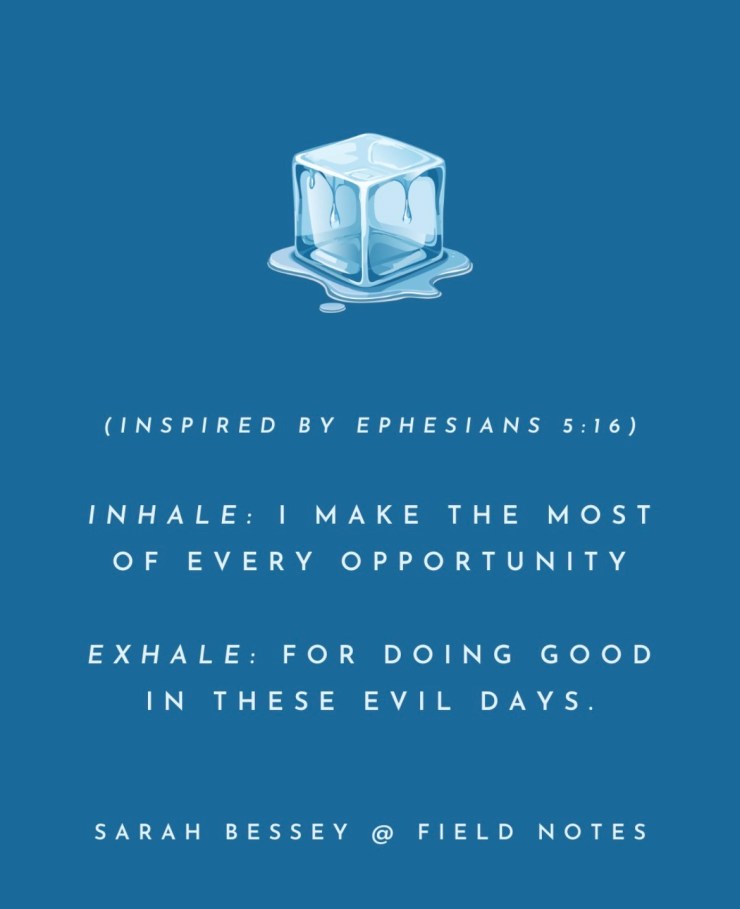
The psalm includes a contrasting statement in verse 10 about those who do not practice loving-kindness. The hope is that they will eventually wake up and see that their ways are not God’s ways. Maybe their hearts will melt like ice, watering the ground where God has already planted seeds of hope, peace, joy, and love.
My hope is that things will change for the better, so I will be working toward that change by doing (not being) good.
Check out other psalm reflections in the links below or find more of my writing published in Presbyterian Outlook or listen to my experiments in podcasting on the Period Pastor Podcast. Follow me @periodpastor
Past reflection links:
Psalm 112 Year A 2022-2023
I began writing Psalm reflections during Lent of 2020. Shortly after, we decided to close the church building, work from home, and worship via zoom. Many churches use the Revised Common Lectionary (RLC) that rotates scripture on a three-year cycle (A, B, and C). Starting in Advent 2019, the church decided to worship with the texts from Year D, which is still not circulated as are years A, B, and C. Year D was created with the goal of including scriptures that were left out or not used as frequently as others. While we were using Psalms in year D, most other lectionary followers were using Year A. In Advent of 2020 we rejoined those who use the lectionary in year B. Advent of 2021 year C. When we returned to in person worship, we took the psalm reflections out of the order of worship. I continued to write them for the blog. Advent of 2022 year A. I left church work in July of 2023 but continued the practice of writing psalm reflections. Advent of 2023 year B. Advent of 2024 year C. I finished year C early, so I began work on psalms I missed: Psalm 119, Year D and others not in the lectionary. By the end of 2025, I have written a reflection for each psalm.
Advent of 2025 year A.
I use the Vanderbilt Divinity Library’s resource for lectionary readings and the PCUSA planning calendar to make text selections.
Year A Psalms
1st Sunday in Advent Psalm 122, 2nd Sunday in Advent Psalm 72, 3rd Sunday in Advent Psalm 146, 4th Sunday in Advent Psalm 80, Christmas Psalm 96, Psalm 97, Psalm 98, 1st Sunday after Christmas Psalm 148, 2nd Sunday after Christmas Psalm 147, 1st Sunday after Epiphany Psalm 29, 2nd Sunday after Epiphany Psalm 40, 3rd Sunday after Epiphany Psalm 27, 4th Sunday after Epiphany Psalm 15, 5th Sunday after Epiphany Psalm 112, Transfiguration Sunday Psalm 2 or Psalm 99.
Ash Wednesday Psalm 51, 1st Sunday in Lent Psalm 32, 2nd Sunday in Lent Psalm 121, 3rdSunday in Lent Psalm 95, 4th Sunday in Lent Psalm 23, 5th Sunday in Lent Psalm 130, 6th Sunday in Lent Psalm 118 or Psalm 31.
Holy Week: Monday Psalm 36, Tuesday Psalm 71, Wednesday Psalm 70, Thursday Psalm 116, Friday Psalm 22, Saturday Psalm 31.
Easter Psalm 118 or Psalm 114, 2nd Sunday of Easter Psalm 16, 3rd Sunday of Easter Psalm 116, 4th Sunday of Easter Psalm 23, 5th Sunday of Easter Psalm 31, 6th Sunday of Easter Psalm 66, Ascension of the Lord Psalm 47 or Psalm 93, 7th Sunday of Easter Psalm 68, Pentecost Psalm 104.
1st Sunday after Pentecost Psalm 8, 2nd Sunday after Pentecost Psalm 33 or Psalm 50, 3rd Sunday after Pentecost Psalm 116 or Psalm 100, 4th Sunday after Pentecost Psalm 86 or Psalm 69, 5th Sunday after Pentecost Psalm 13 or Psalm 89, 6th Sunday after Pentecost Psalm 45 or Psalm 145, 7th Sunday after Pentecost Psalm 119 or Psalm 65, 8th Sunday after Pentecost Psalm 139 or Psalm 86, 9th Sunday after Pentecost Psalm 105 or Psalm 119, 10th Sunday after Pentecost Psalm 17 or Psalm 145, 11th Sunday after Pentecost Psalm 105 or Psalm 85, 12th Sunday after Pentecost Psalm 133 or Psalm 67, 13th Sunday after Pentecost Psalm 124 or Psalm 138, 14th Sunday after Pentecost Psalm 105 or Psalm 26, 15thSunday after Pentecost Psalm 149 or Psalm 119, 16th Sunday after Pentecost Psalm 114 or Psalm 103, 17th Sunday after Pentecost Psalm 105 or Psalm 145, 18th Sunday after Pentecost Psalm 78 or Psalm 25, 19th Sunday after Pentecost Psalm 19 or Psalm 80, 20th Sunday after Pentecost Psalm 106 or Psalm 23, 21st Sunday after Pentecost Psalm 99 or Psalm 96, 22nd Sunday after Pentecost Psalm 90 or Psalm 1, 23rd Sunday after Pentecost Psalm 107 or Psalm 43, 24th Sunday after Pentecost Psalm 78 or Psalm 70, 25th Sunday after Pentecost Psalm 123 or Psalm 90, 26th Sunday after Pentecost Psalm 100 or Psalm 95.
Sources and notes:
“Psalms 111 and 112 belong together. They are a pair, a kind of diptych. They correspond in form and language and deal with complementary topics. Psalm 111 is praise of the works of the LORD by those who fear him. Indeed, it teaches that the read of the LORD is a work of the LORD. Psalm 112 is a commendation of the way and life of those who fear the LORD. The theme of Psalm 112 is set by the last verse of Psalm 111.” Mays p. 355
“Psalm 112 opens with “Hallelujah” and a beatitude, thus combining at its beginning genres of praise and instruction.” Mays p. 358
“The relationship between Psalm 112 and Psalm 111 is obvious and close. Their external forms are similar. Psalm 112, like Psalm 111, is an acrostic poem of twenty-two measures, each measure beginning with the next letter of the Hebrew alphabet. The measures tend to be composed of three Hebrew words or bound expressions. Words, phrases, and even an entire clause from Psalm 111 are repeated in Psalm 112.” Mays p. 359
“Psalm 111 is praise by the upright who fear the LORD, and Psalm 112 describes how the fear of the LORD works out in the life of the upright.” Mays p. 359
“Even where the psalm seems to speak of conduct that deserves the blessing rather than of the blessing itself, the conduct is meant by the psalm to be a blessing that comes from delight in the commandments.” Mays p. 359
“Through them [the commandments] the LORD reveals and bestows the gift of the wisdom that makes for life. The commandments are grace, not burden.” Mays p. 360
“This correlation between the praise of the LORD and the commendation of the upright is the psalm’s way of teaching that the works of the LORD can and should shape the life of the righteous. The correlation is not a presumptuous claim that the upright independently and autonomously realize goodness. Rather, by their fear of the LORD, they enter into the works of the LORD, who works on and in and through their lives. Their goodness is godliness.” Mays p. 360
“Psalms 111 and 112 are summary statement of what faith is all about: who God is and what humans must do in response to God. In a rich intertwining of language and metaphor, the “happy” person of Psalm 112 partners with the God of Psalm 111 and together they work to achieve righteousness–right living, correct order, and truth– in the world.” W p. 119
“Leadership is the ability to pursue the greater good whether anyone else is going in that direction or not. It is, as the psalmist says, the ability to be a light in the darkness for the upright. And it is often a lonely, lonely role.” Chittister p. 12
“Psalm 111 and 112 may belong together. Note that this opening formula is paralleled at the beginning of 111. If the two psalmist belgian together, then Psalm 111 provides the theological basis of rhetorical moral conviction of 112. The world is morally coherent because the Creator is mindful of his covenant (111:5), commands his covenant (111:9), and will be obeyed.” Brueggemann, The Message of the Psalms p. 45
“The main argument of the Psalm (112:1b-9) explores the proposition of 1b, that one who fears Yahweh, i.e., keeps torah, will be happy. Faithful obedience leads to well-bing. The well-being of the happy persons runs the full range of human desire. It includes the most material yearning of wealth and riches (v. 3). It also includes a steady heart that is not shattered by adversity, but has constancy in every circumstance (vv. 7-8; cf. Phil. 4:11-13).” Brueggemann, The Message of the Psalms pp. 45-46
“The key phrase used to describe such a person is “righteous.” All these psalms of orientation speak for a righteous person in a righteous society governed by day and night righteous God. Everything is all right. Thus, in verse 3, the righteous person’s capacity to make things right endures. In verse 6 he is marked as righteous, which means he is himself integrated. He takes action to make right in his world. And in verse 9, his righteousness is again affirmed. This psalm reflects a clear and untroubled conscience.” Brueggemann, The Message of the Psalms p. 46
“The righteousness of the happy person is in the context of, and possible because of, the character of Yahweh, who is here know to be gracious, merciful, and righteous. That is the ground of human righteousness. This character of Yahweh is also stated in 111: 3-4 (cf. Ps. 145:8-9) and likely appeals to the old creedal formulation of Exod. 34:6-7. Psalm 112 knows the best and most profound way in which Yahweh is characterized, and in this psalm we are dealing with a person in the image of this God, who corresponds to that image in the conduct of his life. Note that human life is characterized not by an essence but by faithful actions, as is Yahweh. This life is a happily oriented life because there is real harmony between creation and Creator. Israel’s discernment of God and celebration of humanness come properly together.” Brueggemann, The Message of the Psalms p. 46
“But the righteousness that makes this happy person is neither simply a quality of person nor an attribute. Rather, it is evident in the way he relates to others in his derivative governance of creation, i.e., in the way he exercises his dominion (Gen. 1:26-28). He gives generously (v. 5). He practices justice (v. 5). He cares of the poor (v. 9). We have seen in Psalm 14:6 that Yahweh is known fundamentally as a refuge for the poor. Now this person, faithful to this God, engages in the same practice. This psalm is a clear affirmation that virtue is relational. Goodness is not a condition or a property or a state of being, but a set of actions in social relations Virtue concerns social relations precisely in relation to the distribution of economic justice. (Note this is also the mark of Job’s claim upon God in Job 31:16-23.) Generosity makes for joy in the life of faith.” Brueggemann, The Message of the Psalms p. 46
“Characteristically (as in Pss. 104:35; 145:20b), this psalm cannot resist a statement of contrast in verse 10. The stress is on the happy, righteous person. But to underscore the point, verse 10 asserts not only that the wicked do not act this way, but that they resist and are made miserable by their resistance. The wicked person is one who does not trust God’s generosity and so cannot practice generosity. The wicked are not the morally bad, but those who grudgingly and grimly seek to monopolize and control rather than share. They are so grim, grudging, and greedy because they do not sense the enormous generosity of Yahweh.” Brueggemann, The Message of the Psalms p. 46
“In a way this psalm can be taken as a calculating guide on how to be happy. But its claim goes well beyond that. It asserts that giving life resources away to others in the community is the way to real joy. This psalm is echoed in Jesus’ teaching, “Blessed are those who hunger and thirst for righteousness, for they shall be satisfied” (Matt. 5:6). Satisfaction and life fulfillment do not come from greed and self-filling and self-sufficiency. They come form trusting the generosity of God who always feeds us (Ps. 111:5), and we can in turn be generous. The happy person is the one who knows about the abundance of the Creator who withholds nothing needful from his precious creation. Believing that permits a very different social practice.” Brueggemann, The Message of the Psalms p. 47
“It is the work of the Psalter to populate our world with the character of this God. Where this God governs, the world is transformed and transformable. It becomes a place of joy and duty–of joyous duty–a place of buoyancy and risk. Even so, we itch to be left in a joyless, duty-free world that is noticeably short on buoyancy and empty of serious risk. But because we have entered this counter-world, we may decide differently. The people of this counter-world of covenantal duty and joy, of buoyancy and risk, will now and in time to come be characteristically lost in wonder, love, and praise.” Brueggemann, From Whom No Secrets are Hid p. 35
From my post on Psalm 111:
Psalm 111:10 The fear of the Lord is the beginning of wisdom; all those who practice it have a good understanding. His praise endures forever.
Psalm 112: 1Praise the Lord! Happy are those who fear the Lord, who greatly delight in his commandments.
“Thus it is a celebration of the foundational work of YHWH on behalf of the people of Israel. Its words of celebration preface the human response to YHWH called for in Psalm 112, and the wisdom words at the end of Psalm 111 provide the link to move the reader or hearer from celebration to action.” W p. 113
The last verse of Psalm 111 move the reader or hearer from celebration to action. In Psalm 112, the righteous will act as a light in the darkness and can be described as acting: graciously, generously, mercifully, and as people who conduct their affairs with justice. These attributes and actions are the fruit of wisdom.
Wisdom is more than being an intellectual; it is about being compassionate. Wisdom is knowledge that is applied lovingly. God is the source of wisdom, truth, and love. And when we approach God with awe, reverence, and worship, we come away changed, and maybe a little wiser. And we use this wisdom to treat ourselves and our neighbors graciously, generously, and lovingly.
Alter, Robert. 2007. The Book of Psalms: A Translation with Commentary New York: W. W. Norton & Company
WBC Allen, Leslie C. 1983. Word Biblical Commentary: Psalms 101-150. Vol. 21. Waco, TX: Word Books, Publisher.
Bonhoeffer, Dietrich. 1974. Psalms: The Prayer Book of the Bible. 8th ed. Minneapolis, MN: Augsburg Press.
Bourgeault, C. (2006). Chanting the psalms: A practical guide Audio Book. New Seeds.
Brueggemann, Walter. 2007. Praying the Psalms: Engaging Scripture and the Life of the Spirit. 2nd ed. Eugene, OR: Cascade.
Brueggemann, Walter. 2014. From Whom No Secrets Are Hid: Introducing the Psalms. Edited by Brent A. Strawn. 1st ed. Louisville, KY: Westminster John Knox Press.
Brueggemann, Walter. Davis Hanskins, Editor. 2022. Our Hearts Wait: Worshiping Through Praise and Lament in the Psalms Westminster John Knox Press, Louisville KY.
Brueggemann, Walter. (2002). Spirituality of the psalms. Augsburg Pub. House.
Brueggemann, Walter. (1984). The Message of the Psalms: A Theological Commentary. Minneapolis: Augsburg.
Chilson, Richard, ed. You Shall Not Want: A Spiritual Journey Based on the Psalms. Ave Maria Press, 2009.
Chittister, Joan. (2011). Songs of the heart: reflections on the psalms. John Garratt Publishing.
Cudjoe-Wilkes and Wilkes Cudjoe-Wilkes, G., Wilkes, A. J., & Moss, O. (2022). Psalms for black lives: Reflections for the work of Liberation. Upper Room Books.
WBC Craigie, Peter C. 1983. Psalms 1-50–Word Biblical Commentary. Vol. 19. Waco, TX: Word Books.
Creach, Jerome Frederick Davis. 1998. Psalms: Interpretation Bible Studies. Louisville, KY: Westminster John Knox Press.
DAFLER, J. (2021). PSOBRIETY: A journey of recovery through the psalms. Louisville, KY: WESTMINSTER JOHN KNOX.
W de Claisse-Walford, Nancy L. WISDOM COMMENTARY: Psalms Bks. 4-5. Edited by Barbara E. Reid. Vol. 22. Collegeville, MN: Liturgical, 2020.
Green, Barbara. 1997. Like a Tree Planted: An Exploration of Psalms and Parables Through Metaphor. Collegeville, MN: Liturgical Press.
W Hopkins, Denise Dombkowski. WISDOM COMMENTARY: Psalms Bks. 2-3. Edited by Barbara E. Reid. Vol. 21. Collegeville, MN: Liturgical, 2016.
NIB Keck, Leander E. 2015. The New Interpreters Bible Commentary. Vol. 3. Nashville, TN: Abingdon Press.
Lewis, C. S. (2017). Reflections on the Psalms. Harper One, an imprint of Harper Collins Publishers.
Mays, James Luther. 1994. Psalms. Louisville, KY: John Knox Press.
McCann, J. C. (1993). A theological introduction to the book of Psalms: The Psalms as Torah. Nashville, TN: Abingdon Press.
McCann, J. C., & Howell, J. C. 2001. Preaching the Psalms. Nashville, TN: Abingdon Press.
Merrill, N. C. (2020). Psalms for praying an invitation to wholeness (10th Anniversary Edition ed.). London, England: Bloomsbury Publishing.
Miller, Patrick D. 1986. Interpreting the Psalms. Philadelphia, PA: Fortress Press.
Morgan, Michael. 2010. The Psalter for Christian Worship Revised Edition. Westminster John Knox Press.
Schlimm, Matthew Richard. 2018. 70 Hebrew Words Every Christian Should Know. Nashville, TN: Abington Press.
Spong, M. (Ed.). (2020). The words of her mouth: Psalms for the struggle. Cleveland, OH: The Pilgrim Press.
WBC Tate, Marvin E. 1990. Word Biblical Commentary: Psalms 51-100. Edited by David Allan. Hubbard and Glenn W. Barker. Vol. 20. Waco, TX: Word.
Weems, Ann. 1995. Psalm of Lament. Westminster John Knox Pres
OTL Weiser, Artur. 1998. Old Testament Library: Psalms. Translated by Herbert Hartwell. 3rd ed. New York, NY: Manchester University Press.

 Period Pastor Pad