Why do the nations and people plot against one another,
setting themselves apart and conspiring against the Beloved
and those who follow Love’s way?
They say to themselves,
“We are free of Love’s law; humility and service are for others.”
The Beloved, who is ever present, can but smile at their foolishness,
knowing that one day, they will fall to their knees in regret.
Distracted by greed and arrogance
they do not hear the Beloved’s Voice whispering in the silence:
“Awaken all of you living in darkness!
We are all One in Love Consciousness.
You live in my Heart even as I dwell in yours.
For you are mine; I am your Beloved.
I have given you abundant life to love and care for all Creation.
May it be for the delight of All.
Yet, to know me, fears and illusions must be faced,
as an iron rod hitting a clay pot shining light into the darkness.”
Blessed are all who have asked for forgiveness,
whose hearts radiate the Love we all are at the core.
Nan C. Merrill Psalms for Praying
Reflection:
Why do the nations rage? Why is hate, fear, and violence how the world is ruled? Why do we tear each other apart? Why is there no end to the greed of the wealthy? Why is there no end to the suffering of the poor and oppressed?
This is not God’s way.
Love, humility, and service are the way. God’s way subverts unequal status. And a leader after God’s own heart should know this. The hungry should be fed, the naked should be clothed, and the sick and imprisoned should be cared for. A wise and loving ruler knows that wealth isn’t measured only in terms of how the most privileged are living, but in how comfortable and content each and every person lives.
Why can’t we find a person in power who would use their influence for Love’s sake? Why can’t we find a wealthy person willing to invest in programs and safety nets for everyone’s benefit? What are the wealthy and powerful afraid to lose? Would the 1% even notice a change in their lifestyle if they were taxed like the rest of us? How much would it really cost our country to house, clothe, and care for those who needed help? What if we found more loving, humane, and dignified ways to welcome strangers and refugees? What do we have to lose?
Perhaps it is the idea of losing that is terrifying. We are afraid of being seen as weak or vulnerable. We are afraid of what giving a little will lead to. Maybe we have accidentally tied our worth to someone else being worth less and we don’t want to admit that we were wrong and that change needs to happen not only in our hearts but in our policies. Transformation can be scary even if it is necessary and good.
But if we face our fears and illusions, if we are brave, if we are willing to let Love lead, we might come to understand the ways of the Beloved. If we choose Love we will need to let go of our fear. Are we afraid of what Love can do?
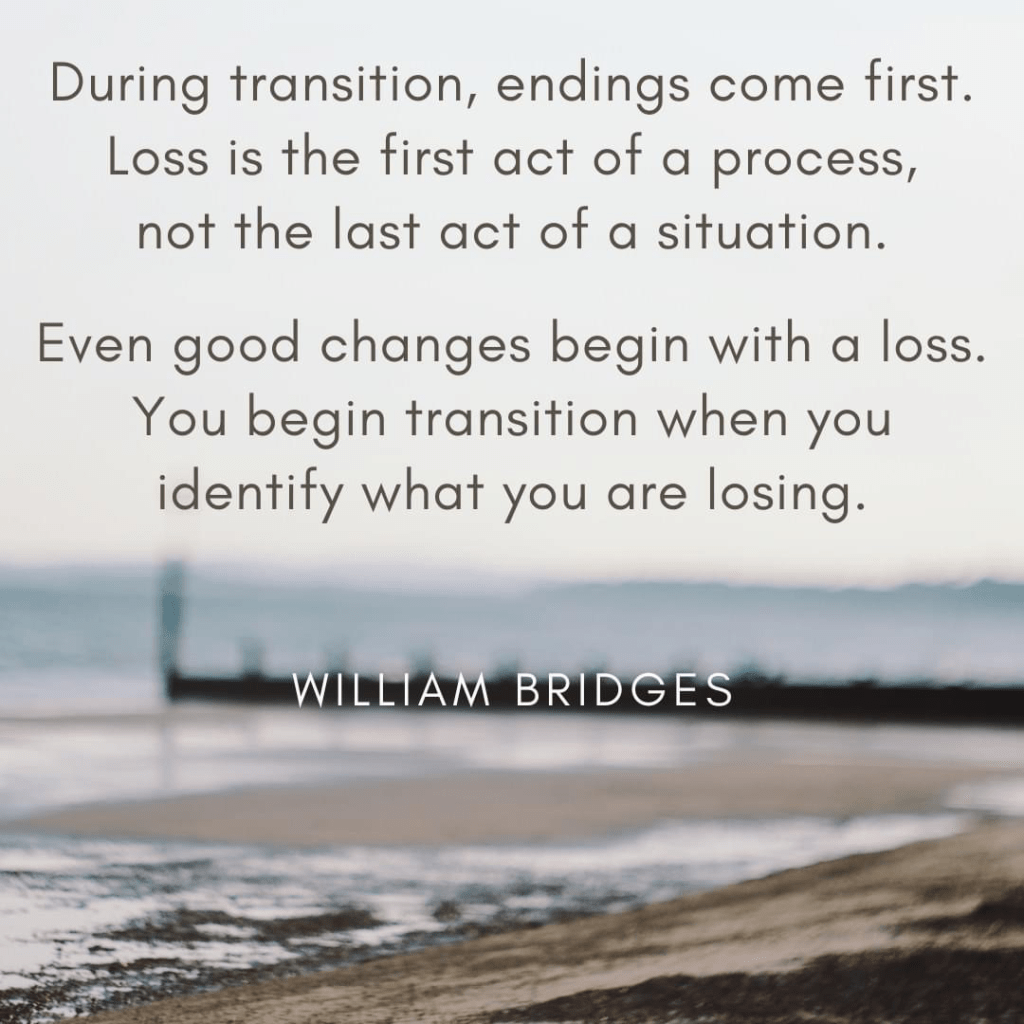
If we all served Love’s way, if we all took refuge in God, what would that look like? It would certainly feel like loss at first, all transitions do. We would have to let go of our power or wealth or whatever false safety net we have in our grip and trust that in letting go, in asking for forgiveness, that there will be enough, more than enough for us all. If we live in humility and service to others, we will be served.
There is abundant life and love for all. We must choose it.
Check out other psalm reflections in the links below or find more of my writing published in Presbyterian Outlook or listen to my experiments in podcasting on the Period Pastor Podcast. Follow me @periodpastor
Past reflection links:
Psalm 2 Year C (2024-2025)
Psalm 2 Year A (2022-2023)
I began writing Psalm reflections during Lent of 2020. Shortly after, we decided to close the church building, work from home, and worship via zoom. Many churches use the Revised Common Lectionary (RLC) that rotates scripture on a three-year cycle (A, B, and C). Starting in Advent 2019, the church decided to worship with the texts from Year D, which is still not circulated as are years A, B, and C. Year D was created with the goal of including scriptures that were left out or not used as frequently as others. While we were using Psalms in year D, most other lectionary followers were using Year A. In Advent of 2020 we rejoined those who use the lectionary in year B. Advent of 2021 year C. When we returned to in person worship, we took the psalm reflections out of the order of worship. I continued to write them for the blog. Advent of 2022 year A. I left church work in July of 2023 but continued the practice of writing psalm reflections. Advent of 2023 year B. Advent of 2024 year C. I finished year C early, so I began work on psalms I missed: Psalm 119, Year D and others not in the lectionary. By the end of 2025, I have written a reflection for each psalm.
Advent of 2025 year A.
I use the Vanderbilt Divinity Library’s resource for lectionary readings and the PCUSA planning calendar to make text selections.
Year A Psalms
1st Sunday in Advent Psalm 122, 2nd Sunday in Advent Psalm 72, 3rd Sunday in Advent Psalm 146, 4th Sunday in Advent Psalm 80, Christmas Psalm 96, Psalm 97, Psalm 98, 1st Sunday after Christmas Psalm 148, 2nd Sunday after Christmas Psalm 147, 1st Sunday after Epiphany Psalm 29, 2nd Sunday after Epiphany Psalm 40, 3rd Sunday after Epiphany Psalm 27, 4th Sunday after Epiphany Psalm 15, 5th Sunday after Epiphany Psalm 112, Transfiguration Sunday Psalm 2 or Psalm 99.
Ash Wednesday Psalm 51, 1st Sunday in Lent Psalm 32, 2nd Sunday in Lent Psalm 121, 3rdSunday in Lent Psalm 95, 4th Sunday in Lent Psalm 23, 5th Sunday in Lent Psalm 130, 6th Sunday in Lent Psalm 118 or Psalm 31.
Holy Week: Monday Psalm 36, Tuesday Psalm 71, Wednesday Psalm 70, Thursday Psalm 116, Friday Psalm 22, Saturday Psalm 31.
Easter Psalm 118 or Psalm 114, 2nd Sunday of Easter Psalm 16, 3rd Sunday of Easter Psalm 116, 4th Sunday of Easter Psalm 23, 5th Sunday of Easter Psalm 31, 6th Sunday of Easter Psalm 66, Ascension of the Lord Psalm 47 or Psalm 93, 7th Sunday of Easter Psalm 68, Pentecost Psalm 104.
1st Sunday after Pentecost Psalm 8, 2nd Sunday after Pentecost Psalm 33 or Psalm 50, 3rd Sunday after Pentecost Psalm 116 or Psalm 100, 4th Sunday after Pentecost Psalm 86 or Psalm 69, 5th Sunday after Pentecost Psalm 13 or Psalm 89, 6th Sunday after Pentecost Psalm 45 or Psalm 145, 7th Sunday after Pentecost Psalm 119 or Psalm 65, 8th Sunday after Pentecost Psalm 139 or Psalm 86, 9th Sunday after Pentecost Psalm 105 or Psalm 119, 10th Sunday after Pentecost Psalm 17 or Psalm 145, 11th Sunday after Pentecost Psalm 105 or Psalm 85, 12th Sunday after Pentecost Psalm 133 or Psalm 67, 13th Sunday after Pentecost Psalm 124 or Psalm 138, 14th Sunday after Pentecost Psalm 105 or Psalm 26, 15thSunday after Pentecost Psalm 149 or Psalm 119, 16th Sunday after Pentecost Psalm 114 or Psalm 103, 17th Sunday after Pentecost Psalm 105 or Psalm 145, 18th Sunday after Pentecost Psalm 78 or Psalm 25, 19th Sunday after Pentecost Psalm 19 or Psalm 80, 20th Sunday after Pentecost Psalm 106 or Psalm 23, 21st Sunday after Pentecost Psalm 99 or Psalm 96, 22nd Sunday after Pentecost Psalm 90 or Psalm 1, 23rd Sunday after Pentecost Psalm 107 or Psalm 43, 24th Sunday after Pentecost Psalm 78 or Psalm 70, 25th Sunday after Pentecost Psalm 123 or Psalm 90, 26th Sunday after Pentecost Psalm 100 or Psalm 95.
Sources and notes:
“The conclusion of the Old Testament scholarship is that the psalm was composed for use by a Davidic king of Judah on the occasion of his installation. Psalm 2 is one of the royal psalms, so called because their text clearly indicated that they concern rituals and ceremonies for the king. It is the first of a number that belong to the proceedings of the inauguration of a king, or perhaps to a festival celebrating that inauguration (110; 72; 101). Mays p. 45
“The idiom found in the psalms was used to express faith in what the Lord, the God of Israel, was working out through the office of the Davidic kingship. The office, not the individual of the particular historical situation, was its theme.” Mays P. 46
“”You are my son” (v. 7) is the only appearance of “son” as title of the Davidic king in the psalms. It is the ritual counterpart to the prophetic promise, “I will be his father, and he shall be my son,” given to David in II Samuel 7:14 (see its echoes in I Chron. 17:13; 22:10; 28:6).” Mays p. 47
“Psalm 2 is one of the psalms most frequently quoted and alluded to in the NT; from the perspective of early Christianity, it was a messianic psalm par excellence. Yet in the interpretation of the psalm which has been given so far, the psalm has been presented as a royal psalm, to be associated with a king’s coronation; it has not been identified as explicitly messianic. To perceive the transition of the psalm from its royal to messianic character, it is necessary first to perceive certain transitions in biblical history and religious though.” WBC p. 68
The declaration of God to the king, “You are my son,” becomes the central assertion about the relation of Jesus to God. In the Old Testament, “king” and “anointed” are more frequent and important titles, but in the New Testament, “son” moves to the fore as the identification of the One whom God has chosen to represent his kingdom in the world. More than the other titles, it emphasizes the correspondence between the heavenly sovereign and the person of his human regent. The setting of the declaration in the New Testament is the disclosure event, moments when the relation of Jesus to God is revealed. The declaration is heard in the baptism of Jesus (Mark 1:11 and parallels) and his transfiguration (Mark 9:7 and parallels; II Peter 1:17). It is proclaimed as the meaning of his resurrection (Acts 13:33; Rom 1:4). It is God’s central word to and about Jesus (Heb. 1:5; 5:5). Mays pp.48-49
Psalm 2 is found in year A on Transfiguration Sunday.
“Just as it must have seemed to ancient Israelites and Judeans during a variety of monarchical crises, and just as it must have seemed to a restored but embattled post-exilic community, so also it seems to us: It does not appear that God rules the world. But it is precisely the disparity between the proclamations and promises of Psalm 2 and historical actualities that presents us with the crucial interpretative issue. This disparity reveals the strange way that God exercise sovereignty. The power of God is not the absolute power of a dictator but the power of committed love. In wordy terms, might makes right. But on God’s terms, right makes might. The righteous–those who live under God’s sovereignty– will be vulnerable to the powers of the world (Ps 3:1-2), but they will never be without help (3:8). The striking claim of Psalm 2 is that true happiness if found by those “who take refuge in” God (2:12). Thus, like Psalm 1, Psalm 2 calls for a decision: Who rules the world? Whom shall we trust? Will we trust the apparent power of the kings and rulers of the earth–the wicked? Or will we trust God? The “happy,” the righteous, are those who, amid competing claims and powers, put their trust in God. In the eyes of the world, this decision makes no sense.” NIB p. 311
“To take refuge in the LORD is one of the most important expressions for the piety nurture by the psalms. Literally, it means to seek shelter or protected space. Used as a metaphor, it belongs to the psalmic vocabulary of trust, the act of turning to and relying on the LORD’s salvation. Here in the introduction it points forward to all the following prayers, beginning with Psalm 3, and was probably added to Psalm 2 to do just that. They prayers are the liturgy of those who take refuge in the LORD, in the midst of all the power in the world that threaten the way of those who seek to live in the rule of God.” Mays p. 48
“Psalm 2 is placed at the outset of the Psalter to express the significance of David and his dynasty for the faith of Israel. This tradition celebrates YHWH’s unconditional promise to David.” Brueggemann, From Whom No Secrets are Hid p. 5
Alter, Robert. 2007. The Book of Psalms: A Translation with Commentary New York: W. W. Norton & Company
WBC Allen, Leslie C. 1983. Word Biblical Commentary: Psalms 101-150. Vol. 21. Waco, TX: Word Books, Publisher.
Bonhoeffer, Dietrich. 1974. Psalms: The Prayer Book of the Bible. 8th ed. Minneapolis, MN: Augsburg Press.
Bourgeault, C. (2006). Chanting the psalms: A practical guide Audio Book. New Seeds.
Brueggemann, Walter. 2007. Praying the Psalms: Engaging Scripture and the Life of the Spirit. 2nd ed. Eugene, OR: Cascade.
Brueggemann, Walter. 2014. From Whom No Secrets Are Hid: Introducing the Psalms. Edited by Brent A. Strawn. 1st ed. Louisville, KY: Westminster John Knox Press.
Brueggemann, Walter. Davis Hanskins, Editor. 2022. Our Hearts Wait: Worshiping Through Praise and Lament in the Psalms Westminster John Knox Press, Louisville KY.
Brueggemann, Walter. (2002). Spirituality of the psalms. Augsburg Pub. House.
Brueggemann, Walter. (1984). The Message of the Psalms: A Theological Commentary. Minneapolis: Augsburg.
Chilson, Richard, ed. You Shall Not Want: A Spiritual Journey Based on the Psalms. Ave Maria Press, 2009.
Chittister, Joan. (2011). Songs of the heart: reflections on the psalms. John Garratt Publishing.
Cudjoe-Wilkes and Wilkes Cudjoe-Wilkes, G., Wilkes, A. J., & Moss, O. (2022). Psalms for black lives: Reflections for the work of Liberation. Upper Room Books.
WBC Craigie, Peter C. 1983. Psalms 1-50–Word Biblical Commentary. Vol. 19. Waco, TX: Word Books.
Creach, Jerome Frederick Davis. 1998. Psalms: Interpretation Bible Studies. Louisville, KY: Westminster John Knox Press.
DAFLER, J. (2021). PSOBRIETY: A journey of recovery through the psalms. Louisville, KY: WESTMINSTER JOHN KNOX.
W de Claisse-Walford, Nancy L. WISDOM COMMENTARY: Psalms Bks. 4-5. Edited by Barbara E. Reid. Vol. 22. Collegeville, MN: Liturgical, 2020.
Green, Barbara. 1997. Like a Tree Planted: An Exploration of Psalms and Parables Through Metaphor. Collegeville, MN: Liturgical Press.
W Hopkins, Denise Dombkowski. WISDOM COMMENTARY: Psalms Bks. 2-3. Edited by Barbara E. Reid. Vol. 21. Collegeville, MN: Liturgical, 2016.
NIB Keck, Leander E. 2015. The New Interpreters Bible Commentary. Vol. 3. Nashville, TN: Abingdon Press.
Lewis, C. S. (2017). Reflections on the Psalms. Harper One, an imprint of Harper Collins Publishers.
Mays, James Luther. 1994. Psalms. Louisville, KY: John Knox Press.
McCann, J. C. (1993). A theological introduction to the book of Psalms: The Psalms as Torah. Nashville, TN: Abingdon Press.
McCann, J. C., & Howell, J. C. 2001. Preaching the Psalms. Nashville, TN: Abingdon Press.
Merrill, N. C. (2020). Psalms for praying an invitation to wholeness (10th Anniversary Edition ed.). London, England: Bloomsbury Publishing.
Miller, Patrick D. 1986. Interpreting the Psalms. Philadelphia, PA: Fortress Press.
Morgan, Michael. 2010. The Psalter for Christian Worship Revised Edition. Westminster John Knox Press.
Schlimm, Matthew Richard. 2018. 70 Hebrew Words Every Christian Should Know. Nashville, TN: Abington Press.
Spong, M. (Ed.). (2020). The words of her mouth: Psalms for the struggle. Cleveland, OH: The Pilgrim Press.
WBC Tate, Marvin E. 1990. Word Biblical Commentary: Psalms 51-100. Edited by David Allan. Hubbard and Glenn W. Barker. Vol. 20. Waco, TX: Word.
Weems, Ann. 1995. Psalm of Lament. Westminster John Knox Pres
OTL Weiser, Artur. 1998. Old Testament Library: Psalms. Translated by Herbert Hartwell. 3rd ed. New York, NY: Manchester University Press.

 Period Pastor Pad