In You, Beloved, I would make my home;
Though I be humiliated with guilt, Your mercy and forgiveness will deliver me!
Hear me and hasten to my assistance!
For You are my strength and have the power to raise me up!
Yes, You are strength and truth to me;
You are my teacher, my guide; the Fire of your abiding Love cleanses my heart;
Loosen the webs that entangle me, that veil my love for You.
Into your Heart I commend my soul.
You have redeemed me, O Love, O ever Faithful One.
Those who put their focus and trust in false idols
separate themselves from You, O Love.
Though You have seen my guilt and have noted my wrongdoings,
You have not left me alone with my fears;
rather, You have forgiven my folly and set my feet on Love’s path.
My heartfelt gratitude knows no bounds, O Gracious Mender of Souls!
Be a comfort to me, Beloved, for I am in distress;
my eyes are dim from weeping, my soul is deep with grief.
For my life is worn away with sorrow, and my years with sighing;
My body has weakened and my bones waste away with misery.
All my fears rise up to mock me, my neighbors turn away,
My friends dread to see me and flee from my sickness of soul.
My mind, too, has left me like one who is dead;
I have become like a broken vessel.
Yes, I hear the voices around me whispering of my plight-
fears rise up on every side!
Isolation, rejection, fear surround me and conspire to overwhelm me.
Still, I trust in You, O Beloved, I repeat, “You are my Life.”
My life is in your hands; deliver me from the fears with separate me!
Let your face shine on me; hold me in your steadfast love!
Let me know your forgiveness, O Love, for I call upon You;
let my fears be case out, let them be transformed.
Let me speak only truth, Beloved, that I might live with integrity,
offering my work and praise to You.
O, how abundant is your goodness,
which is ever-present to those who reverence You,
and available to all who make you Heart their hoe, openly for all to see!
Like a mother hen, You shelter them from temptations of the world;
You hold then safe under your wings form the enemy…fear.
Blessed be the eternal Beloved,
who wondrously showered me with steadfast Love
when I was overwhelmed by fear.
I had cried out, “Where are You? Have You left me forever?”
You heard my fear-filled please and enveloped me in Love.
Listen in the silence, all you saints!
For Wisdom makes her home there.
The Beloved upholds the faith-filled,
those who embrace goodness and walk in the Light.
Those who choose to remain in illusion separate themselves from truth
and know not Love.
Be strong, let your heart take courage and be encouraged,
all you who would serve with Love in the Oneness of Light.
Nan C. Merrill Psalms for Praying
Reflection:
The psalmist is beyond their ability to cope and really can’t control what is happening to them anyway, so they let go and let God. That is easier said than done most of the time. Both mindfulness practices and contemplative prayer practices encourage letting go of what we cannot control. Which is hard, and it takes practice.
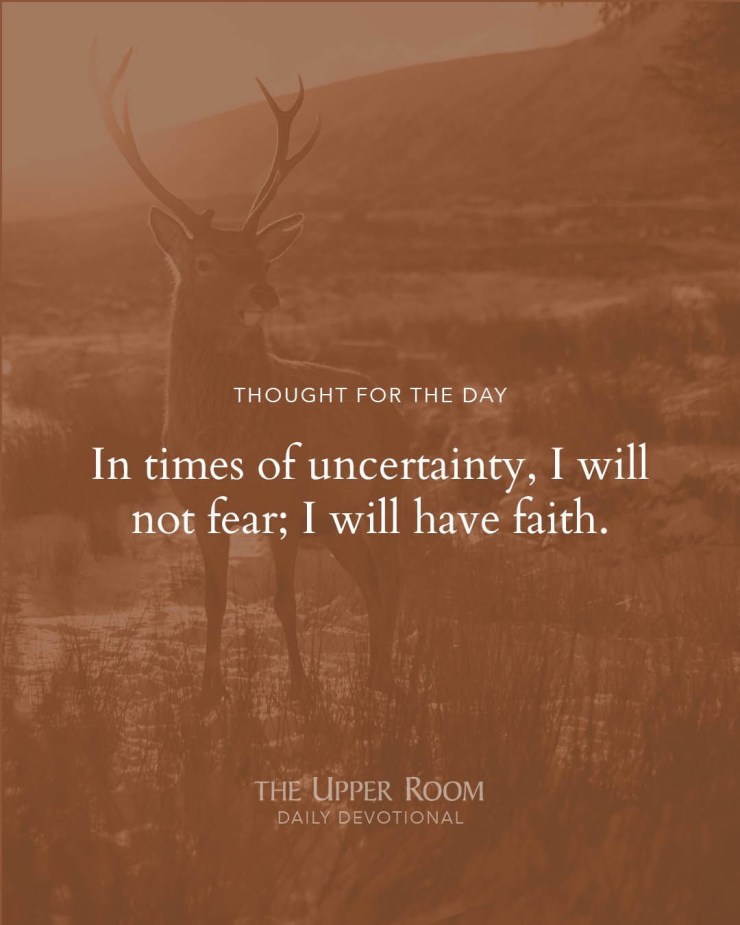
When worry or fear grips me, my practices help me to detach from the outcomes that I’m worried about. If it’s out of my control, I work on accepting all possible outcomes. The more detached I can be of the possible future, the less I fear whatever might happen next. No matter the outcome, the love of God surround me. I can choose to have faith, hope, and love guide my next steps.
A helpful guide/prayer is the serenity prayer used in twelve step programs, which goes like this, “God grant me the serenity to accept the things I cannot change, the courage to change the things I can, and the wisdom to know the difference.”
My other go-to thought practice when things are difficult, is to ask, who is God? (Not where is God?) Like the psalmist, I believe that God is present everywhere always. Sometimes, what is lacking is my awareness of God’s presence. I have experienced times when it feels like God is absent or far away that I can’t always explain. But even in my doubt, when I ask myself who is God, I remind myself of God’s steadfast love, compassion, and mercy. In life and in death, I belong to God. I cannot be separated from Love.
And, when I’m being my best self, I remember to be loving, compassionate, and merciful to my neighbors, especially those in need. I remind myself that other people are battling their inner thoughts just like I am. When I can do something, I do it. And when I can’t, I simply offer my love and presence. My hope is that my love is a reflection of God’s loving presence, providing comfort and hope no matter what happens next.
Check out other psalm reflections in the links below or find more of my writing published in Presbyterian Outlook or listen to my experiments in podcasting on the Period Pastor Podcast. Follow me @periodpastor
Past reflection links:
Psalm 31 Year C (2024-2025)
Psalm 31 Year D (2019-2020)
I began writing Psalm reflections during Lent of 2020. Shortly after, we decided to close the church building, work from home, and worship via zoom. Many churches use the Revised Common Lectionary (RLC) that rotates scripture on a three-year cycle (A, B, and C). Starting in Advent 2019, the church decided to worship with the texts from Year D, which is still not circulated as are years A, B, and C. Year D was created with the goal of including scriptures that were left out or not used as frequently as others. While we were using Psalms in year D, most other lectionary followers were using Year A. In Advent of 2020 we rejoined those who use the lectionary in year B. Advent of 2021 year C. When we returned to in person worship, we took the psalm reflections out of the order of worship. I continued to write them for the blog. Advent of 2022 year A. I left church work in July of 2023 but continued the practice of writing psalm reflections. Advent of 2023 year B. Advent of 2024 year C. I finished year C early, so I began work on psalms I missed: Psalm 119, Year D and others not in the lectionary. By the end of 2025, I have written a reflection for each psalm.
Advent of 2025 year A.
I use the Vanderbilt Divinity Library’s resource for lectionary readings and the PCUSA planning calendar to make text selections.
Year A Psalms
1st Sunday in Advent Psalm 122, 2nd Sunday in Advent Psalm 72, 3rd Sunday in Advent Psalm 146, 4th Sunday in Advent Psalm 80, Christmas Psalm 96, Psalm 97, Psalm 98, 1st Sunday after Christmas Psalm 148, 2nd Sunday after Christmas Psalm 147, 1st Sunday after Epiphany Psalm 29, 2nd Sunday after Epiphany Psalm 40, 3rd Sunday after Epiphany Psalm 27, 4th Sunday after Epiphany Psalm 15, 5th Sunday after Epiphany Psalm 112, Transfiguration Sunday Psalm 2 or Psalm 99.
Ash Wednesday Psalm 51, 1st Sunday in Lent Psalm 32, 2nd Sunday in Lent Psalm 121, 3rdSunday in Lent Psalm 95, 4th Sunday in Lent Psalm 23, 5th Sunday in Lent Psalm 130, 6th Sunday in Lent Psalm 118 or Psalm 31.
Holy Week: Monday Psalm 36, Tuesday Psalm 71, Wednesday Psalm 70, Thursday Psalm 116, Friday Psalm 22, Saturday Psalm 31.
Easter Psalm 118 or Psalm 114, 2nd Sunday of Easter Psalm 16, 3rd Sunday of Easter Psalm 116, 4th Sunday of Easter Psalm 23, 5th Sunday of Easter Psalm 31, 6th Sunday of Easter Psalm 66, Ascension of the Lord Psalm 47 or Psalm 93, 7th Sunday of Easter Psalm 68, Pentecost Psalm 104.
1st Sunday after Pentecost Psalm 8, 2nd Sunday after Pentecost Psalm 33 or Psalm 50, 3rd Sunday after Pentecost Psalm 116 or Psalm 100, 4th Sunday after Pentecost Psalm 86 or Psalm 69, 5th Sunday after Pentecost Psalm 13 or Psalm 89, 6th Sunday after Pentecost Psalm 45 or Psalm 145, 7th Sunday after Pentecost Psalm 119 or Psalm 65, 8th Sunday after Pentecost Psalm 139 or Psalm 86, 9th Sunday after Pentecost Psalm 105 or Psalm 119, 10th Sunday after Pentecost Psalm 17 or Psalm 145, 11th Sunday after Pentecost Psalm 105 or Psalm 85, 12th Sunday after Pentecost Psalm 133 or Psalm 67, 13th Sunday after Pentecost Psalm 124 or Psalm 138, 14th Sunday after Pentecost Psalm 105 or Psalm 26, 15thSunday after Pentecost Psalm 149 or Psalm 119, 16th Sunday after Pentecost Psalm 114 or Psalm 103, 17th Sunday after Pentecost Psalm 105 or Psalm 145, 18th Sunday after Pentecost Psalm 78 or Psalm 25, 19th Sunday after Pentecost Psalm 19 or Psalm 80, 20th Sunday after Pentecost Psalm 106 or Psalm 23, 21st Sunday after Pentecost Psalm 99 or Psalm 96, 22nd Sunday after Pentecost Psalm 90 or Psalm 1, 23rd Sunday after Pentecost Psalm 107 or Psalm 43, 24th Sunday after Pentecost Psalm 78 or Psalm 70, 25th Sunday after Pentecost Psalm 123 or Psalm 90, 26th Sunday after Pentecost Psalm 100 or Psalm 95.
Sources and notes:
“The psalm ends with a call to the faithful hasidim to love and rely on the LORD in need (vv. 23-24). The deliverance of the one who prays this prayer is a revelation of the way God deals with those who rely on him and the basis for summing them to a life of enduring trust.” Mays p. 143
“the confidence of the prayer is not in any respect a virtue of the one who prays. It is, rather, a possibility that is based on the character of the one to how the prayer is made. The psalm speaks to the LORD as the ‘el ’emet (v. 5), the God who can be relied on and believed in because he is true to himself and continues to always be what he has shown himself.” Mays p. 143
2 unique phrases: “Into your hands I commit my spirit” Vs. 5 “Because the sentence in Luke’s Gospel was the dying word of Jesus and because of similar words of the dying Stephan (Acts 7:59), it has been used by believers across the ages as the prayer with which to take leave of this life in faith…. But in Hebrew and in the context of the psalm the sentence means something like “I entrust my life to your sovereign disposition”; it is an existential confession of ultimate helplessness, dependence, and trust, a way of saying in the midst of affliction, “It is up to you, God, what becomes of me, and I am willing to have it so.” The other unique sentence is a different way of saying the same. “My time is in your hand” (v. 15) does not mean it depends on God how long I live, but my destiny (the occasions when things happen that determine my life) is in the hand of God. These are sentences that belong to living as well as dying. Indeed, it is a question whether they can be said at the end in authenticity unless they have been our confession all along the way.” Mays p. 144
“even through failure and death the providence of the faithful God determines the “times” of his servants. And they encourage and exhort us through the words of verses 23-24 to find love, strength, and courage in life and death through making their commitment of trust.” Mays p. 145
“To entrust our lives and futures to God, to belong to God in living and dying means ultimately that we derive our identity not from the worthless idols of our culture but form the character of God, to whom we entrust ourselves. The two fundamental characteristics of God that are emphasized in Psalm 31 are God’s faithfulness (v. 5) and God’s steadfast love (vv. 7, 16, 21), and the psalmist’s closing admonition addressed the people of God as God’s steadfastly loved (or loving) ones and “the faithful” (v. 23). God’s faithfulness and love enable and empower the existence of a people who in turn can be faithful and loving to God and to each other. In our world–full of isolated selves and with “terror all around” (v. 13) — that good news incites a commitment to God and to the church that makes it possible to “be strong… take courage…wait for the LORD” (v. 24).” NIB p. 392
“In You, O LORD, I shelter,/Let me never be shamed. Both the clauses, as they stand or with minor variations, are encountered in many other psalms, immediately identifying this one as a supplication. The predisposition of the psalmist to draw on a repertory of stock images and even stock lines is especially evident in this poem, which repeatedly echoes other psalms as well as a sentence from the psalm that occurs in the Book of Jonah and some lines from Jeremiah.” Alter p. 105
“like the dead/… like a vessel lost. In the midst of many stock phrases, a concreteness of somber existential reflection manifests itself. It is a cruel fact of life that the dead and buried, however much lip service is paid to them, are often forgotten, no longer part of the continuing considerations of our lives, like some lost possession for which we no longer even look.” Alter p. 107
Alter, Robert. 2007. The Book of Psalms: A Translation with Commentary New York: W. W. Norton & Company
WBC Allen, Leslie C. 1983. Word Biblical Commentary: Psalms 101-150. Vol. 21. Waco, TX: Word Books, Publisher.
Bonhoeffer, Dietrich. 1974. Psalms: The Prayer Book of the Bible. 8th ed. Minneapolis, MN: Augsburg Press.
Bourgeault, C. (2006). Chanting the psalms: A practical guide Audio Book. New Seeds.
Brueggemann, Walter. 2007. Praying the Psalms: Engaging Scripture and the Life of the Spirit. 2nd ed. Eugene, OR: Cascade.
Brueggemann, Walter. 2014. From Whom No Secrets Are Hid: Introducing the Psalms. Edited by Brent A. Strawn. 1st ed. Louisville, KY: Westminster John Knox Press.
Brueggemann, Walter. Davis Hanskins, Editor. 2022. Our Hearts Wait: Worshiping Through Praise and Lament in the Psalms Westminster John Knox Press, Louisville KY.
Brueggemann, Walter. (2002). Spirituality of the psalms. Augsburg Pub. House.
Brueggemann, Walter. (1984). The Message of the Psalms: A Theological Commentary. Minneapolis: Augsburg.
Chilson, Richard, ed. You Shall Not Want: A Spiritual Journey Based on the Psalms. Ave Maria Press, 2009.
Chittister, Joan. (2011). Songs of the heart: reflections on the psalms. John Garratt Publishing.
Cudjoe-Wilkes and Wilkes Cudjoe-Wilkes, G., Wilkes, A. J., & Moss, O. (2022). Psalms for black lives: Reflections for the work of Liberation. Upper Room Books.
WBC Craigie, Peter C. 1983. Psalms 1-50–Word Biblical Commentary. Vol. 19. Waco, TX: Word Books.
Creach, Jerome Frederick Davis. 1998. Psalms: Interpretation Bible Studies. Louisville, KY: Westminster John Knox Press.
DAFLER, J. (2021). PSOBRIETY: A journey of recovery through the psalms. Louisville, KY: WESTMINSTER JOHN KNOX.
W de Claisse-Walford, Nancy L. WISDOM COMMENTARY: Psalms Bks. 4-5. Edited by Barbara E. Reid. Vol. 22. Collegeville, MN: Liturgical, 2020.
Green, Barbara. 1997. Like a Tree Planted: An Exploration of Psalms and Parables Through Metaphor. Collegeville, MN: Liturgical Press.
W Hopkins, Denise Dombkowski. WISDOM COMMENTARY: Psalms Bks. 2-3. Edited by Barbara E. Reid. Vol. 21. Collegeville, MN: Liturgical, 2016.
NIB Keck, Leander E. 2015. The New Interpreters Bible Commentary. Vol. 3. Nashville, TN: Abingdon Press.
Lewis, C. S. (2017). Reflections on the Psalms. Harper One, an imprint of Harper Collins Publishers.
Mays, James Luther. 1994. Psalms. Louisville, KY: John Knox Press.
McCann, J. C. (1993). A theological introduction to the book of Psalms: The Psalms as Torah. Nashville, TN: Abingdon Press.
McCann, J. C., & Howell, J. C. 2001. Preaching the Psalms. Nashville, TN: Abingdon Press.
Merrill, N. C. (2020). Psalms for praying an invitation to wholeness (10th Anniversary Edition ed.). London, England: Bloomsbury Publishing.
Miller, Patrick D. 1986. Interpreting the Psalms. Philadelphia, PA: Fortress Press.
Morgan, Michael. 2010. The Psalter for Christian Worship Revised Edition. Westminster John Knox Press.
Schlimm, Matthew Richard. 2018. 70 Hebrew Words Every Christian Should Know. Nashville, TN: Abington Press.
Spong, M. (Ed.). (2020). The words of her mouth: Psalms for the struggle. Cleveland, OH: The Pilgrim Press.
WBC Tate, Marvin E. 1990. Word Biblical Commentary: Psalms 51-100. Edited by David Allan. Hubbard and Glenn W. Barker. Vol. 20. Waco, TX: Word.
Weems, Ann. 1995. Psalm of Lament. Westminster John Knox Pres
OTL Weiser, Artur. 1998. Old Testament Library: Psalms. Translated by Herbert Hartwell. 3rd ed. New York, NY: Manchester University Press.

 Period Pastor Pad