I will bless the Beloved at all times; a song of praise will I sing.
My soul speaks to the Beloved continually let all who suffer hear and be glad.
O, open your hearts, friends, that your pain and loneliness be turned to Love;
And then, we shall rejoice in the Beloved together!
When I searched for Love, the Beloved answered within my heart,
and all my fears flew away.
Look to the Beloved, and your emptiness will be filled, your face will radiate Love.
For when you weep, the Beloved hears and comes to companion you;
your burdens are eased by Love.
The Beloved sends angels when you call upon these messengers
for guidance and light, for their gracious inspiration,
One with Love, you are never alone!
Happy are all who dwell in the Beloved’s heart!
Abandon yourself into Love’s hands, O you holy ones,
For those who give themselves to the Beloved, lack no good thing.
Everyone separated from Love is empty and hungry within;
But those who open their hearts to the Beloved, are filled to overflowing!
O come and see, come and hear, how we honor the Beloved.
Many there are who desire Life, who yearn for fulfillment,
who covet wisdom and Truth.
Keep your heart open and free, take time to dwell in the Silence,
Become a peaceful presence in the world.
For the Beloved sees the deeds of our hearts,
and hears our innermost thoughts.
The face of the Beloved turns from the evil ways of men and women;
For Love is kind and merciful and remember not our sins.
Rather, the Beloved is patient, ever-waiting for us to cry out for forgiveness
to embrace Love’s way.
How often the Beloved weeps with compassion
over those who are crushed in spirit.
Through we are beset with many fears that cause illness and troubles,
The Beloved is ever ready to comfort us in our sorrows,
to strengthen us on our soul’s journey to wholeness.
The Beloved renews the life of all who surrender to Love.
Nan C. Merrill Psalms for Praying
Reflection:
God is present always. God is not with us to make our lives perfect, but to be united with us no matter what happens. God’s promise isn’t perfection, its presence. We are in a relationship with God that is eternal, nothing, not even death, can separate us from God’s love.
I trust that that God who dwells within my heart (who dwells in all our hearts) is Love. And if I open my inmost self to Love, I believe that there will be healing and hope within me. For me, the goal of this process is to live as someone who is thoughtful and intentional, regards self and others with compassion, and acts accordingly.
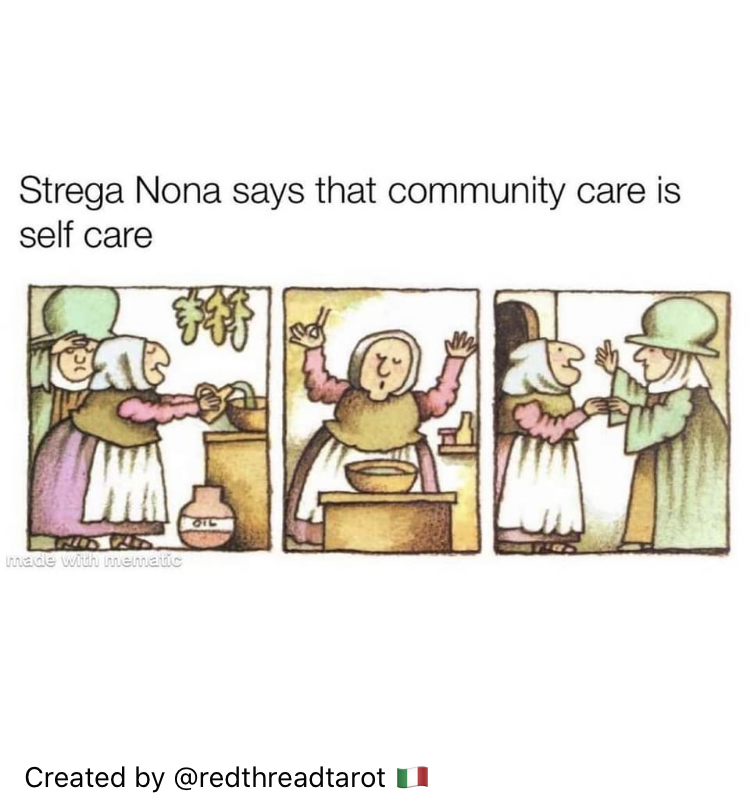
Being a person of faith does not mean that bad things won’t happen or that life will be full of blessings. In happy times and in sad, we are not alone. I encourage you to surround yourself with believers, your crew, your church family, whatever you call those nearest and dearest to you that you share your life with. Open your heart to this chosen tribe. Together you will experience your joys and sorrows in the presence of the divine. In this community there is solidarity and love. Life shared in community is the way of Love. Let us open our hearts to embrace Love’s way. We shall rejoice in the Beloved together.
Check out other psalm reflections in the links below or find more of my writing published in Presbyterian Outlook or listen to my experiments in podcasting on the Period Pastor Podcast. Follow me @periodpastor
Past reflection links:
Psalm 34 Year B (2023-2024)
Psalm 34 Year B (2020-2021)
I began writing Psalm reflections during Lent of 2020. Shortly after, we decided to close the church building, work from home, and worship via zoom. Many churches use the Revised Common Lectionary (RLC) that rotates scripture on a three-year cycle (A, B, and C). Starting in Advent 2019, the church decided to worship with the texts from Year D, which is still not circulated as are years A, B, and C. Year D was created with the goal of including scriptures that were left out or not used as frequently as others. While we were using Psalms in year D, most other lectionary followers were using Year A. In Advent of 2020 we rejoined those who use the lectionary in year B. Advent of 2021 year C. When we returned to in person worship, we took the psalm reflections out of the order of worship. I continued to write them for the blog. Advent of 2022 year A. I left church work in July of 2023 but continued the practice of writing psalm reflections. Advent of 2023 year B. Advent of 2024 year C. I finished year C early, so I began work on psalms I missed: Psalm 119, Year D and others not in the lectionary. By the end of 2025, I have written a reflection for each psalm.
Advent of 2025 year A.
I use the Vanderbilt Divinity Library’s resource for lectionary readings and the PCUSA planning calendar to make text selections.
Year A Psalms
1st Sunday in Advent Psalm 122, 2nd Sunday in Advent Psalm 72, 3rd Sunday in Advent Psalm 146, 4th Sunday in Advent Psalm 80, Christmas Psalm 96, Psalm 97, Psalm 98, 1st Sunday after Christmas Psalm 148, 2nd Sunday after Christmas Psalm 147, 1st Sunday after Epiphany Psalm 29, 2nd Sunday after Epiphany Psalm 40, 3rd Sunday after Epiphany Psalm 27, 4th Sunday after Epiphany Psalm 15, 5th Sunday after Epiphany Psalm 112, Transfiguration Sunday Psalm 2 or Psalm 99.
1st Sunday in Lent Psalm 32, 2nd Sunday in Lent Psalm 121, 3rdSunday in Lent Psalm 95, 4th Sunday in Lent Psalm 23, 5th Sunday in Lent Psalm 130, 6th Sunday in Lent Psalm 118 or Psalm 31.
Easter Psalm 118 or Psalm 114, 2nd Sunday of Easter Psalm 16 or Psalm 111, 3rd Sunday of Easter Psalm 116, 4th Sunday of Easter Psalm 23, 5th Sunday of Easter Psalm 31, 6th Sunday of Easter Psalm 66, Ascension of the Lord Psalm 47 or Psalm 93, 7th Sunday of Easter Psalm 68, Pentecost Psalm 104.
1st Sunday after Pentecost Psalm 8, 2nd Sunday after Pentecost Psalm 33 or Psalm 50, 3rd Sunday after Pentecost Psalm 116 or Psalm 100, 4th Sunday after Pentecost Psalm 86 or Psalm 69, 5th Sunday after Pentecost Psalm 13 or Psalm 89, 6th Sunday after Pentecost Psalm 45 or Psalm 145, 7th Sunday after Pentecost Psalm 119 or Psalm 65, 8th Sunday after Pentecost Psalm 139 or Psalm 86, 9th Sunday after Pentecost Psalm 105 or Psalm 119, 10th Sunday after Pentecost Psalm 17 or Psalm 145, 11th Sunday after Pentecost Psalm 105 or Psalm 85, 12th Sunday after Pentecost Psalm 133 or Psalm 67, 13th Sunday after Pentecost Psalm 124 or Psalm 138, 14th Sunday after Pentecost Psalm 105 or Psalm 26, 15thSunday after Pentecost Psalm 149 or Psalm 119, 16th Sunday after Pentecost Psalm 114 or Psalm 103, 17th Sunday after Pentecost Psalm 105 or Psalm 145, 18th Sunday after Pentecost Psalm 78 or Psalm 25, 19th Sunday after Pentecost Psalm 19 or Psalm 80, 20th Sunday after Pentecost Psalm 106 or Psalm 23, 21st Sunday after Pentecost Psalm 99 or Psalm 96, 22nd Sunday after Pentecost Psalm 90 or Psalm 1, 23rd Sunday after Pentecost Psalm 107 or Psalm 43, 24th Sunday after Pentecost Psalm 78 or Psalm 70, 25th Sunday after Pentecost Psalm 123 or Psalm 90, 26th Sunday after Pentecost Psalm 100 or Psalm 95.
Sources and notes:
“Psalm 34 is in many respects a companion of Psalm 25. Both are acrostic poems whose poetic lines begin with letters of the Hebrew alphabet in order. In both, the letter waw is omitted and a final line beyond the alphabetic sequence is added to make twenty-two lines. Psalm 25 employs the liturgical form of a prayer for help and Psalm 34 the form of thanksgiving for help, but in both the instructional function dominates. In Psalm 34 the element of witness to others in the songs of thanksgiving has developed into a teaching mode. The psalm is a general thanksgiving that gives instruction in the theology of both phases of psalmic prayer: the cry for help and thankful praise for help.” Mays p. 151
“The shaping of new life requires discipline and fidelity to principle. In this song of thanksgiving, the moment of rescue is remembered. But the speaker cannot refrain from instruction that counsels others in how to consolidate and sustain the new orientation, so this psalm has strong features of wisdom instruction. That the psalm has such deliberate intentionality is also evident in its acrostic construction, which suggests it is not an emotional outburst of gratitude but a quite disciplined stamen for new world building.” Brueggemann The Message of the Psalms p. 133
“The ethical life must be lived as the prayerful life.” Mays p. 153
Taste and See = “find out by experience” Mays p. 153
“The fear of the Lord is indeed the foundation of life, the key to joy in life and long and happy days. But it is not a guarantee that life will be always easy, devoid of the difficulties that may seem to mar so much of human existence. The fear of the Lord establishes joy and fulfillment in all of life’s experiences. It may mend the broken heart, but it does not prevent the heart from being broken; it may restore the spiritually crushed, but it does not crush the forces that may create oppression. The psalm, if fully grasped, dispels the naïveté of that faith which does not contain within it the strength to stand against the onslaught of evil.” WBC p. 282
“The superscription explicitly links this psalm to David’s rescue from Abimelech (1 Sam. 21:10-15). We may take that reference as one important case that helps dramatize the generalization the text affirms. What is clear is that the rescue is concrete and historical and resists everything spiritualizing. This prayer is for those who find themselves resourceless against the powers of this age, and then are remarkably released for new life.” Brueggemann The Message of the Psalms p. 133
“The newly oriented Israel must engage in society building, to develop forms of behavior which sustain the gift of new social possibility. Perhaps the teacher knows that if such things are not done intentionally, very soon the recently poor and afflicted will be back in the old context of hopelessness. So we have a nice juxtaposition of liberation (vv. 1-7) and world building (vv. 8-14). Brueggemann The Message of the Psalms p. 133
“It is precisely the righteous whom the Lord sees (v. 15), hears (v. 17), is near (v. 18), and delivers (v. 19-20). the use of “the righteous” requires a “class reading” of the text. The righteous may or may not be the good, but they are surely the socially marginal, who no longer expect the dominant society to succor them, and so they look to Yahweh as the alternative source of help. Thus the cry of the righteous is an act of delegitimating the primary structures that have reduced people to helplessness. In verse 21 the righteous are not hated because they are marginal or because they are good, but because they look to Yahweh. They have discovered something remarkable and subversive about Yahweh. Yahweh’s peculiar inclinations are with the brokenhearted and the ones with crushed spirit. That is, Yahweh’s solidarity is not with the ones who go from success to success, but the ones denied success.” Brueggemann The Message of the Psalms p. 134
“Therefore verses 11-14, the summons to a faithful life, are not a call for “law and order” or conventional morality. they are rather a call to the revolutionary “good” that is antithetical to the “evildoers” (v. 16) who now orders society. The climax of verse 21 is an argument that the resisters of the righteous will turn out guilty, even though they appear to be the ones who dispenses justice. There is a higher court, and in that appeal process, they will not do well.” Brueggemann The Message of the Psalms p. 134
Alter, Robert. 2007. The Book of Psalms: A Translation with Commentary New York: W. W. Norton & Company
WBC Allen, Leslie C. 1983. Word Biblical Commentary: Psalms 101-150. Vol. 21. Waco, TX: Word Books, Publisher.
Bonhoeffer, Dietrich. 1974. Psalms: The Prayer Book of the Bible. 8th ed. Minneapolis, MN: Augsburg Press.
Bourgeault, C. (2006). Chanting the psalms: A practical guide Audio Book. New Seeds.
Brueggemann, Walter. 2007. Praying the Psalms: Engaging Scripture and the Life of the Spirit. 2nd ed. Eugene, OR: Cascade.
Brueggemann, Walter. 2014. From Whom No Secrets Are Hid: Introducing the Psalms. Edited by Brent A. Strawn. 1st ed. Louisville, KY: Westminster John Knox Press.
Brueggemann, Walter. Davis Hanskins, Editor. 2022. Our Hearts Wait: Worshiping Through Praise and Lament in the Psalms Westminster John Knox Press, Louisville KY.
Brueggemann, Walter. (2002). Spirituality of the psalms. Augsburg Pub. House.
Brueggemann, Walter. (1984). The Message of the Psalms: A Theological Commentary. Minneapolis: Augsburg.
Chilson, Richard, ed. You Shall Not Want: A Spiritual Journey Based on the Psalms. Ave Maria Press, 2009.
Chittister, Joan. (2011). Songs of the heart: reflections on the psalms. John Garratt Publishing.
Cudjoe-Wilkes and Wilkes Cudjoe-Wilkes, G., Wilkes, A. J., & Moss, O. (2022). Psalms for black lives: Reflections for the work of Liberation. Upper Room Books.
WBC Craigie, Peter C. 1983. Psalms 1-50–Word Biblical Commentary. Vol. 19. Waco, TX: Word Books.
Creach, Jerome Frederick Davis. 1998. Psalms: Interpretation Bible Studies. Louisville, KY: Westminster John Knox Press.
DAFLER, J. (2021). PSOBRIETY: A journey of recovery through the psalms. Louisville, KY: WESTMINSTER JOHN KNOX.
W de Claisse-Walford, Nancy L. WISDOM COMMENTARY: Psalms Bks. 4-5. Edited by Barbara E. Reid. Vol. 22. Collegeville, MN: Liturgical, 2020.
Green, Barbara. 1997. Like a Tree Planted: An Exploration of Psalms and Parables Through Metaphor. Collegeville, MN: Liturgical Press.
W Hopkins, Denise Dombkowski. WISDOM COMMENTARY: Psalms Bks. 2-3. Edited by Barbara E. Reid. Vol. 21. Collegeville, MN: Liturgical, 2016.
NIB Keck, Leander E. 2015. The New Interpreters Bible Commentary. Vol. 3. Nashville, TN: Abingdon Press.
Lewis, C. S. (2017). Reflections on the Psalms. Harper One, an imprint of Harper Collins Publishers.
Mays, James Luther. 1994. Psalms. Louisville, KY: John Knox Press.
McCann, J. C. (1993). A theological introduction to the book of Psalms: The Psalms as Torah. Nashville, TN: Abingdon Press.
McCann, J. C., & Howell, J. C. 2001. Preaching the Psalms. Nashville, TN: Abingdon Press.
Merrill, N. C. (2020). Psalms for praying an invitation to wholeness (10th Anniversary Edition ed.). London, England: Bloomsbury Publishing.
Miller, Patrick D. 1986. Interpreting the Psalms. Philadelphia, PA: Fortress Press.
Morgan, Michael. 2010. The Psalter for Christian Worship Revised Edition. Westminster John Knox Press.
Schlimm, Matthew Richard. 2018. 70 Hebrew Words Every Christian Should Know. Nashville, TN: Abington Press.
Spong, M. (Ed.). (2020). The words of her mouth: Psalms for the struggle. Cleveland, OH: The Pilgrim Press.
WBC Tate, Marvin E. 1990. Word Biblical Commentary: Psalms 51-100. Edited by David Allan. Hubbard and Glenn W. Barker. Vol. 20. Waco, TX: Word.
Weems, Ann. 1995. Psalm of Lament. Westminster John Knox Pres
OTL Weiser, Artur. 1998. Old Testament Library: Psalms. Translated by Herbert Hartwell. 3rd ed. New York, NY: Manchester University Press.

 Period Pastor Pad