Those who teach illusion are ignorant as are those who trust in them.
O, people of the earth, trust in the Blessed One,
in the Holy One, who is your very life!
O, nations of the world, put your trust in the Blessed One,
in the Holy One, who is your Guide and Counselor!
You, who open your hearts to Love, will find inner peace,
through the Holy One, who is your Teacher!
The Beloved is ever mindful of us, and blesses us.
Love will bless the peoples;
Love will bless the nations;
The Beloved will bless those who invite Love within,
who open wide the door, and who bless the world with their presence.
May you call upon the Holy One, you and your children!
May you be guided by the Spirit of Truth, who dwells within your heart!
the heavens declare the glory of the Creator,
the earth too, is filled with wonder, gifts of Love.
Fear not for your life; for death is but a doorway to new birth;
the Beloved has shown us the way to Eternal Life.
Let us trust the Holy One from this time forth and forevermore.
Sing praises to the Living Presence, to You, Life of all life!
Nan C. Merrill Psalms for Praying
Reflection:
Idols made by human hands cannot do good and cannot do evil. They can’t do anything… well… unfortunately, those who make and worship them become like them. So in some ways, these idols that we worship can take away our humanity.
The living God is capable of love, compassion, transformational and more than I can imagine. I want to worship a God whose character is one I desire to emulate, a God whose goodness and love has no limit.
We become like what we worship. We are made in God’s imagine and bear her likeness. Our hearts are formed after her heart. We are called to love as God loves. We live like those who are loved and blessed by God. We are called to rest, to give ourselves a sabbath and to allow others to have sabbath rest too. We are called to do what is right and to know the difference between what is right and what is easy. We are called to think of ourselves less and to think of others more often as we make our choices about the world we want to live in. And in doing so we are ushering in the reign of God.
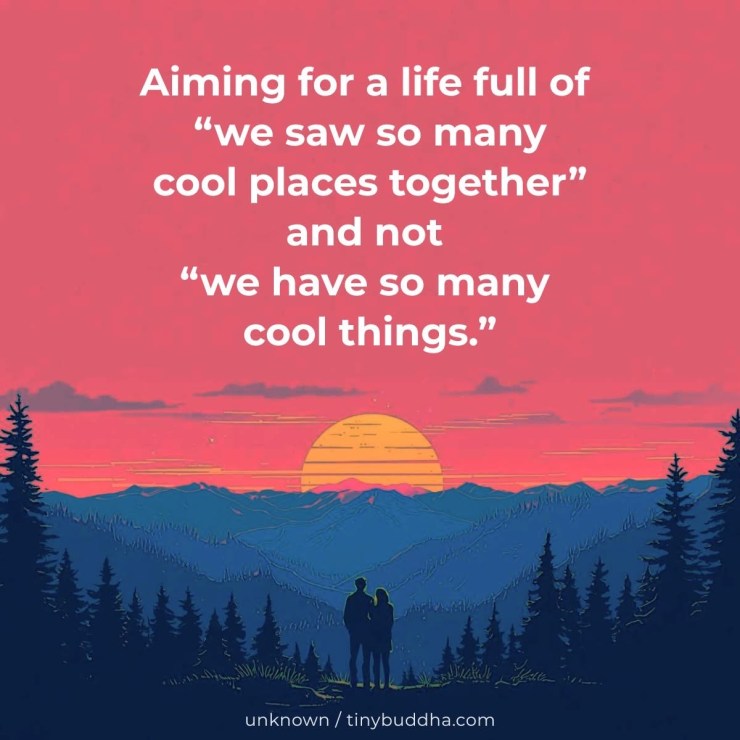
I want to be more like the living God in all of my interactions with people and with nature. This is even more evident to me when I travel and live among strangers even for a short time. I see new places in the world and I’m grateful for those who took care of this place so that I could visit, and I in turn try to leave only footprints. And for a brief moment, I stand with those who are experiencing the same. I want that moment to be infused with God’s love. I want my neighbor to experience God with and through me as I experience God with and through them. These interactions are sacred, we all belong to God and each other. Thanks be to God.
Check out other psalm reflections in the links below or find more of my writing published in Presbyterian Outlook or listen to my experiments in podcasting on the Period Pastor Podcast. Follow me @periodpastor
Past reflection links:
Psalm 115 Year D (2019-2020)
I began writing Psalm reflections during Lent of 2020. Shortly after, we decided to close the church building, work from home, and worship via zoom. Many churches use the Revised Common Lectionary (RLC) that rotates scripture on a three-year cycle (A, B, and C). Starting in Advent 2019, the church decided to worship with the texts from Year D, which is still not circulated as are years A, B, and C. Year D was created with the goal of including scriptures that were left out or not used as frequently as others. While we were using Psalms in year D, most other lectionary followers were using Year A. In Advent of 2020 we rejoined those who use the lectionary in year B. Advent of 2021 year C. When we returned to in person worship, we took the psalm reflections out of the order of worship. I continued to write them for the blog. Advent of 2022 year A. I left church work in July of 2023 but continued the practice of writing psalm reflections. Advent of 2023 year B. Advent of 2024 year C. I finished year C early, so I began work on psalms I missed: Psalm 119, Year D and others not in the lectionary. By the end of 2025, I have written a reflection for each psalm.
Advent of 2025 year A.
I use the Vanderbilt Divinity Library’s resource for lectionary readings and the PCUSA planning calendar to make text selections.
Year A Psalms
1st Sunday in Advent Psalm 122, 2nd Sunday in Advent Psalm 72, 3rd Sunday in Advent Psalm 146, 4th Sunday in Advent Psalm 80, Christmas Psalm 96, Psalm 97, Psalm 98, 1st Sunday after Christmas Psalm 148, 2nd Sunday after Christmas Psalm 147, 1st Sunday after Epiphany Psalm 29, 2nd Sunday after Epiphany Psalm 40, 3rd Sunday after Epiphany Psalm 27, 4th Sunday after Epiphany Psalm 15, 5th Sunday after Epiphany Psalm 112, Transfiguration Sunday Psalm 2 or Psalm 99.
1st Sunday in Lent Psalm 32, 2nd Sunday in Lent Psalm 121, 3rdSunday in Lent Psalm 95, 4th Sunday in Lent Psalm 23, 5th Sunday in Lent Psalm 130, 6th Sunday in Lent Psalm 118 or Psalm 31.
Easter Psalm 118 or Psalm 114, 2nd Sunday of Easter Psalm 16 or Psalm 111, 3rd Sunday of Easter Psalm 116 or Psalm 34, 4th Sunday of Easter Psalm 23 or Psalm 100, 5th Sunday of Easter Psalm 31 or Psalm 119: 9-32, 6th Sunday of Easter Psalm 66 or Psalm 115, Ascension of the Lord Psalm 47 or Psalm 93, 7th Sunday of Easter Psalm 68, Pentecost Psalm 104.
1st Sunday after Pentecost Psalm 8, 2nd Sunday after Pentecost Psalm 33 or Psalm 50, 3rd Sunday after Pentecost Psalm 116 or Psalm 100, 4th Sunday after Pentecost Psalm 86 or Psalm 69, 5th Sunday after Pentecost Psalm 13 or Psalm 89, 6th Sunday after Pentecost Psalm 45 or Psalm 145, 7th Sunday after Pentecost Psalm 119 or Psalm 65, 8th Sunday after Pentecost Psalm 139 or Psalm 86, 9th Sunday after Pentecost Psalm 105 or Psalm 119, 10th Sunday after Pentecost Psalm 17 or Psalm 145, 11th Sunday after Pentecost Psalm 105 or Psalm 85, 12th Sunday after Pentecost Psalm 133 or Psalm 67, 13th Sunday after Pentecost Psalm 124 or Psalm 138, 14th Sunday after Pentecost Psalm 105 or Psalm 26, 15thSunday after Pentecost Psalm 149 or Psalm 119, 16th Sunday after Pentecost Psalm 114 or Psalm 103, 17th Sunday after Pentecost Psalm 105 or Psalm 145, 18th Sunday after Pentecost Psalm 78 or Psalm 25, 19th Sunday after Pentecost Psalm 19 or Psalm 80, 20th Sunday after Pentecost Psalm 106 or Psalm 23, 21st Sunday after Pentecost Psalm 99 or Psalm 96, 22nd Sunday after Pentecost Psalm 90 or Psalm 1, 23rd Sunday after Pentecost Psalm 107 or Psalm 43, 24th Sunday after Pentecost Psalm 78 or Psalm 70, 25th Sunday after Pentecost Psalm 123 or Psalm 90, 26th Sunday after Pentecost Psalm 100 or Psalm 95.
Sources and notes:
“Psalm 115 begins and ends with an emphatic focus on community–“us” (v.1) and “we” (v.18)– but in each case, the community looks beyond itself. …. “Trust in God sets the community apart from those who make and worship idols. …. [warning against making/worshiping idols like other nations] is part of the liturgy of the congregation, it also serves to remind the community of the persistent temptation towards idolatrous self-centeredness that it professes to renounce.” NIB p. 629
“Though the psalm contains different styles and forms, it has a clear literary and theological unity. It begins as a prayer composed of petition (v. 1), complaint (v. 2), and an assertion of confidence in the God of Israel (v. 3). In a time when the nations scorned the competence of their God, the congregation implores the LORD to glorify himself and they confess their faith in his unqualified sovereignty. They counter with a polemic against the idols that the nations make a trust (vv. 4-8). In a threefold exhortation Israel and the Aaronic priests and all who fear the LORD (the categories are not mutually exclusive) are instructed to trust the LORD as their help and shield (vv. 9-11). Blessing upon Israel’s priests and the pious is promised (vv. 12-13) and invoked form the LORD, maker of heaven and earth (vv. 14-15). Concluding praise of the LORD as sovereign over heaven and earth (v. 16) is offered by he congregation, who contrast themselves in their unending lively praise (v. 18) with the dead, who do not praise the LORD (v. 17). The changes in style of discourse may indicate that the psalm was composed as a liturgy, but the whole could be recited by a voice speaking for and to the congregation. The concluding “Hallelujah” shows that the psalm has been included in the Psalter as a psalm of praise.” Mays pp. 365-366
“The claim that those who trust in what they made become like what they trust (v. 8) does touch on a profound truth. If human work sets the boundaries for the reach of trust, then those who trust are limited to possibilities of their own making and the power of their own potential.” Mays p. 367
“Its purpose is to chasten and correct the congregation itself in support of the first and second commandments. the temptation to forms of faith that fashion their own representations of God is never absent from religion, even that of the congregation. The congregation needs to be taught in its liturgy a language that debunks the gods we make.” Mays p. 367
“The LORD’s doing/making is purely a matter of will, a total contrast to idols made (‘asah) by human hands who can do nothing.” Mays p. 237
“Psalm 115 is third in the collection of the Egyptian Hallel psalms, the first four (Pss 115- 118) that are read after the Passover meal’s concluding prayer.” W p. 131
“Verse 8 then compares this who make a those who trust in idols to the idols themselves.” W p. 133
“How it is this freshly mediated world possible among us? What makes it different and compelling? The answer is that the Primary Character in this counter-world–so utterly absent from our closely held world–is YHWH; and YHWH is a real agent, a lively character, and an agent of firm resolve who brings transformative energy and emancipatory capacity to all our social transactions.” Brueggemann, From Whom No Secrets Are Hid pp. 26-27
Describing Psalm 115:5-7, “These gods are objects and not subjects; they are not agents, not capable of transformative action, things that, in the words of Zephaniah, “cannot do good and cannot do evil” (1:12).” Brueggemann, From Whom No Secrets Are Hid p. 27
Alter, Robert. 2007. The Book of Psalms: A Translation with Commentary New York: W. W. Norton & Company
WBC Allen, Leslie C. 1983. Word Biblical Commentary: Psalms 101-150. Vol. 21. Waco, TX: Word Books, Publisher.
Bonhoeffer, Dietrich. 1974. Psalms: The Prayer Book of the Bible. 8th ed. Minneapolis, MN: Augsburg Press.
Bourgeault, C. (2006). Chanting the psalms: A practical guide Audio Book. New Seeds.
Brueggemann, Walter. 2007. Praying the Psalms: Engaging Scripture and the Life of the Spirit. 2nd ed. Eugene, OR: Cascade.
Brueggemann, Walter. 2014. From Whom No Secrets Are Hid: Introducing the Psalms. Edited by Brent A. Strawn. 1st ed. Louisville, KY: Westminster John Knox Press.
Brueggemann, Walter. Davis Hanskins, Editor. 2022. Our Hearts Wait: Worshiping Through Praise and Lament in the Psalms Westminster John Knox Press, Louisville KY.
Brueggemann, Walter. (2002). Spirituality of the psalms. Augsburg Pub. House.
Brueggemann, Walter. (1984). The Message of the Psalms: A Theological Commentary. Minneapolis: Augsburg.
Chilson, Richard, ed. You Shall Not Want: A Spiritual Journey Based on the Psalms. Ave Maria Press, 2009.
Chittister, Joan. (2011). Songs of the heart: reflections on the psalms. John Garratt Publishing.
Cudjoe-Wilkes and Wilkes Cudjoe-Wilkes, G., Wilkes, A. J., & Moss, O. (2022). Psalms for black lives: Reflections for the work of Liberation. Upper Room Books.
WBC Craigie, Peter C. 1983. Psalms 1-50–Word Biblical Commentary. Vol. 19. Waco, TX: Word Books.
Creach, Jerome Frederick Davis. 1998. Psalms: Interpretation Bible Studies. Louisville, KY: Westminster John Knox Press.
DAFLER, J. (2021). PSOBRIETY: A journey of recovery through the psalms. Louisville, KY: WESTMINSTER JOHN KNOX.
W de Claisse-Walford, Nancy L. WISDOM COMMENTARY: Psalms Bks. 4-5. Edited by Barbara E. Reid. Vol. 22. Collegeville, MN: Liturgical, 2020.
Green, Barbara. 1997. Like a Tree Planted: An Exploration of Psalms and Parables Through Metaphor. Collegeville, MN: Liturgical Press.
W Hopkins, Denise Dombkowski. WISDOM COMMENTARY: Psalms Bks. 2-3. Edited by Barbara E. Reid. Vol. 21. Collegeville, MN: Liturgical, 2016.
NIB Keck, Leander E. 2015. The New Interpreters Bible Commentary. Vol. 3. Nashville, TN: Abingdon Press.
Lewis, C. S. (2017). Reflections on the Psalms. Harper One, an imprint of Harper Collins Publishers.
Mays, James Luther. 1994. Psalms. Louisville, KY: John Knox Press.
McCann, J. C. (1993). A theological introduction to the book of Psalms: The Psalms as Torah. Nashville, TN: Abingdon Press.
McCann, J. C., & Howell, J. C. 2001. Preaching the Psalms. Nashville, TN: Abingdon Press.
Merrill, N. C. (2020). Psalms for praying an invitation to wholeness (10th Anniversary Edition ed.). London, England: Bloomsbury Publishing.
Miller, Patrick D. 1986. Interpreting the Psalms. Philadelphia, PA: Fortress Press.
Morgan, Michael. 2010. The Psalter for Christian Worship Revised Edition. Westminster John Knox Press.
Schlimm, Matthew Richard. 2018. 70 Hebrew Words Every Christian Should Know. Nashville, TN: Abington Press.
Spong, M. (Ed.). (2020). The words of her mouth: Psalms for the struggle. Cleveland, OH: The Pilgrim Press.
WBC Tate, Marvin E. 1990. Word Biblical Commentary: Psalms 51-100. Edited by David Allan. Hubbard and Glenn W. Barker. Vol. 20. Waco, TX: Word.
Weems, Ann. 1995. Psalm of Lament. Westminster John Knox Pres
OTL Weiser, Artur. 1998. Old Testament Library: Psalms. Translated by Herbert Hartwell. 3rd ed. New York, NY: Manchester University Press.

 Period Pastor Pad