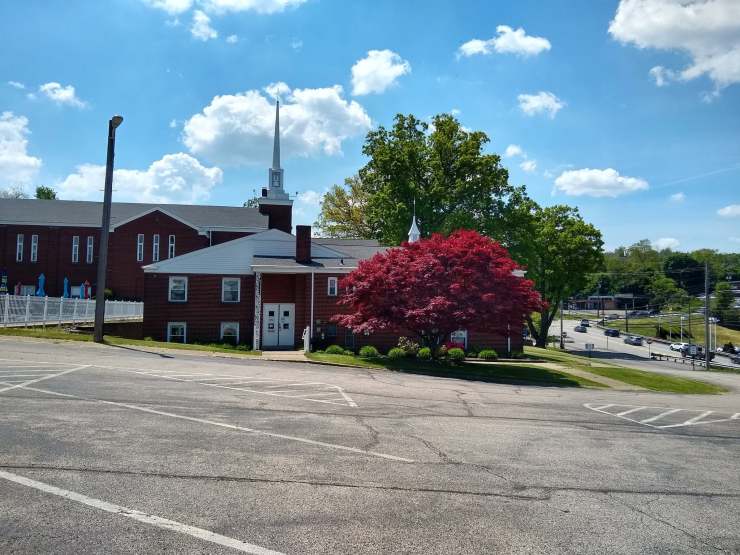
This sermon was written for Sharon Community Presbyterian Church on November 22, 2026, Christ the King Sunday. The sermon can be watched here
Where do we encounter Christ?
This is one of those passages that is familiar to many of us. Jesus describes the final judgment. The Son of Man comes in glory, gathers the nations before him, and separates people as a shepherd separates sheep from goats.
And the measure of that judgment is surprising.
The King says to those on his right:
“I was hungry and you gave me food, I was thirsty and you gave me something to drink, I was a stranger and you welcomed me, I was naked and you gave me clothing, I was sick and you took care of me, I was in prison and you visited me.”
And the people are confused.
They ask, “Lord, when was it that we saw you hungry and gave you food, or thirsty and gave you something to drink? When was it that we saw you a stranger and welcomed you?”
And the King answers, “Truly I tell you, just as you did it to one of the least of these who are members of my family, you did it to me.”
What a strange thing for Jesus to say.
He doesn’t say that when we help people in need, we are doing something that reminds him of his own compassion. He says that when we help them, we are helping him.
Christ is present in the person who is hungry. Christ is present in the stranger who needs welcome. Christ is present in the person who is sick or imprisoned, and in the person who doesn’t have adequate clothing.
And that means we may encounter Jesus in places where we don’t necessarily expect to find him.
We might expect to encounter Christ in a beautiful sanctuary, in a moving worship service, in a moment of prayer, or in the words of Scripture. And we do.
But Jesus tells us that we also encounter him in the people we might otherwise overlook. The people who are struggling. The people who need something from us. The people whose lives may be very different from our own.
That changes the way we look at our neighbors.
It also changes the way we think about what it means to serve Christ. We don’t have to go looking for some extraordinary religious experience. Sometimes the opportunity to encounter Jesus is right in front of us, in the person who needs a meal, a welcome, a visit, or a little help.
There is something else worth noticing about this passage.
Jesus doesn’t gather a handful of individuals before him. He gathers the nations. All the nations are brought before him.
This isn’t simply a story about whether one person was generous to another person. It is a picture of the whole world being held accountable for how people are treated.
Of course, individual acts of kindness matter. Feeding someone who is hungry matters. Visiting someone who is sick matters. Welcoming a stranger matters.
But Jesus is also asking us to consider our shared responsibility. What kind of communities are we creating? What kind of world are we building? Are we paying attention to the people who are struggling, or have we simply learned to accept that some people will always go without?
The needs Jesus names are not always the result of individual choices. Hunger, illness, poverty, and homelessness are shaped by circumstances and by the systems in which people live. Our response cannot always be limited to helping one person at a time. We also have to care about the conditions that leave people in need.
And perhaps the greatest surprise in this passage is where Jesus chooses to be found.
We might expect to find the King among people with power, influence, wealth, or prestige. We might expect to find him in places of religious importance.
But Jesus says, in effect, “Look again. I am with the hungry. I am with the stranger. I am with the sick. I am with the imprisoned. I am with the people who need care.”
The kingdom of God looks different from the kingdoms of this world. And the people we might be tempted to overlook are the very people Jesus tells us to see.
How have Presbyterians put this teaching into action?
The Presbyterian Church (U.S.A.) has taken this passage seriously as a call to action.
The denomination’s Matthew 25 movement is rooted in these very words of Jesus. It invites congregations and presbyteries to focus on three areas: building congregational vitality, dismantling structural racism, and eradicating systemic poverty.
That last phrase is what I’ve been thinking about in preparing this sermon: eradicating systemic poverty.
The goal isn’t simply to help people manage poverty. It is to work toward a world in which fewer people experience poverty in the first place.
The PC(USA) recognizes that this requires more than individual acts of generosity. It calls us to look at the systems and structures that shape people’s lives and to work toward changing the conditions that keep people in poverty.
And Presbyterians are doing some interesting work in that direction.
One example is right here in our own region.
In 2025, Pittsburgh Presbytery organized a campaign through its Matthew 25 On The Move ministry team to help eliminate medical debt for people in Allegheny County.
Church members from across the presbytery contributed nearly $75,000 to a partnership with an organization called Undue Medical Debt. Because that organization is able to purchase medical debt for a fraction of its original value, those contributions were enough to eliminate more than $14 million in outstanding medical bills.
Think about that for a moment.
Nearly $75,000 in donations. More than $14 million in medical debt eliminated.
People who had been carrying the stress and burden of medical bills received a letter telling them that those debts had been forgiven. The financial burden that could have kept them in poverty was lifted.
That is a powerful example of what can happen when churches work together to respond to a need in their community. And it is a reminder that sometimes we can do more together than we can do separately.
We see this same spirit of service here at Sharon Community Presbyterian Church.
There are many ways this congregation already responds to the needs of its neighbors.
The church supports the West Hills Food Pantry. The Mission group prepares and delivers lunches twice a month for volunteers at the Center for Hope in Ambridge. The congregation collects school supplies for children in the AIU Pre-K program. There is the Soup for Souls ministry, which prepares meals that can be shared with church members, friends, neighbors, and the broader community.
And there is the shoe drive. For five years, this congregation has collected shoes, and this year donated 1,413 pairs through Samaritan’s Feet.
There are also efforts to provide clean water through Deep Springs International. The congregation and the Mission and Outreach Committee contributed $2,500 to that work. These clean water systems are keeping communities healthy in Haiti.
Sharon Community Presbyterian Church has also contributed to local Days for Girls teams, helping address period poverty here in Pennsylvania and around the world. Access to menstrual supplies is something many of us may take for granted, but for people who cannot afford them, it can affect their health, education, dignity, and ability to participate fully in daily life.
That, too, is a way of seeing a need and responding with care.
These are not small things.
They represent people giving their time, sharing their resources, preparing food, collecting supplies, organizing ministries, and looking for ways to care for others.
And they reflect something important about this congregation’s mission: to care for those in need and respond to the needs of an ever-changing world.
This is what it looks like to take Jesus seriously.
We see a need, and we respond. We see a neighbor who needs help, and we do what we can. We share what we have.
These ministries matter. They make a real difference in people’s lives. They are ways of serving Christ.
But I wonder if there is another step we are being invited to take.
From helping our neighbors to changing the conditions that hurt them
What if we expanded our understanding of what it means to care for our neighbors?
What if we asked not only, “How can we help the person who is hungry?” but also, “What can we do to make sure fewer people go hungry?”
What if we asked not only, “How can we help someone who cannot afford medical care?” but also, “What can we do about the policies and systems that leave people with overwhelming medical debt?”
There will always be a need for charitable ministries. There will always be times when someone needs a meal, a warm coat, a pair of shoes, or a helping hand. We should never stop doing those things.
But charitable organizations and church ministries are often stretched thin. They are trying to respond to needs that are bigger than their resources. And sometimes we spend so much time trying to meet the immediate needs that we don’t have the time or energy to address the reasons those needs keep occurring.
That is where public policy becomes part of our Christian calling.
I know that talking about politics in church can make people uncomfortable. We come from different political backgrounds. We don’t all agree about candidates, parties, or particular policies.
But there is a difference between being political and being partisan.
Being partisan means aligning ourselves with a political party or candidate. Being political, in the broader sense, means caring about the decisions that shape our shared life together. It means recognizing that laws, budgets, and public policies affect whether people have enough to eat, whether they can afford health care, whether they have safe housing, and whether they have opportunities to build a stable life.
The church does not need to tell people which political party to support. But we can speak clearly about the needs of our neighbors and encourage our elected representatives to address them.
One example of an organization doing this work is Bread for the World.
Bread for the World is a Christian advocacy organization that works to end hunger. It encourages people of faith to contact their senators and representatives and ask them to support policies and programs that help people feed their families.
That might mean advocating for strong nutrition programs like SNAP and WIC, supporting legislation that helps families put food on the table, or supporting a Farm Bill that helps build healthy and sustainable food systems.
Bread for the World also encourages churches to hold something called an “Offering of Letters.” Instead of taking an offering of money, a congregation takes an offering of letters. People write to their elected representatives about hunger and ask them to support policies that will make a difference.
Think about how that expands the work of a congregation.
We can collect food for a food pantry. We can prepare meals for people who need them. We can support families who are struggling.
And we can also write letters, contact our representatives, learn about proposed legislation, and advocate for policies that help prevent hunger.
Those actions and advocacy are connected.
When we help feed someone who is hungry, we are responding to an immediate need. When we advocate for policies that make food more affordable and accessible, we are working to reduce the conditions that cause hunger.
Both are expressions of care.
And both are ways of taking Jesus’ words seriously.
So I want to leave Sharon Community Presbyterian Church with a challenge.
Keep doing the work you are already doing. Keep supporting the food pantry. Keep collecting shoes and school supplies. Keep preparing meals. Keep supporting efforts to provide clean water and menstrual supplies. Keep looking for the people in our community who need help.
But don’t stop there.
Look beyond the immediate need and ask what is causing it. Pay attention to the decisions being made in our communities, in Harrisburg, and in Washington. Learn about the policies that affect people who are hungry, sick, poor, or vulnerable. Find organizations that are already doing this work, and join them. Write letters. Make phone calls. Speak up.
And do it not as Republicans or Democrats, but as people who follow Jesus Christ.
Because when Jesus says, “Just as you did it to one of the least of these, you did it to me,” he is asking us to see the people around us differently.
He is asking us to recognize that their well-being is connected to our own. He is asking us to care not only about the person standing in front of us, but also about the conditions that shape that person’s life.
We may not be able to solve every problem. We may not be able to change every policy or meet every need.
But we can pay attention. We can work together. We can use our voices as well as our hands.
And we can keep asking what it would look like for our community to reflect the compassion and justice of Christ.
May we be a congregation that sees Christ in the people around us. May we be a congregation that serves Christ with our hands, our resources, and our voices. And may we have the courage to work for a community where fewer of our neighbors are left in need.
Amen.