The witness of our Life is my model; therefore my soul yearns for You.
The unfolding of your Way gives light; it imparts understanding to the simple.
My mouth pours forth praise continually, for I am ever grateful for your Promises.
You come to me and are gracious to me, as You are to all who open their heart’s door.
Guide my steps according to your Wisdom, and show me how to lovingly co-create with You.
Let me not be lured by the world’s values, that I may walk the path of wholeness.
May your face shine upon your friend, as You teach me of Love.
I weep over our wounded world, our earth ravaged by greedy, insensitive hands.
Nan C. Merrill Psalms for Praying
Reflection:
The psalmist praises God for God’s laws while lamenting that not everyone chooses to follow in God’s ways. The psalm recounts God’s wonderful works, deeds, miracles, and signs to remind us of what God has done throughout history and to reveal God’s character. Remembering God’s faithfulness in the past gives us hope that we can trust God to be with us now and always.
Those who follow in God’s ways learn to embody God’s love and become co-creators and healers in the world. This is not easy work; compassion never is. The psalmist grieves for those who do not walk in God’s ways because she sees the harm they bring upon themselves, their neighbors, and the earth. If we could all learn the radical ways of Love, the world would become a more compassionate and just place.
God, I long to co-create a compassionate world with you and my neighbors.
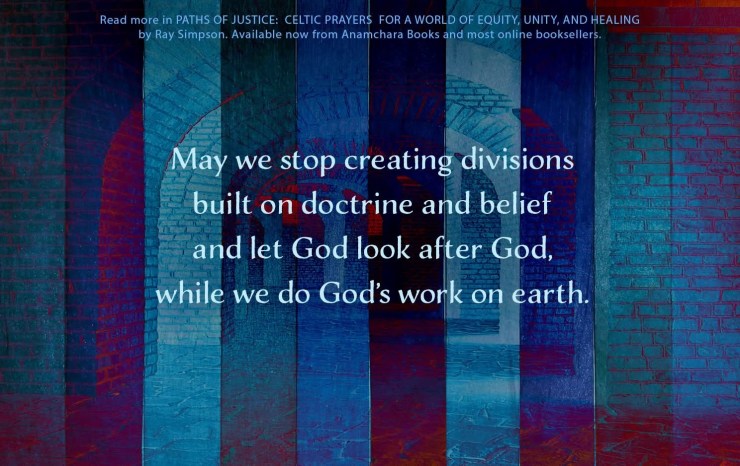
Check out other psalm reflections in the links below or find more of my writing published in Presbyterian Outlook or listen to my experiments in podcasting on the Period Pastor Podcast. Follow me @periodpastor
Past reflection links:
Psalm 119 General Information
Psalm 119 final post
Psalm 119:129-136
I began writing Psalm reflections during Lent of 2020. Shortly after, we decided to close the church building, work from home, and worship via zoom. Many churches use the Revised Common Lectionary (RLC) that rotates scripture on a three-year cycle (A, B, and C). Starting in Advent 2019, the church decided to worship with the texts from Year D, which is still not circulated as are years A, B, and C. Year D was created with the goal of including scriptures that were left out or not used as frequently as others. While we were using Psalms in year D, most other lectionary followers were using Year A. In Advent of 2020 we rejoined those who use the lectionary in year B. Advent of 2021 year C. When we returned to in person worship, we took the psalm reflections out of the order of worship. I continued to write them for the blog. Advent of 2022 year A. I left church work in July of 2023 but continued the practice of writing psalm reflections. Advent of 2023 year B. Advent of 2024 year C. I finished year C early, so I began work on psalms I missed: Psalm 119, Year D and others not in the lectionary. By the end of 2025, I have written a reflection for each psalm.
Advent of 2025 year A.
I use the Vanderbilt Divinity Library’s resource for lectionary readings and the PCUSA planning calendar to make text selections.
Year A Psalms
1st Sunday in Advent Psalm 122, 2nd Sunday in Advent Psalm 72, 3rd Sunday in Advent Psalm 146, 4th Sunday in Advent Psalm 80, Christmas Psalm 96, Psalm 97, Psalm 98, 1st Sunday after Christmas Psalm 148, 2nd Sunday after Christmas Psalm 147, 1st Sunday after Epiphany Psalm 29, 2nd Sunday after Epiphany Psalm 40, 3rd Sunday after Epiphany Psalm 27, 4th Sunday after Epiphany Psalm 15, 5th Sunday after Epiphany Psalm 112, Transfiguration Sunday Psalm 2 or Psalm 99.
1st Sunday in Lent Psalm 32, 2nd Sunday in Lent Psalm 121, 3rdSunday in Lent Psalm 95, 4th Sunday in Lent Psalm 23, 5th Sunday in Lent Psalm 130, 6th Sunday in Lent Psalm 118 or Psalm 31.
Easter Psalm 118 or Psalm 114, 2nd Sunday of Easter Psalm 16 or Psalm 111, 3rd Sunday of Easter Psalm 116 or Psalm 34, 4th Sunday of Easter Psalm 23 or Psalm 100, 5th Sunday of Easter Psalm 31 or Psalm 119: 9-32, 6th Sunday of Easter Psalm 66 or Psalm 115, 7th Sunday of Easter Psalm 68 or Psalm 21, Pentecost Psalm 104.
1st Sunday after Pentecost Psalm 8, 2nd Sunday after Pentecost Psalm 33 or Psalm 50, 3rd Sunday after Pentecost Psalm 116 or Psalm 100, 4th Sunday after Pentecost Psalm 86 or Psalm 69, 5th Sunday after Pentecost Psalm 13 or Psalm 89, 6th Sunday after Pentecost Psalm 45 or Psalm 145, 7th Sunday after Pentecost Psalm 119: 105-112 or Psalm 65, 8th Sunday after Pentecost Psalm 139 or Psalm 86, 9thSunday after Pentecost Psalm 105 or Psalm 128 or Psalm 119: 129-136, 10th Sunday after Pentecost Psalm 17 or Psalm 145, 11th Sunday after Pentecost Psalm 105 or Psalm 85, 12th Sunday after Pentecost Psalm 133 or Psalm 67, 13th Sunday after Pentecost Psalm 124 or Psalm 138, 14th Sunday after Pentecost Psalm 105 or Psalm 26, 15th Sunday after Pentecost Psalm 149 or Psalm 119, 16th Sunday after Pentecost Psalm 114 or Psalm 103, 17th Sunday after Pentecost Psalm 105 or Psalm 145, 18thSunday after Pentecost Psalm 78 or Psalm 25, 19th Sunday after Pentecost Psalm 19 or Psalm 80, 20thSunday after Pentecost Psalm 106 or Psalm 23, 21st Sunday after Pentecost Psalm 99 or Psalm 96, 22ndSunday after Pentecost Psalm 90 or Psalm 1, 23rd Sunday after Pentecost Psalm 107 or Psalm 43, 24thSunday after Pentecost Psalm 78 or Psalm 70, 25th Sunday after Pentecost Psalm 123 or Psalm 90, 26thSunday after Pentecost Psalm 100 or Psalm 95.
Sources and notes:
129-136 Pe strophe
Psalm 119:129-136 appears in Year C in the season after Pentecost, proper 12 (17) and in Year D in combination with 113-120, 121-128, on Pentecost Sunday
“The pe strophe returns to the theme of appreciation of the Torah, vv. 129-131, and its non-appreciation by others, v 136. It is the framework for the prayers of vv. 312-135, lest the poet succumb to a double enemy, mortal wrong and human oppression.” WBC p. 144
“More literally, the psalmist asserts that it is God’s “justice” to be gracious. This assertion reinforces the psalmist’s conviction that his or her life depends ultimately on God’s mercy and love. The subsequent petitions indicate that the psalmist entrusts life to God, depending on God for guidance, (v. 133), liberation from oppression (v. 134; see vv. 121-122), and illumination (v. 135).” NIB p. 645
“The strophe begins with the psalmist praising God for God’s “wonderful decrees.” The word [miracle] occurs in is various forms some thirty-three times in the book of Psalms, often in reference to the deliverance of the Israelites from Egypt. It is used most often in biblical Hebrew to describe “extraordinary phenomena, transcending the power of human knowledge and imagination” and finds perhaps its best parallel in the word “miracle.” For a full discussion of the concept of “miracle” in the Hebrew Bible, see the commentary for Psalm 105. Thus the singer of Psalm 119 equates the decrees of YHWH with YHWH’s wondrous acts of deliverance on behalf of the people of Israel.” W pp. 165-166
Psalm 105 “… the recounting of the “wonderful works” (vv. 2, 5), the “deeds” (v. 1), the “miracles” (vv. 5, 27), and the “signs” (v. 27) does not mean that they are mere historical memory. Rather, the stories testify to the basic character of God, who has provided in the past and continues to provide.” W p. 71
“In verse 130 the psalmist, using wisdom language once again, states that the opening of YHWH’s words give slight and understanding to the simple. The word translated “simple” occurs only eighteen times in the Hebrew Bible, with fifteen occurrences in the book of Proverbs.” W p. 165
“130. The portal of Your words sends forth light. Could Kafka have been remembering this verse when, in “Before the Law,” he imagined the closed gate in the parable opening to reveal a brilliant light shining from within?”” Alter p. 430
“136. men did not observe. The Hebrew says only “they,” but “men” is introduced here to avoid the possibility that the plural pronoun might refer to “eyes” or even to “streams of water.”” Alter p. 431
Alter, Robert. 2007. The Book of Psalms: A Translation with Commentary New York: W. W. Norton & Company
WBC Allen, Leslie C. 1983. Word Biblical Commentary: Psalms 101-150. Vol. 21. Waco, TX: Word Books, Publisher.
Bonhoeffer, Dietrich. 1974. Psalms: The Prayer Book of the Bible. 8th ed. Minneapolis, MN: Augsburg Press.
Bourgeault, C. (2006). Chanting the psalms: A practical guide Audio Book. New Seeds.
Brueggemann, Walter. 2007. Praying the Psalms: Engaging Scripture and the Life of the Spirit. 2nd ed. Eugene, OR: Cascade.
Brueggemann, Walter. 2014. From Whom No Secrets Are Hid: Introducing the Psalms. Edited by Brent A. Strawn. 1st ed. Louisville, KY: Westminster John Knox Press.
Brueggemann, Walter. Davis Hanskins, Editor. 2022. Our Hearts Wait: Worshiping Through Praise and Lament in the Psalms Westminster John Knox Press, Louisville KY.
Brueggemann, Walter. (2002). Spirituality of the psalms. Augsburg Pub. House.
Brueggemann, Walter. (1984). The Message of the Psalms: A Theological Commentary. Minneapolis: Augsburg.
Chilson, Richard, ed. You Shall Not Want: A Spiritual Journey Based on the Psalms. Ave Maria Press, 2009.
Chittister, Joan. (2011). Songs of the heart: reflections on the psalms. John Garratt Publishing.
Cudjoe-Wilkes and Wilkes Cudjoe-Wilkes, G., Wilkes, A. J., & Moss, O. (2022). Psalms for black lives: Reflections for the work of Liberation. Upper Room Books.
WBC Craigie, Peter C. 1983. Psalms 1-50–Word Biblical Commentary. Vol. 19. Waco, TX: Word Books.
Creach, Jerome Frederick Davis. 1998. Psalms: Interpretation Bible Studies. Louisville, KY: Westminster John Knox Press.
DAFLER, J. (2021). PSOBRIETY: A journey of recovery through the psalms. Louisville, KY: WESTMINSTER JOHN KNOX.
W de Claisse-Walford, Nancy L. WISDOM COMMENTARY: Psalms Bks. 4-5. Edited by Barbara E. Reid. Vol. 22. Collegeville, MN: Liturgical, 2020.
Green, Barbara. 1997. Like a Tree Planted: An Exploration of Psalms and Parables Through Metaphor. Collegeville, MN: Liturgical Press.
W Hopkins, Denise Dombkowski. WISDOM COMMENTARY: Psalms Bks. 2-3. Edited by Barbara E. Reid. Vol. 21. Collegeville, MN: Liturgical, 2016.
NIB Keck, Leander E. 2015. The New Interpreters Bible Commentary. Vol. 3. Nashville, TN: Abingdon Press.
Lewis, C. S. (2017). Reflections on the Psalms. Harper One, an imprint of Harper Collins Publishers.
Mays, James Luther. 1994. Psalms. Louisville, KY: John Knox Press.
McCann, J. C. (1993). A theological introduction to the book of Psalms: The Psalms as Torah. Nashville, TN: Abingdon Press.
McCann, J. C., & Howell, J. C. 2001. Preaching the Psalms. Nashville, TN: Abingdon Press.
Merrill, N. C. (2020). Psalms for praying an invitation to wholeness (10th Anniversary Edition ed.). London, England: Bloomsbury Publishing.
Miller, Patrick D. 1986. Interpreting the Psalms. Philadelphia, PA: Fortress Press.
Morgan, Michael. 2010. The Psalter for Christian Worship Revised Edition. Westminster John Knox Press.
Schlimm, Matthew Richard. 2018. 70 Hebrew Words Every Christian Should Know. Nashville, TN: Abington Press.
Spong, M. (Ed.). (2020). The words of her mouth: Psalms for the struggle. Cleveland, OH: The Pilgrim Press.
WBC Tate, Marvin E. 1990. Word Biblical Commentary: Psalms 51-100. Edited by David Allan. Hubbard and Glenn W. Barker. Vol. 20. Waco, TX: Word.
Weems, Ann. 1995. Psalm of Lament. Westminster John Knox Pres
OTL Weiser, Artur. 1998. Old Testament Library: Psalms. Translated by Herbert Hartwell. 3rd ed. New York, NY: Manchester University Press.


