O Beloved, how gracious You are to your people;
You restore their souls time and time again.
You forgive their distractions when they wander far from You;
You give them new Life.
Yes, You bless them and raise up new hope; You awaken their hearts to love.
Restore us again, O Spirit of Truth; burn us with the refining Fire of Love!
We cannot live separated from You;
cast out the demons of fear, doubt, and illusion.
Revive us again, we pray; may your people rejoice in You!
Have compassion on your people, O Holy One, and grant us your forgiveness.
Listen, O people, in the silent Chapel of your heart;
and the Beloved will speak of peace to you,
to the hidden saints, to all who turn their hearts to Love.
Surely new life is at hand for those who reverence Love;
O, that harmony might dwell among the nations.
Steadfast love and faithfulness will meet;
righteousness and peace will embrace on another.
Wisdom will spring up from the ground and truth will look down from the sky.
Yes, the Eternal Giver will grant what is good, and the lands will yield abundantly.
Mercy and compassion are Love’s way;
You will guide our footsteps upon the path of peace
as we recognize with open hearts that You are our peace.
Nan C. Merrill Psalms for Praying
Reflection:
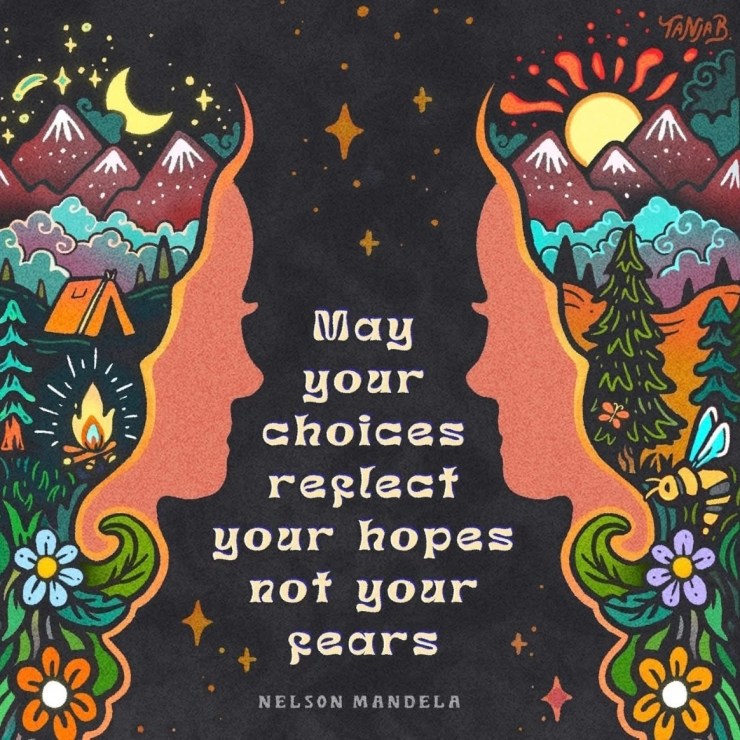
Fear rules our world. We live with a constant anxiety that there will not be enough. The illusion of self-sufficiency has separated us from our neighbors. Instead of working together in community for the good of all, we fear “others” and blame them for scarcity.
But we can choose a different way of living.
I have hope that we will remember how deeply connected we are to one another and rediscover what it means to live together in loving community. Our hope is found in each other, in love, and in God.
New life comes from God, and this new life reflects God’s very nature. This new way of living must embody the characteristics of the way of the LORD: loyal love (hesed), faithfulness (’emet), righteousness (sedeq), and peace (shalom). Verses 10–11 describe these attributes of God meeting together: love and faithfulness rise up from the earth, while righteousness and peace come down from heaven, meeting in a holy kiss. God is moving heaven and earth to revive us once again.
Salvation (transformation that leads to new life) takes place when the love, faithfulness, righteousness, and peace of God are active within and through the community of the faithful. God’s work flows from God’s character, and we are called to be transformed into God’s likeness and participate in that work. This “Oneing” with God, as Julian of Norwichdescribed it, is what we long for and prepare for, especially in a time when we need connection most.
It may seem countercultural or even counterintuitive in a world shaped by division and fear, but I believe that softening our hearts, humbling our pride, reconciling with God and neighbor, and learning to live as one is the way we help heal the world.
Check out other psalm reflections in the links below or find more of my writing published in Presbyterian Outlook or listen to my experiments in podcasting on the Period Pastor Podcast. Follow me @periodpastor
Past reflection links:
Psalm 85 Year C (2024-2025)
Psalm 85 Year B (2023-2024)
Psalm 85 Year B (2020-2021)
I began writing Psalm reflections during Lent of 2020. Shortly after, we decided to close the church building, work from home, and worship via zoom. Many churches use the Revised Common Lectionary (RLC) that rotates scripture on a three-year cycle (A, B, and C). Starting in Advent 2019, the church decided to worship with the texts from Year D, which is still not circulated as are years A, B, and C. Year D was created with the goal of including scriptures that were left out or not used as frequently as others. While we were using Psalms in year D, most other lectionary followers were using Year A. In Advent of 2020 we rejoined those who use the lectionary in year B. Advent of 2021 year C. When we returned to in person worship, we took the psalm reflections out of the order of worship. I continued to write them for the blog. Advent of 2022 year A. I left church work in July of 2023 but continued the practice of writing psalm reflections. Advent of 2023 year B. Advent of 2024 year C. I finished year C early, so I began work on psalms I missed: Psalm 119, Year D and others not in the lectionary. By the end of 2025, I have written a reflection for each psalm.
Advent of 2025 year A.
I use the Vanderbilt Divinity Library’s resource for lectionary readings and the PCUSA planning calendar to make text selections.
Year A Psalms
1st Sunday in Advent Psalm 122, 2nd Sunday in Advent Psalm 72, 3rd Sunday in Advent Psalm 146, 4th Sunday in Advent Psalm 80, Christmas Psalm 96, Psalm 97, Psalm 98, 1st Sunday after Christmas Psalm 148, 2nd Sunday after Christmas Psalm 147, 1st Sunday after Epiphany Psalm 29, 2nd Sunday after Epiphany Psalm 40, 3rd Sunday after Epiphany Psalm 27, 4th Sunday after Epiphany Psalm 15, 5th Sunday after Epiphany Psalm 112, Transfiguration Sunday Psalm 2 or Psalm 99.
1st Sunday in Lent Psalm 32, 2nd Sunday in Lent Psalm 121, 3rdSunday in Lent Psalm 95, 4th Sunday in Lent Psalm 23, 5th Sunday in Lent Psalm 130, 6th Sunday in Lent Psalm 118 or Psalm 31.
Easter Psalm 118 or Psalm 114, 2nd Sunday of Easter Psalm 16 or Psalm 111, 3rd Sunday of Easter Psalm 116 or Psalm 34, 4th Sunday of Easter Psalm 23 or Psalm 100, 5th Sunday of Easter Psalm 31 or Psalm 119: 9-32, 6th Sunday of Easter Psalm 66 or Psalm 115, 7th Sunday of Easter Psalm 68 or Psalm 21, Pentecost Psalm 104.
1st Sunday after Pentecost Psalm 8, 2nd Sunday after Pentecost Psalm 33 or Psalm 50, 3rd Sunday after Pentecost Psalm 116 or Psalm 100, 4th Sunday after Pentecost Psalm 86 or Psalm 69, 5th Sunday after Pentecost Psalm 13 or Psalm 89, 6th Sunday after Pentecost Psalm 45 or Psalm 145, 7th Sunday after Pentecost Psalm 119: 105-112 or Psalm 65, 8th Sunday after Pentecost Psalm 139 or Psalm 86, 9thSunday after Pentecost Psalm 105 or Psalm 128 or Psalm 119: 129-136, 10th Sunday after Pentecost Psalm 17 or Psalm 145, 11th Sunday after Pentecost Psalm 105 or Psalm 85, 12th Sunday after Pentecost Psalm 133 or Psalm 67, 13th Sunday after Pentecost Psalm 124 or Psalm 138, 14th Sunday after Pentecost Psalm 105 or Psalm 26, 15th Sunday after Pentecost Psalm 149 or Psalm 119, 16th Sunday after Pentecost Psalm 114 or Psalm 103, 17th Sunday after Pentecost Psalm 105 or Psalm 145, 18thSunday after Pentecost Psalm 78 or Psalm 25, 19th Sunday after Pentecost Psalm 19 or Psalm 80, 20thSunday after Pentecost Psalm 106 or Psalm 23, 21st Sunday after Pentecost Psalm 99 or Psalm 96, 22ndSunday after Pentecost Psalm 90 or Psalm 1, 23rd Sunday after Pentecost Psalm 107 or Psalm 43, 24thSunday after Pentecost Psalm 78 or Psalm 70, 25th Sunday after Pentecost Psalm 123 or Psalm 90, 26thSunday after Pentecost Psalm 100 or Psalm 95.Sources and notes:
“It begins in the style of hymnic address and praises the LORD for his favor to his land and people in the past (vv. 1-3). Then it asks that the LORD turn again, as he did in the past, from anger to favor and manifest his covenant faithfulness (hesed) in the salvation of his people (vv. 4-8). An individual voice, responding to the petition, announces that he will listen on behalf of the congregation to what God says and bring them God’s message of shalom (v. 8). A thematic sentence (v. 9) introduces the message, which takes the form of a portrayal of the powers of salvation at work creating shalom (vv. 10-13).” Mays p. 276
“Salvation is portrayed as the dynamic activity of a quartet of attributes characteristic of the way of the LORD: covenant loyalty (hesed), faithfulness (’emet), righteousness (sedeq), and peace (shalom). …. [salvation is] a dynamic process in which the character of God in all its fullness is at work. Salvation is happening when the hesed and ’emet and sedeq and shalom of God are active in and through the community of God-fearing faithful. For similar portrayals of divine attributes, see Isaiah 32:15-18; 45:8; 58:8; 59:14-15; Pss. 43:3; 89:14; 96:6. This vision of salvation as the conformation of life to the character of God always transcends the life of the people of God. The vision has an easchatalocial reach. It needs the coming of God himself to realize it fully (vv. 9, 13).” Mays p. 277
“Ps 85 is a prayer for renewal of “life” among the people of Yahweh. The supplication in v 7 [v.6] looks back to Yahweh’s life-giving actions in the past and it looks forward to the great message of the future shalom in vv 9-14. “Life” is, of course, more than physical existence, and to “revive” or “renew” life is more comprehensive than a new surge of physical vitality.” WBC p. 373
“…Psalm 85, especially vv. 8-13, captures the reality that Christians already know and experience in Jesus Christ, but that exists amid the ongoing brokenness of the world and the sinfulness of persons and of our society.” NIB p. 538
“… Advent encourages us both to celebrate salvation and to pray for salvation, as does Psalm 85…” NIB p. 538
“Powered by some of the most imaginative and evocative metaphors in the Bible, Psalm 85 counters our world of anxiety, scarcity, self-sufficiency, denial, amnesia, and despair with hope roots in “God the Promise Keeper”. (Walter Brueggemann, From Whom No Secrets are Hid, p.32 Quoted from Wisdom Commentary p. 331) W must be referencing a different edition, I couldn’t find this quote in my copy.
“The heaping up of ways to describe God’s forgiveness in the past suggest that all is not well in the present. God needs to be reminded about how God has acted and should be acting towards Israel, God’s people.” W p. 332
“The importance of land and harvest in the book of Ruth suggest the story of Ruth and Naomi as inter text for Psalm 85. …. Both psalm and story are concerned with relationship, security, and identity.” W p. 334
Referencing vv 5-6, “The psalm offers core testimony about who God is in the midst of lived counter-testimony about who God is not at the moment. Psalm 85 does not try to coef her this tension.” W p. 333
“The Psalms mediate to us the great promise keeper whole resolve guarantees that the world is not a closed system. Creation, instead, is a world very much in process, sure to come to full shalom. Despair is the fate of a world “without god,” where there are no new gifts to be given. The Psalms refuse that world, knowing that God is not yet finished. Consequently, the Psalms can gather all the great words of the covenant and apply them to the future:
Steadfast love and faithfulness will meet;
righteousness and peace will kiss each other.
Faithfulness will spring up from the ground,
and righteousness will look down from the sky.
The LORD will give what is good,
and our land will yield its increase.
Righteousness will go before him,
and will make a path for his steps.
(Ps. 85:10-13)
Here the entire vocabulary of fidelity is through toward the future-steadfast love, faithfulness, righteousness, peace, faithfulness twice, righteousness three times–all in the “will” of the not yet.” Brueggemann, From Whom No Secrets Are Hid p. 32
“At the center of this hope is YHWH: “The Lord will give.” Psalm 85 imagines the steps of this God into a future of well-being. As a result of that divine resolve, the earth will yield and yield and yield. There is more to come, and it is good. There is more to come because God, long before Martin Luther King Jr., said, “I have a dream,” a dream of shalom. We live toward that dream because God’s dream will not be defeated.” Brueggemann, From Whom No Secrets Are Hid pp. 32 -33
Alter, Robert. 2007. The Book of Psalms: A Translation with Commentary New York: W. W. Norton & Company
WBC Allen, Leslie C. 1983. Word Biblical Commentary: Psalms 101-150. Vol. 21. Waco, TX: Word Books, Publisher.
Bonhoeffer, Dietrich. 1974. Psalms: The Prayer Book of the Bible. 8th ed. Minneapolis, MN: Augsburg Press.
Bourgeault, C. (2006). Chanting the psalms: A practical guide Audio Book. New Seeds.
Brueggemann, Walter. 2007. Praying the Psalms: Engaging Scripture and the Life of the Spirit. 2nd ed. Eugene, OR: Cascade.
Brueggemann, Walter. 2014. From Whom No Secrets Are Hid: Introducing the Psalms. Edited by Brent A. Strawn. 1st ed. Louisville, KY: Westminster John Knox Press.
Brueggemann, Walter. Davis Hanskins, Editor. 2022. Our Hearts Wait: Worshiping Through Praise and Lament in the Psalms Westminster John Knox Press, Louisville KY.
Brueggemann, Walter. (2002). Spirituality of the psalms. Augsburg Pub. House.
Brueggemann, Walter. (1984). The Message of the Psalms: A Theological Commentary. Minneapolis: Augsburg.
Chilson, Richard, ed. You Shall Not Want: A Spiritual Journey Based on the Psalms. Ave Maria Press, 2009.
Chittister, Joan. (2011). Songs of the heart: reflections on the psalms. John Garratt Publishing.
Cudjoe-Wilkes and Wilkes Cudjoe-Wilkes, G., Wilkes, A. J., & Moss, O. (2022). Psalms for black lives: Reflections for the work of Liberation. Upper Room Books.
WBC Craigie, Peter C. 1983. Psalms 1-50–Word Biblical Commentary. Vol. 19. Waco, TX: Word Books.
Creach, Jerome Frederick Davis. 1998. Psalms: Interpretation Bible Studies. Louisville, KY: Westminster John Knox Press.
DAFLER, J. (2021). PSOBRIETY: A journey of recovery through the psalms. Louisville, KY: WESTMINSTER JOHN KNOX.
W de Claisse-Walford, Nancy L. WISDOM COMMENTARY: Psalms Bks. 4-5. Edited by Barbara E. Reid. Vol. 22. Collegeville, MN: Liturgical, 2020.
Green, Barbara. 1997. Like a Tree Planted: An Exploration of Psalms and Parables Through Metaphor. Collegeville, MN: Liturgical Press.
W Hopkins, Denise Dombkowski. WISDOM COMMENTARY: Psalms Bks. 2-3. Edited by Barbara E. Reid. Vol. 21. Collegeville, MN: Liturgical, 2016.
NIB Keck, Leander E. 2015. The New Interpreters Bible Commentary. Vol. 3. Nashville, TN: Abingdon Press.
Lewis, C. S. (2017). Reflections on the Psalms. Harper One, an imprint of Harper Collins Publishers.
Mays, James Luther. 1994. Psalms. Louisville, KY: John Knox Press.
McCann, J. C. (1993). A theological introduction to the book of Psalms: The Psalms as Torah. Nashville, TN: Abingdon Press.
McCann, J. C., & Howell, J. C. 2001. Preaching the Psalms. Nashville, TN: Abingdon Press.
Merrill, N. C. (2020). Psalms for praying an invitation to wholeness (10th Anniversary Edition ed.). London, England: Bloomsbury Publishing.
Miller, Patrick D. 1986. Interpreting the Psalms. Philadelphia, PA: Fortress Press.
Morgan, Michael. 2010. The Psalter for Christian Worship Revised Edition. Westminster John Knox Press.
Schlimm, Matthew Richard. 2018. 70 Hebrew Words Every Christian Should Know. Nashville, TN: Abington Press.
Spong, M. (Ed.). (2020). The words of her mouth: Psalms for the struggle. Cleveland, OH: The Pilgrim Press.
WBC Tate, Marvin E. 1990. Word Biblical Commentary: Psalms 51-100. Edited by David Allan. Hubbard and Glenn W. Barker. Vol. 20. Waco, TX: Word.
Weems, Ann. 1995. Psalm of Lament. Westminster John Knox Pres
OTL Weiser, Artur. 1998. Old Testament Library: Psalms. Translated by Herbert Hartwell. 3rd ed. New York, NY: Manchester University Press.


