Bless the Beloved, O my soul, and all that is within me; I bless your Holy Name!
Bless the Beloved, O my soul, and remember the goodness of Love.
You forgive our stubbornness,
You heal our disease,
You save us from the snares of fear,
You crown us with steadfast Love and Mercy,
You satisfy our every need and renew our spirit like the eagle’s.
Through You comes peace and justice for all who are oppressed.
You make known the pathway of truth, and guide us on the Way.
You are merciful and gracious, quelling our anger with your patient Love.
You love us more than we can ask or imagine; in truth, we belong to You.
For You understand us, requiting us not according to our ignorance and error.
As far as the heavens are high above the earth,
so great is your loving response toward those who are humble;
So far does your enduring strength uphold those who face the darkness within.
As parents are concerned for their children,
so You come to those who reach out in faith.
For our ways are known, our weaknesses seen with compassion.
As for humanity, our days are like the grass; we flourish like a flower of the field;
When the wind passes over, it is gone, and that place knows it no more.
Yet the steadfast Love of the Beloved
is from everlasting to everlasting to those who Awaken,
and justice to all generations,
To those who remember your Promises, and follow your Voice.
The Beloved’s home is in our hearts, as we discover in the Silence.
Bless the Beloved, O you angels, you faith-filled ones who hear the Word,
following the Voice of Love!
Bless the Beloved, all you people, those who abandon themselves into Love’s hands!
Praise the Beloved, praise all of Creation!
Praise the Beloved, O my soul!
Nan Merrill Psalms for Praying
Reflection:
Bless the Beloved, O my soul, and remember the goodness of Love.
It may seem a little strange to say, ‘I said to myself, Karie, I said, remember to pray, remember to study scripture, remember to be open to the work of the holy spirit in your soul’ but I think I do that in a different way. Grounding, centering, and being mindful are important practices that help us be ready to be present. I pause for a moment of silence before I start a prayer and before I preach. This pause is a reminder that I’m entering holy space. I am mindful of what comes from my mouth, because I believe that words are powerful; they give shape and meaning to our experience with the holy. I pause to remind myself to bless the divine and the unique moment we occupy together.
In these prayers before the prayer, I am reminding myself that I am loved by a gracious God. In these silent moments in God’s presence, God knows and God remembers me, specifically my beloved-ness. The steadfast love of God holds me in this moment, works within me, transforming me with love so that I can be loving in the words of my prayer and preaching, and most importantly God’s love is communicated within me so that I can communicate God’s love to the world.
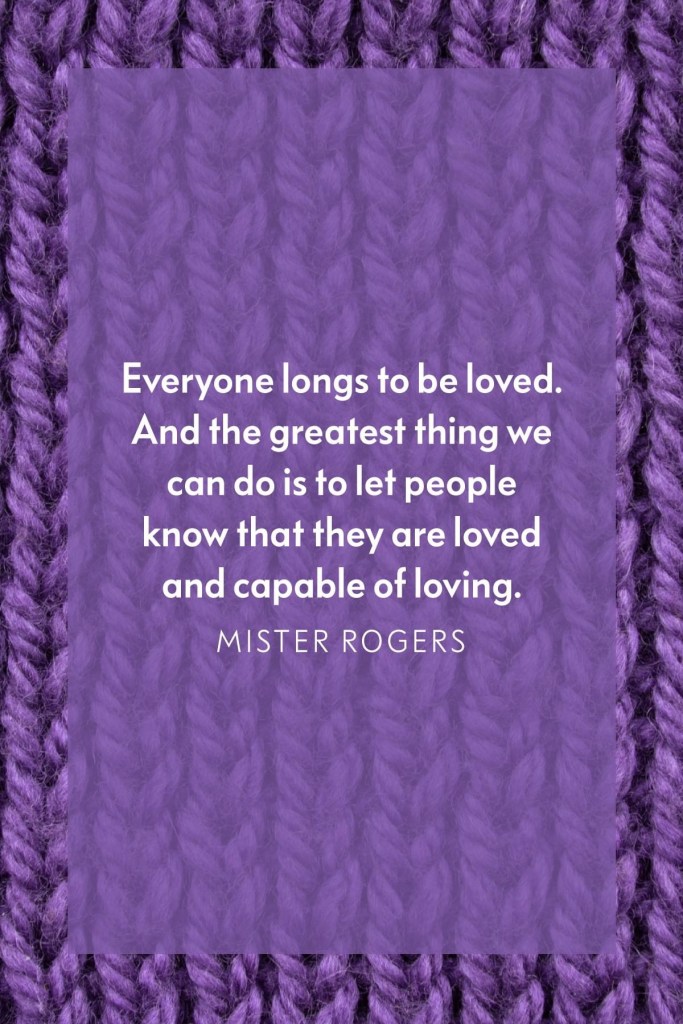
Remember that God loves you, and that you are capable of loving.
Check out other psalm reflections in the links below or find more of my writing published in Presbyterian Outlook or listen to my experiments in podcasting on the Period Pastor Podcast. Follow me @periodpastor
Past reflection links:
Psalm 103 Year C (2024-2025)
Psalm 103 Year A (2022-2023)
I began writing Psalm reflections during Lent of 2020. Shortly after, we decided to close the church building, work from home, and worship via zoom. Many churches use the Revised Common Lectionary (RLC) that rotates scripture on a three-year cycle (A, B, and C). Starting in Advent 2019, the church decided to worship with the texts from Year D, which is still not circulated as are years A, B, and C. Year D was created with the goal of including scriptures that were left out or not used as frequently as others. While we were using Psalms in year D, most other lectionary followers were using Year A. In Advent of 2020 we rejoined those who use the lectionary in year B. Advent of 2021 year C. When we returned to in person worship, we took the psalm reflections out of the order of worship. I continued to write them for the blog. Advent of 2022 year A. I left church work in July of 2023 but continued the practice of writing psalm reflections. Advent of 2023 year B. Advent of 2024 year C. I finished year C early, so I began work on psalms I missed: Psalm 119, Year D and others not in the lectionary. By the end of 2025, I have written a reflection for each psalm.
Advent of 2025 year A.
I use the Vanderbilt Divinity Library’s resource for lectionary readings and the PCUSA planning calendar to make text selections.
Year A Psalms
1st Sunday in Advent Psalm 122, 2nd Sunday in Advent Psalm 72, 3rd Sunday in Advent Psalm 146, 4th Sunday in Advent Psalm 80, Christmas Psalm 96, Psalm 97, Psalm 98, 1st Sunday after Christmas Psalm 148, 2nd Sunday after Christmas Psalm 147, 1st Sunday after Epiphany Psalm 29, 2nd Sunday after Epiphany Psalm 40, 3rd Sunday after Epiphany Psalm 27, 4th Sunday after Epiphany Psalm 15, 5th Sunday after Epiphany Psalm 112, Transfiguration Sunday Psalm 2 or Psalm 99.
1st Sunday in Lent Psalm 32, 2nd Sunday in Lent Psalm 121, 3rd Sunday in Lent Psalm 95, 4th Sunday in Lent Psalm 23, 5th Sunday in Lent Psalm 130, 6th Sunday in Lent Psalm 118 or Psalm 31.
Easter Psalm 118 or Psalm 114, 2nd Sunday of Easter Psalm 16 or Psalm 111, 3rd Sunday of Easter Psalm 116 or Psalm 34, 4th Sunday of Easter Psalm 23 or Psalm 100, 5th Sunday of Easter Psalm 31 or Psalm 119: 9-32, 6th Sunday of Easter Psalm 66 or Psalm 115, 7th Sunday of Easter Psalm 68 or Psalm 21, Pentecost Psalm 104.
1st Sunday after Pentecost Psalm 8, 2nd Sunday after Pentecost Psalm 33 or Psalm 50, 3rd Sunday after Pentecost Psalm 116 or Psalm 100, 4th Sunday after Pentecost Psalm 86 or Psalm 69, 5th Sunday after Pentecost Psalm 13 or Psalm 89, 6th Sunday after Pentecost Psalm 45 or Psalm 145, 7th Sunday after Pentecost Psalm 119: 105-112 or Psalm 65, 8th Sunday after Pentecost Psalm 139 or Psalm 86, 9th Sunday after Pentecost Psalm 105 or Psalm 128 or Psalm 119: 129-136, 10th Sunday after Pentecost Psalm 17 or Psalm 145, 11th Sunday after Pentecost Psalm 105 or Psalm 85, 12th Sunday after Pentecost Psalm 133 or Psalm 67, 13th Sunday after Pentecost Psalm 124 or Psalm 138, 14th Sunday after Pentecost Psalm 105 or Psalm 26, 15th Sunday after Pentecost Psalm 149 or Psalm 119:33-40, 16th Sunday after Pentecost Psalm 114 or Psalm 103, 17th Sunday after Pentecost Psalm 105 or Psalm 145, 18th Sunday after Pentecost Psalm 78 or Psalm 25, 19th Sunday after Pentecost Psalm 19 or Psalm 80, 20th Sunday after Pentecost Psalm 106 or Psalm 23, 21st Sunday after Pentecost Psalm 99 or Psalm 96, 22nd Sunday after Pentecost Psalm 90 or Psalm 1, 23rd Sunday after Pentecost Psalm 107 or Psalm 43, 24th Sunday after Pentecost Psalm 78 or Psalm 70, 25th Sunday after Pentecost Psalm 123 or Psalm 90, 26th Sunday after Pentecost Psalm 100 or Psalm 95.
Sources and notes:
“Verses 1-2 are a summons to praise. The formula, “Bless the Lord, O my soul,” is so familiar to us that we do not notice how odd it is. It is the self summoning the self to praise, i.e., the self reminding self of the fact that all life must be finally referred to God’s goodness. This hymn begins with the worshipper talking to himself. The term rendered “benefits” might be translated as “payoffs.” It refers to the rewards and punishments this God reliably gives.” Brueggemann The Message of the Psalms p. 160
“The basis for praise is the marvelous series of participle in verses 3-6, which summarize God’s characteristic action. Though lacking in specificity, this list shows a memory of God overcoming every kind of disorientation. The verbs tell the tale: “forgives, heals, redeems, crowns, satisfies.” We should notice that in verse 6, we have what seems to be a last element in the list which is often left outside the recital: “works.” This last verb is a reminder to us that Israel always keeps the goal of justice visible. Most interesting is the reference to “steadfast love and mercy” (v. 4), characteristically salvific language.” Brueggemann The Message of the Psalms p. 160
“It is no wonder that the concluding summons to praise is expansive (vv. 19-22). The psalm began by calling the self. But now it is all creation, earth-creatures and heavenly angels, who are needed adequately to assert who this unutterable God is. Notice the psalm is not specific. Its concern is not specific memory but that the person of Yahweh should be rendered adequately and faithfully. The key to this discernment of Yahweh is “steadfast love.” Brueggemann The Message of the Psalms p. 161
“Psalm 103 is a profoundly evangelical hymn. It gives voice to the thankfulness of sinners that the LORD is a God of mercy and grace. It recites in a concentrated way what Israel learned about the ways of God; the LORD had not dealt with them according to their sins. Because of its subject and the way that subject is developed in a poem of subtle allusions and aesthetic power, Psalm 103 has been the favored praise of sinners. In every age, in liturgical contexts from Common service to graveside, in the prayers of the simple and the sophisticated, the words of the words of the psalms have been the means of remembering the LORD is gracious.” Mays p. 326
“The superscription of Psalm 103, like Psalm 101, attributes it to David, and thus Psalms 101 and 103 form something of a “framing” around Psalm 102. Erich Zenger’s suggestion that Psalm 103 be read in conjunction with Psalm 104 further ties all four of the psalms together. Psalm 101’s cry for justice followed by Psalm 102;s words of despair (vv. 1-11, 23-26) and then hope (vv. 12-22, 27-28) is met in Psalm 103 with words of the promise of wholeness. Zenger states, “Psalm 103 heightens the theme sounded in Psalm 102 of YHWH’s mercy as the fundamental power of YHWH’s reign.” W p. 53
“The word “all” occurs seven times in the psalm (vv. 1, 2, 3, 6, 19, 20, and 21), particularly at its beginning and end, suggesting that the psalm singer intends for the psalm to be a comprehensive summary of all that YHWH has done and will continue to do as sovereign over the world (v. 19).” W p. 53
Wisdom Commentary compares Psalm 90 to Psalm 103. They use similar language (dust, mortals, grass) but Psalm 90 is a lament and Psalm 103 is more hopeful; perhaps an answer to Psalm 90. “Psalm 103, however, adds a not that God “knows we were made; he remembers that we are dust” (v. 14). …. The added note in Psalm 103:14 turns the words of limner in psalm 90:3 and 5 into words of hope–God knows; God remembers.” W p. 56
“The concluding words of Psalm 103 affirm that hope. They remind the reader or hearer once again of God’s “steadfast love”, the covenant fidelity between YHWH and the people, and they return to the theme of the enthronement psalms, YHWH’s sovereignty over all creation (v. 19). The psalm ends as it begins, first calling for blessings on YHWH, this time not by an individual “soul” (vv. 1 and 2) but by both heavenly beings and those who minister to YHWH here on earth. The closing words in verse 22, however, bring the psalm back to where it began, calling each individual “soul” to join the blessing.” W p. 56
Alter, Robert. 2007. The Book of Psalms: A Translation with Commentary New York: W. W. Norton & Company
WBC Allen, Leslie C. 1983. Word Biblical Commentary: Psalms 101-150. Vol. 21. Waco, TX: Word Books, Publisher.
Bonhoeffer, Dietrich. 1974. Psalms: The Prayer Book of the Bible. 8th ed. Minneapolis, MN: Augsburg Press.
Bourgeault, C. (2006). Chanting the psalms: A practical guide Audio Book. New Seeds.
Brueggemann, Walter. 2007. Praying the Psalms: Engaging Scripture and the Life of the Spirit. 2nd ed. Eugene, OR: Cascade.
Brueggemann, Walter. 2014. From Whom No Secrets Are Hid: Introducing the Psalms. Edited by Brent A. Strawn. 1st ed. Louisville, KY: Westminster John Knox Press.
Brueggemann, Walter. Davis Hanskins, Editor. 2022. Our Hearts Wait: Worshiping Through Praise and Lament in the Psalms Westminster John Knox Press, Louisville KY.
Brueggemann, Walter. (2002). Spirituality of the psalms. Augsburg Pub. House.
Brueggemann, Walter. (1984). The Message of the Psalms: A Theological Commentary. Minneapolis: Augsburg.
Chilson, Richard, ed. You Shall Not Want: A Spiritual Journey Based on the Psalms. Ave Maria Press, 2009.
Chittister, Joan. (2011). Songs of the heart: reflections on the psalms. John Garratt Publishing.
Cudjoe-Wilkes and Wilkes Cudjoe-Wilkes, G., Wilkes, A. J., & Moss, O. (2022). Psalms for black lives: Reflections for the work of Liberation. Upper Room Books.
WBC Craigie, Peter C. 1983. Psalms 1-50–Word Biblical Commentary. Vol. 19. Waco, TX: Word Books.
Creach, Jerome Frederick Davis. 1998. Psalms: Interpretation Bible Studies. Louisville, KY: Westminster John Knox Press.
DAFLER, J. (2021). PSOBRIETY: A journey of recovery through the psalms. Louisville, KY: WESTMINSTER JOHN KNOX.
W de Claisse-Walford, Nancy L. WISDOM COMMENTARY: Psalms Bks. 4-5. Edited by Barbara E. Reid. Vol. 22. Collegeville, MN: Liturgical, 2020.
Green, Barbara. 1997. Like a Tree Planted: An Exploration of Psalms and Parables Through Metaphor. Collegeville, MN: Liturgical Press.
W Hopkins, Denise Dombkowski. WISDOM COMMENTARY: Psalms Bks. 2-3. Edited by Barbara E. Reid. Vol. 21. Collegeville, MN: Liturgical, 2016.
NIB Keck, Leander E. 2015. The New Interpreters Bible Commentary. Vol. 3. Nashville, TN: Abingdon Press.
Lewis, C. S. (2017). Reflections on the Psalms. Harper One, an imprint of Harper Collins Publishers.
Mays, James Luther. 1994. Psalms. Louisville, KY: John Knox Press.
McCann, J. C. (1993). A theological introduction to the book of Psalms: The Psalms as Torah. Nashville, TN: Abingdon Press.
McCann, J. C., & Howell, J. C. 2001. Preaching the Psalms. Nashville, TN: Abingdon Press.
Merrill, N. C. (2020). Psalms for praying an invitation to wholeness (10th Anniversary Edition ed.). London, England: Bloomsbury Publishing.
Miller, Patrick D. 1986. Interpreting the Psalms. Philadelphia, PA: Fortress Press.
Morgan, Michael. 2010. The Psalter for Christian Worship Revised Edition. Westminster John Knox Press.
Schlimm, Matthew Richard. 2018. 70 Hebrew Words Every Christian Should Know. Nashville, TN: Abington Press.
Spong, M. (Ed.). (2020). The words of her mouth: Psalms for the struggle. Cleveland, OH: The Pilgrim Press.
WBC Tate, Marvin E. 1990. Word Biblical Commentary: Psalms 51-100. Edited by David Allan. Hubbard and Glenn W. Barker. Vol. 20. Waco, TX: Word.
Weems, Ann. 1995. Psalm of Lament. Westminster John Knox Pres
OTL Weiser, Artur. 1998. Old Testament Library: Psalms. Translated by Herbert Hartwell. 3rd ed. New York, NY: Manchester University Press.


