Listen well, O peoples of the earth, to inner promptings of the Spirit;
Let Silence enter your house that you may hear!
For within your heart Love speaks: not with words of deceit,
But of spiritual truths to guide you upon the paths of peace.
Do not hide this from your children; teach of the inward Voice,
and help all generations to listen in the Silence,
That they may know the Beloved and be free to follow the precepts of Love.
For the Spirit of Truth is written upon open hearts,
that we might share the Divine Plan,
And model to the children Love’s way as we have been shown;
That each new generation might honor Silence, the children yet unborn.
Herein lies the hope of the future: to live as co-creators with the great Creator,
Not like those who live in ignorance too impatient to wait for Love’s word,
Whose spirits are not faithful to their birthright of Love.
Since the birth of consciousness, armed with free will,
many there are who have rebelled against the Creator.
They did not keep the great Covenant
but refused to live according to Love’s way.
They forgot their purpose and the beautiful Plan,
and all that have been given as Gift.
Throughout the ages, the Eternal Lover has show the marvels of Creation,
wonders to behold.
Remember how the sea was divided so the people passed through,
how the waters stood as a wall;
How in the daytime, they were led with a cloud,
and through the night with a fiery light.
Recall how the rocks in the wilderness cracked open,
that the people might drink their fill as from the deep;
Yes, streams came out of the rock, and caused waters to flow down like rivers.
Yet did the people close their hearts,
rebelling agains the Most High, living in a wilderness.
Over and over, they tested Love by demanding that their desires be met.
Speaking against Love, they cried,
“Can the Mighty One not spread a feast for us?
The rocks opened so the water gushed out and streams overflowed.
Can we not also expect bread and meat to be provided for us?”
Did they not know how their rebellions separated them from
the Source of all that is?
How often the people lost faith on the journey,
not trusting in the saving power of the Beloved!
Even so, their complaints were answered with compassion;
And the doors to heaven opened raining down their sustenance,
the very grain of heaven.
They ate of the bread of the angels; food was sent in abundance.
The East wind blew in the heavens, and the South wind was called forth;
Out of heaven’s abundance came the winged birds,
as many as the sand in the seas;
They fell right in their midst, all around their habitation,
And the people ate and were well filled;
all that they craved was given to them.
Yet justice prevailed, retribution was made,
even as their mouths were still filled with food.
To restore the balance, the strongest among them died,
the strongest in their midst.
In spite of all this, the people continued to separate themselves from Love;
their eyes and ears were closed.
So they lived their days in fear, and their years in terror.
When they fell, they sought the Most High;
they repented and sought help earnestly.
They remembered then the Rock, who was their strength,
the Almighty One, the Redeemer.
Flattery poured from their mouths, lies issued from their tongues.
Their hearts were not filled with love; they were not true to the covenant.
Still the Beloved, being compassionate,
forgave their hypocrisy and gave them new life.
How patient was the Eternal Lover, how blind to their fickle hearts,
Knowing that they believed themselves to be but flesh,
a wind that passes and comes not again.
How often the people rebelled against Love in the wilderness,
grieving the Beloved with their distance!
How often they tested Love and turned their backs to the Holy One!
They forgot the power of Love, and the times that they were saved,
When they were comforted by signs, and sustained through miracles.
Through all generations the rives have flowed, rivers now polluted by greed.
Through famine and floods, the Beloved has brought forth new life.
All through the ages, the earth has yielded its bountiful harvest;
yet, valleys and mountains, forests and fields have been misused.
Yes, greed has become the great destroyer of life, taking without offering back,
consuming the earth with abandon, leaving death, disease,
and destruction in its wake.
We cannot be spared what we have sown;
Generations to come will suffer from our willful ways;
their lives will be a mirror to blind and stubborn hearts.
Injustice, oppression, and greed will turn back upon hearts of stone;
children born will reap a harvest of lost dreams.
Even so, the Source of all life remains faithful,
ever-ready to lead us out of the wilderness,
to speak to us in the Silence of our hearts.
Yes, You are our hope, our strength, and our comfort;
our fears will not overwhelm us.
You will guide us to the New Jerusalem,
to the Mountain of Hope, the City of Light!
You will be an ever-living Presence to those who call upon your Name,
to all who open their hearts to Love.
When, O peoples of the earth,
will you stop testing and rebelling agains the Source of Life?
When will you awaken and live according to Love,
And attune yourselves to the music of the spheres?
For as you turn back to the Beloved, listening for Love’s voice
within your own heart, you will live with integrity, you will radiate love.
When you call upon the Beloved, your prayers will be heard;
your needs will be met abundantly.
The Beloved is a stranger to those who choose to walk in darkness,
to all who are the enemies of Light.
For You, Love of all loves, gift us with freedom to follow the way of Life, or
to live in the shadow of death.
Who will awaken our sleeping minds, and lift up our heart to Truth?
Who will rouse us from apathy,
quicken our spirits that we might serve your Plan?
The Beloved awaits our response to the new dawn,
where the people of earth will united in peace,
Where harmony will reign forever in the beauty of diversity,
and all nations will bow before the Most High.
Those who choose the way of darkness, who follow the road of ignorance,
become lost;
They know not the joy of abandonment to Love’s Companioning Presence.
O peoples of Earth, O nations around the globe, turn back to Love,
build anew upon strong foundations, renew your commitment to the Divine Plan!
Listen long in the Silence that the Word may be heard,
that decisions arise from the depths of your Inner Being where Wisdom dwells.
For the Spirit of Truth is written upon gentle and open hearts,
not as on stones of old.
With steadfast love, will the Counselor guide you;
and to all who abandon themselves to the Beloved with the Divine Plan revealed.
Amen and amen!
Nan C. Merrill Psalms for Praying
Reflection:
Psalm 78 is the second longest Psalm (Psalm 119 is quite a bit longer) and it recalls the history of the people of God. We tell this story to future generations not to glorify battle or justify decisions they made, but to recount the past including our flaws and failures so that future generations can learn from the mistakes and lead change. Psalm 78 tells of human failure and unfaithfulness and God’s compassion and love. The story of God’s wonders is told in a way that invites future generations to be willing participants; to experience relationship with God not with hard hearts and stiff necks, but with open hearts and a willingness to turn back to God. Perhaps this next generation will be faithful to God and compassionate to neighbors.
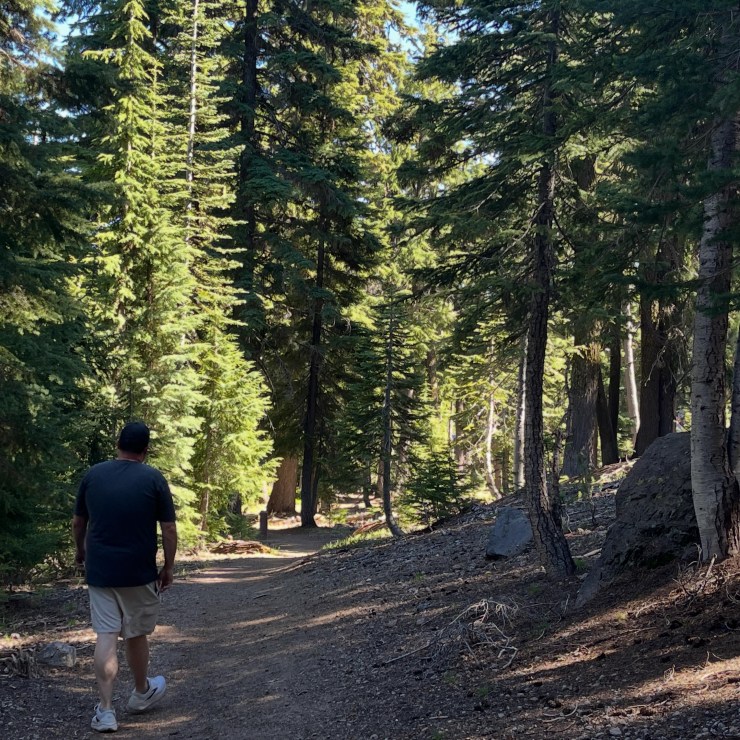
In Nan Merrill’s version, there is an invitation to silence in the opening of the Psalm. Silence, contemplative practices, meditation, forest bathing, and a number of spiritual disciplines have aided me in clearing my mind and being open for divine connection. In different seasons, I change practices. As I’m writing my husband and I are visiting national parks. While we don’t forest bathe each time we hike, we are informed by the practice, taking our time, breathing deeply, and walking portions in silence so we can listen deeply. In my experience, there isn’t a “singular correct way” to engage in spiritual practices. Certainly, there are traditions and ways to learn that are the helpful tried and true methods, but in my own life, I need more flexibility or at least the freedom to engage in the practices imperfectly. I encourage you to open your heart in whatever way is comfortable and meaningful, and let God do God’s thing.
May we all open our hearts to God, practicing love and compassion for ourselves and our neighbors.
Check out other psalm reflections in the links below or find more of my writing published in Presbyterian Outlook or listen to my experiments in podcasting on the Period Pastor Podcast. Follow me @periodpastor
Past reflection links:
Psalm 78 Year B (2023-2024)
Psalm 78 Year B (2020-2021)
I began writing Psalm reflections during Lent of 2020. Shortly after, we decided to close the church building, work from home, and worship via zoom. Many churches use the Revised Common Lectionary (RLC) that rotates scripture on a three-year cycle (A, B, and C). Starting in Advent 2019, the church decided to worship with the texts from Year D, which is still not circulated as are years A, B, and C. Year D was created with the goal of including scriptures that were left out or not used as frequently as others. While we were using Psalms in year D, most other lectionary followers were using Year A. In Advent of 2020 we rejoined those who use the lectionary in year B. Advent of 2021 year C. When we returned to in person worship, we took the psalm reflections out of the order of worship. I continued to write them for the blog. Advent of 2022 year A. I left church work in July of 2023 but continued the practice of writing psalm reflections. Advent of 2023 year B. Advent of 2024 year C. I finished year C early, so I began work on psalms I missed: Psalm 119, Year D and others not in the lectionary. By the end of 2025, I have written a reflection for each psalm.
Advent of 2025 year A.
I use the Vanderbilt Divinity Library’s resource for lectionary readings and the PCUSA planning calendar to make text selections.
Year A Psalms
1st Sunday in Advent Psalm 122, 2nd Sunday in Advent Psalm 72, 3rd Sunday in Advent Psalm 146, 4th Sunday in Advent Psalm 80, Christmas Psalm 96, Psalm 97, Psalm 98, 1st Sunday after Christmas Psalm 148, 2nd Sunday after Christmas Psalm 147, 1st Sunday after Epiphany Psalm 29, 2nd Sunday after Epiphany Psalm 40, 3rd Sunday after Epiphany Psalm 27, 4th Sunday after Epiphany Psalm 15, 5th Sunday after Epiphany Psalm 112, Transfiguration Sunday Psalm 2 or Psalm 99.
1st Sunday in Lent Psalm 32, 2nd Sunday in Lent Psalm 121, 3rdSunday in Lent Psalm 95, 4th Sunday in Lent Psalm 23, 5th Sunday in Lent Psalm 130, 6th Sunday in Lent Psalm 118 or Psalm 31.
Easter Psalm 118 or Psalm 114, 2nd Sunday of Easter Psalm 16 or Psalm 111, 3rd Sunday of Easter Psalm 116 or Psalm 34, 4th Sunday of Easter Psalm 23 or Psalm 100, 5th Sunday of Easter Psalm 31 or Psalm 119: 9-32, 6th Sunday of Easter Psalm 66 or Psalm 115, 7th Sunday of Easter Psalm 68 or Psalm 21, Pentecost Psalm 104.
1st Sunday after Pentecost Psalm 8, 2nd Sunday after Pentecost Psalm 33 or Psalm 50, 3rd Sunday after Pentecost Psalm 116 or Psalm 100, 4th Sunday after Pentecost Psalm 86 or Psalm 69, 5th Sunday after Pentecost Psalm 13 or Psalm 89, 6th Sunday after Pentecost Psalm 45 or Psalm 145, 7th Sunday after Pentecost Psalm 119: 105-112 or Psalm 65, 8th Sunday after Pentecost Psalm 139 or Psalm 86, 9th Sunday after Pentecost Psalm 105 or Psalm 128 or Psalm 119: 129-136, 10th Sunday after Pentecost Psalm 17 or Psalm 145, 11th Sunday after Pentecost Psalm 105 or Psalm 85, 12th Sunday after Pentecost Psalm 133 or Psalm 67, 13th Sunday after Pentecost Psalm 124 or Psalm 138, 14th Sunday after Pentecost Psalm 105 or Psalm 26, 15th Sunday after Pentecost Psalm 149 or Psalm 119:33-40, 16th Sunday after Pentecost Psalm 114 or Psalm 103, 17th Sunday after Pentecost Psalm 105 or Psalm 145, 18th Sunday after Pentecost Psalm 78 or Psalm 25, 19th Sunday after Pentecost Psalm 19 or Psalm 80, 20th Sunday after Pentecost Psalm 106 or Psalm 23, 21st Sunday after Pentecost Psalm 99 or Psalm 96, 22nd Sunday after Pentecost Psalm 90 or Psalm 1, 23rd Sunday after Pentecost Psalm 107 or Psalm 43, 24th Sunday after Pentecost Psalm 78 or Psalm 70, 25th Sunday after Pentecost Psalm 123 or Psalm 90, 26th Sunday after Pentecost Psalm 100 or Psalm 95.
Sources and notes:
“Psalm 78 is the voice of a teacher. It is largely composed of narrative, a telling of the story of the LORD’s way with Israel. In this respect it is similar to Psalms 105; 106; and 136. Because of this common dominant feature, this group of psalms is often classified as “historical psalms”.” Mays p. 254
“The speech is an eloquent testimony to the crucial importance of tradition in biblical religion. Its basic assumption is that remembering and telling are essential to the existence of the people of God. The speaker views the people of God as a family whose identity and ethos are maintained across generations because parents tell children the story of how they came to be the people of the LORD.” Mays p. 256
“This teaching does recite the mighty works of God (vv. 12-16, 43-55), but each recital leads up to a specific castoff Israel’s failure, and the instruction turns on these cases as negative examples of what the audience should not be like. The speaker’s torah, just like the canonical form of Israel’s foundation story, includes the response of the people. The way o fGod and the way of the ancestors (Hebrew “fathers”) are women together. the people of god are instructed, not only by what God has done and said, but also by what the fathers and mothers in faith have done and said. The biblical torah of the fist five books and the four Gospels is composed in that way. The speaker uses examples of failure by the ancestors. There is irony here; those who passed on the tradition also failed it. Every generation will have to reckon with the face that the story tells of failure as well as faithfulness.” Mays p. 257
“The final point of the speaker’s instruction, however, is not about wrath. Judgment is the word, but it is not the last word. The last word is the triumph of grace. The people fail, but the failure of the people is not the failure of God. God prevails against faithlessness.” Mays p. 258
“With its seventy-two verses, Psalm 78 is the second-longest plasma in the Psalter, after Psalm 119. Because of its length, many readers avoid it. Their aversion is intensified by its categorization as a “historical psalm” (along with Pss 105, 106, 135, 136) that retells Israel’s story in order to teach future generations. Clearly, many readers prefer prayer to a history lesson. The problem with this “historical” label for Psalm 78 is that it “flattens” events and encourages us too read them “statistically” like a photograph rather than “dynamically” like a film; the psalmist, however, “practices the memory, not to recount the past, but to prompt the kind of remembrance that leads to change.” Not only is the unfaithfulness of ancestors exposed but so are God’s actions on Israel’s behalf during the exodus, wilderness wanderings, settlement, and establishment of Davidic monarchy anchored in Zion. The psalmist terms these actions “wonders” (v. 4, from the root “do wondrously”; cp. exodus. 3:20; 15:11). Consequently, reciting this history invites “participating in the ongoing legacy of God’s wonders, which instills a distinct communal identity.” W p. 269
“In Psalm 78, there is, in the main, the same normative recital concerning “glorious deeds” and “wonders” (v. 4). First there is the Torah designed for Israel’s obedience (v. 5), then the exodus (vv. 12-13), and then wilderness with its petition and sustenance (vv. 14-31). The result is a mix of divine generosity and Israelite resistance, the same themes we have seen in Psalm s 105 and 106, respectively.” Brueggemann, From Whom No Secrets are Hid p. 137
“But there is a surprise in Psalm 78, despite our familiarity with the normative recital. In verses 56-59, the rebellion of Israel is so sever that YHWH “rejects Israel,” that is, the northern tribes. YHWH gave up on the important northern sanctuary at Shiloh (v. 60, see Jer. 7:12-15). Verses 56-57 reflect the crisis of the eighth century BCE when the northern kingdom was conquered by the Assyrian army and the leading residents were deported out of their own land (see Kings 17). The surprising, new dimension in Psalm 78 is that YHWH chose Judah, David, and Mt. Zion as YHWH’s new object of fidelity in the wake of the end of the northern kingdom. The psalm reflects the conviction (ideology?) that the Jerusalem establishment with king and temple now carries divine favor. In contrast to the rejection of the North, this is a new chosenness. Psalm 78 exhibits the way in which the normative recital is supple and can be turned, in interpretation, to respond to contemporary reality and contemporary ideology. In this rendering, it is David and the Davidic establishment in Jerusalem that are the full, faithful culmination of the entire sum of divine wonders. Psalm 78 is one more affirmation of the way in which the force of divine resolve sustains the historical reality of the community of faith.” Brueggemann, From Whom No Secrets are Hid pp. 137-138
“The Psalms invite us to generosity, not greed, because this is the God who prepares a table for us in the presence of our enemies (see Psalm 23:5; 78:19). This God is always setting the table of abundance, always preparing more, always supplying bread for the hungry, always cooking fish on the seashore, always setting a welcome table for the stranger, the widow, and the orphan…” Brueggemann, From Whom No Secrets are Hid pp. 29-30
“1. Hearken, my people, to my teaching,/Lend your ear to the sayings of my mouth. This sort of formal and formulaic beginnings got the poem is reminiscent of didactic poetic texts such as Shirat Ha’Azinu, the Song of Moses (Deuteronomy 32). In fact, some of the phrase used (for example, verse 8, “a wayward, rebellious generation”) are similar to formulations in Deuteronomy 32. This is a historical psalm, which recapitulates in poetry the Plagues Narrative and the victory at the Sea of Reeds from Exodus as well as cortina later events. the narrative purpose is the reason for the lengthiness of the psalm For once, the scholarly conjecture about a ritual purpose for the psalm seems plausible: It distinctly looks as though it originally served a function of commemoration of national history cast in the mnemonic form of verse, which might have also lent itself to public changing, perhaps in a temple ceremony. The strong didactic bent of the commemoration is reflected in the fact that the hortatory preamble runs to the end of verse 8, much of it in a long, run-on sentence. It must also be said that a good deal of the poetry of this psalm is no more than perfunctory–a recasting in parallelistic verse of the narrative in Exodus, borrowing some terms from the prose story and substituting many synonyms.” Alter, p. 272
Alter, Robert. 2007. The Book of Psalms: A Translation with Commentary New York: W. W. Norton & Company
WBC Allen, Leslie C. 1983. Word Biblical Commentary: Psalms 101-150. Vol. 21. Waco, TX: Word Books, Publisher.
Bonhoeffer, Dietrich. 1974. Psalms: The Prayer Book of the Bible. 8th ed. Minneapolis, MN: Augsburg Press.
Bourgeault, C. (2006). Chanting the psalms: A practical guide Audio Book. New Seeds.
Brueggemann, Walter. 2007. Praying the Psalms: Engaging Scripture and the Life of the Spirit. 2nd ed. Eugene, OR: Cascade.
Brueggemann, Walter. 2014. From Whom No Secrets Are Hid: Introducing the Psalms. Edited by Brent A. Strawn. 1st ed. Louisville, KY: Westminster John Knox Press.
Brueggemann, Walter. Davis Hanskins, Editor. 2022. Our Hearts Wait: Worshiping Through Praise and Lament in the Psalms Westminster John Knox Press, Louisville KY.
Brueggemann, Walter. (2002). Spirituality of the psalms. Augsburg Pub. House.
Brueggemann, Walter. (1984). The Message of the Psalms: A Theological Commentary. Minneapolis: Augsburg.
Chilson, Richard, ed. You Shall Not Want: A Spiritual Journey Based on the Psalms. Ave Maria Press, 2009.
Chittister, Joan. (2011). Songs of the heart: reflections on the psalms. John Garratt Publishing.
Cudjoe-Wilkes and Wilkes Cudjoe-Wilkes, G., Wilkes, A. J., & Moss, O. (2022). Psalms for black lives: Reflections for the work of Liberation. Upper Room Books.
WBC Craigie, Peter C. 1983. Psalms 1-50–Word Biblical Commentary. Vol. 19. Waco, TX: Word Books.
Creach, Jerome Frederick Davis. 1998. Psalms: Interpretation Bible Studies. Louisville, KY: Westminster John Knox Press.
DAFLER, J. (2021). PSOBRIETY: A journey of recovery through the psalms. Louisville, KY: WESTMINSTER JOHN KNOX.
W de Claisse-Walford, Nancy L. WISDOM COMMENTARY: Psalms Bks. 4-5. Edited by Barbara E. Reid. Vol. 22. Collegeville, MN: Liturgical, 2020.
Green, Barbara. 1997. Like a Tree Planted: An Exploration of Psalms and Parables Through Metaphor. Collegeville, MN: Liturgical Press.
W Hopkins, Denise Dombkowski. WISDOM COMMENTARY: Psalms Bks. 2-3. Edited by Barbara E. Reid. Vol. 21. Collegeville, MN: Liturgical, 2016.
NIB Keck, Leander E. 2015. The New Interpreters Bible Commentary. Vol. 3. Nashville, TN: Abingdon Press.
Lewis, C. S. (2017). Reflections on the Psalms. Harper One, an imprint of Harper Collins Publishers.
Mays, James Luther. 1994. Psalms. Louisville, KY: John Knox Press.
McCann, J. C. (1993). A theological introduction to the book of Psalms: The Psalms as Torah. Nashville, TN: Abingdon Press.
McCann, J. C., & Howell, J. C. 2001. Preaching the Psalms. Nashville, TN: Abingdon Press.
Merrill, N. C. (2020). Psalms for praying an invitation to wholeness (10th Anniversary Edition ed.). London, England: Bloomsbury Publishing.
Miller, Patrick D. 1986. Interpreting the Psalms. Philadelphia, PA: Fortress Press.
Morgan, Michael. 2010. The Psalter for Christian Worship Revised Edition. Westminster John Knox Press.
Schlimm, Matthew Richard. 2018. 70 Hebrew Words Every Christian Should Know. Nashville, TN: Abington Press.
Spong, M. (Ed.). (2020). The words of her mouth: Psalms for the struggle. Cleveland, OH: The Pilgrim Press.
WBC Tate, Marvin E. 1990. Word Biblical Commentary: Psalms 51-100. Edited by David Allan. Hubbard and Glenn W. Barker. Vol. 20. Waco, TX: Word.
Weems, Ann. 1995. Psalm of Lament. Westminster John Knox Pres
OTL Weiser, Artur. 1998. Old Testament Library: Psalms. Translated by Herbert Hartwell. 3rd ed. New York, NY: Manchester University Press.


